
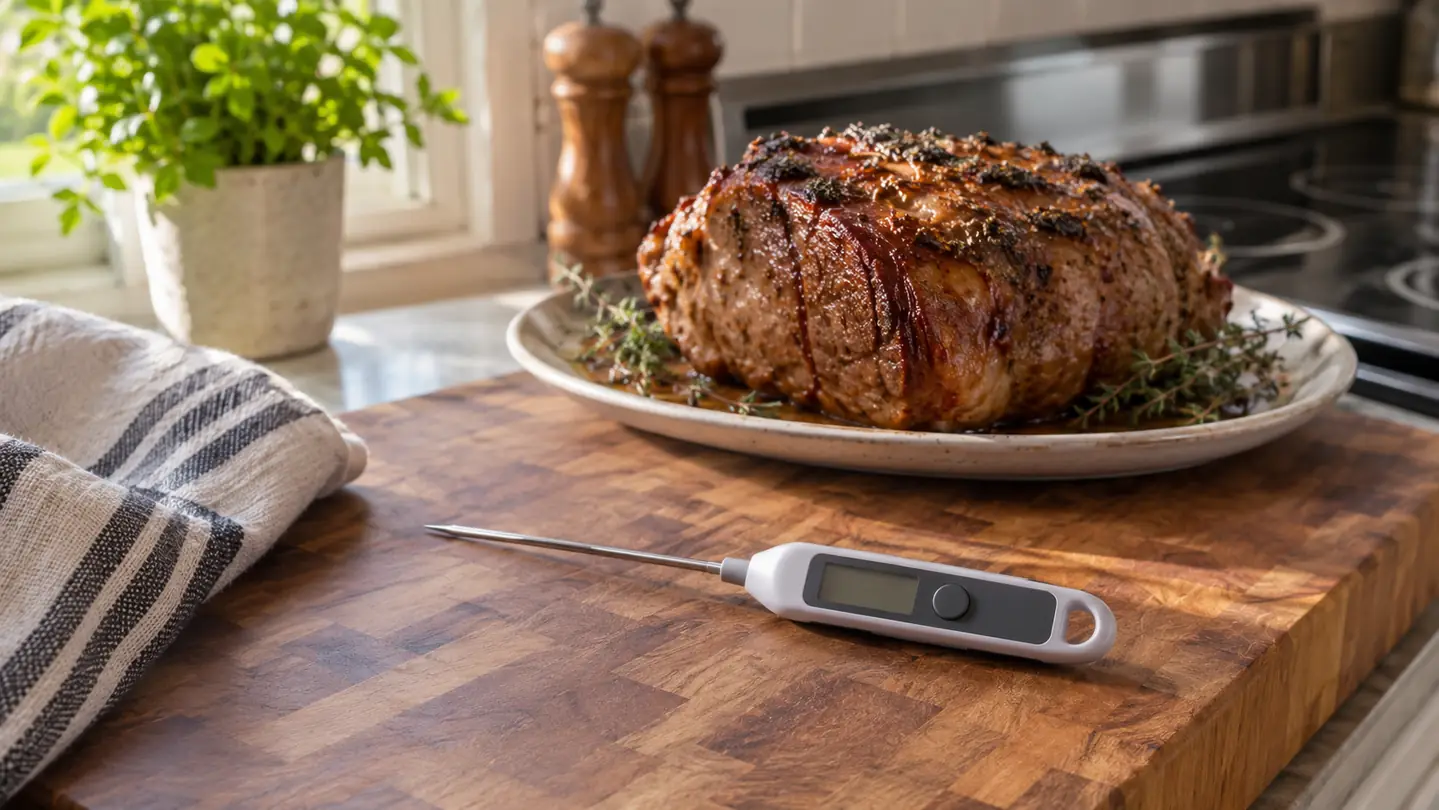
Two instant-read thermometers, one question: which one do you grab when the roast has been in the oven for an hour and there are people at the table waiting? I bought the TempPro TempSwift TP19H in the first week of March, with my own money, along with four other pieces of gear I had been putting off replacing. I have used it almost every night since, for meat, for bread, and for oil. The ThermoMonster is not mine. I have handled one at my son's house and read its listing more closely than I read most things, and that is enough to tell you where it beats the TempPro and where it does not. I would rather be straight with you about the second part than pretend I ran a lab test on a tool I do not own.
Short answer: the TempPro is the one in my kitchen drawer and the one I would buy again. It settles on a number in roughly a second, the screen turns to face me when I am reaching across a hot skillet, and it has survived eight months of being set down too hard on laminate. The ThermoMonster is a decent tool with a narrower job, and I will get to who it suits. What follows is what I could verify myself, what I am taking on faith from a listing, and the two places where the other tool is genuinely the better choice.
| TempPro TP19H | ThermoMonster | |
|---|---|---|
| Speed to a settled number | Listed at one second. In my kitchen the number is there before I have finished turning the probe toward the light. | Faster than the old dial it replaced, but I counted a beat longer than the TempPro over the same pot. |
| Accuracy I could check | Plus or minus 0.9 Fahrenheit claimed. My boiling water and ice water checks land where they should. | I have not run a check on the one I handled, so I can neither credit nor fault it. |
| Reading at an angle | 2.0 inch backlit screen with 180 degree auto rotation, so the number faces you while you reach over a pan. | You bring your wrist around to the screen. A small thing that stops being small at a hot stove. |
| Living in a crowded drawer | A straight tool that wants its own slot or a utensil cup. Mine has a spot next to the knife. | The slimmer of the two in the hand, and it slid into a full drawer without hooking the handle of anything. |
| Weight in the hand | 77 grams listed, with enough behind the handle that it does not feel flimsy when you push. | Felt lighter to me, though I did not put either on a scale, so take that for what it is. |
| Cleanup | Stainless steel probe, hand wash only per the listing, and listed oven safe. A wipe and a dry towel. | Nothing fussy about it, but I have not owned one long enough to say how the seams hold up over years. |
| Best for | Someone cooking meat, bread and oil most nights who wants one fast number they can trust. | A small kitchen, a travel bag, or a cook who wants the plainest possible tool with nothing to learn. |
Where the TempPro TP19H Wins
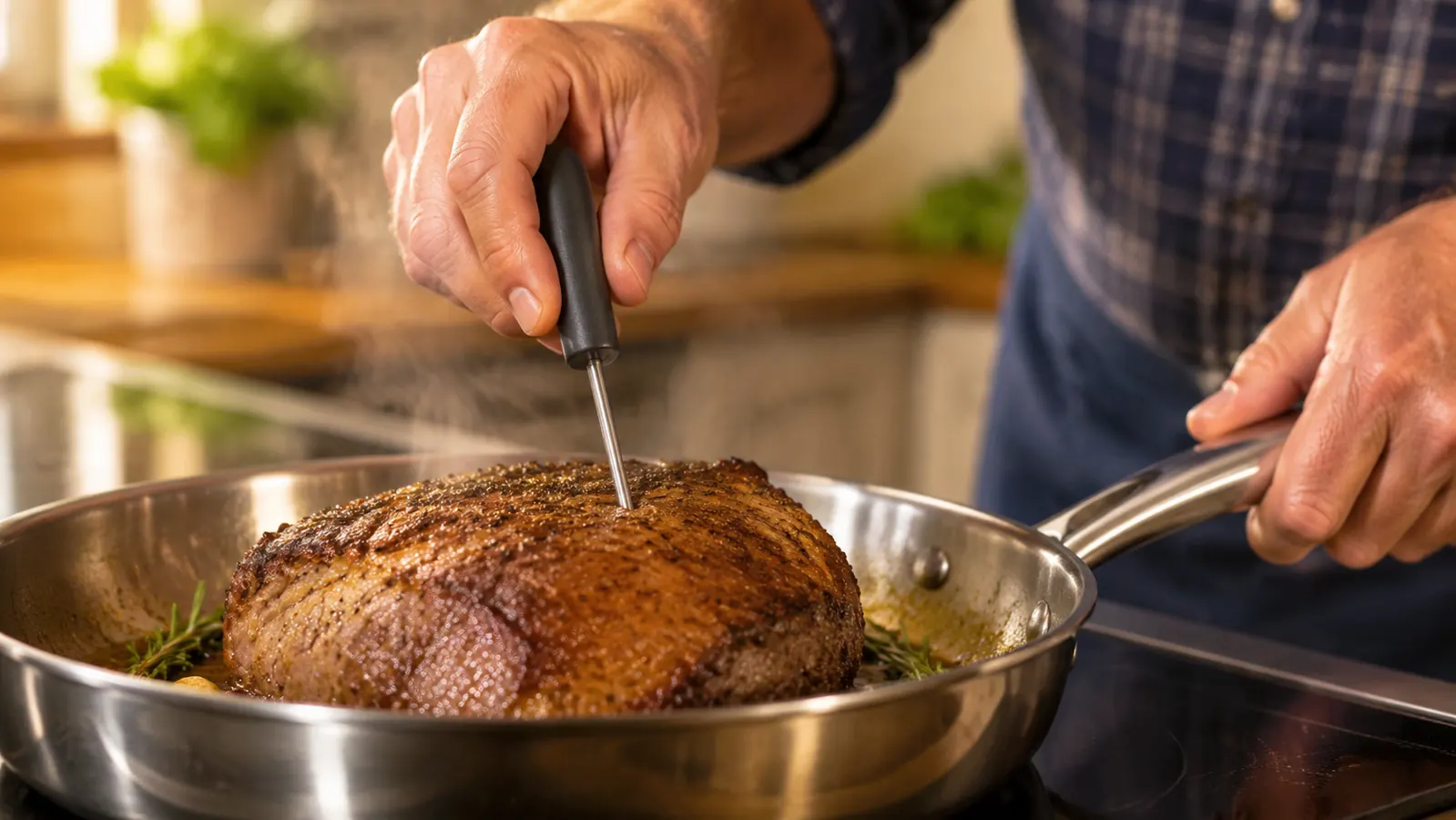
Start with speed, because speed is the whole reason these things exist. The listing puts the TP19H at one second, and in my kitchen that is close to true. I am not standing there counting. What I notice is that the number has already settled when I lift my eyes to read it, which means the probe is in the meat for a second and a half instead of the five or six seconds my old dial thermometer demanded. Over a hot pan that difference is not vanity. It is the difference between a sear that keeps its crust and one that steams while you wait with the oven door open.
One Tuesday in May I decided to measure the difference instead of just asserting it, which is the sort of thing a retired teacher does when he has an hour and nobody to interrupt him. I cooked two pork chops of the same thickness, one on each side of the same skillet, and checked the first the way I used to with the old dial and the second with the TempPro. By the time the dial gave me a number I trusted, that chop had been in the pan sixteen seconds longer. Sixteen seconds on a hot skillet is the difference between a crust that has set and a crust that has gone soft, and Ruth asked me why one chop was better than the other without knowing I had done anything. That was the whole experiment and I did not need to repeat it.
The second advantage is accuracy I can actually check, which matters more to me than any of it. The claim is plus or minus 0.9 degrees Fahrenheit, and I have a retired chemistry teacher's habit of not taking that on trust. Once a month I bring a small pot of water to a rolling boil, and here in Asheville, at about 2,100 feet, that is a shade under 210 degrees, not 212. Mine reads within a degree of the number it should. I do the ice water check too. A thermometer that is two degrees off is worse than no thermometer at all, because you will believe it. This one I believe, and I have never had to adjust it.
Where ThermoMonster Wins
I am not going to run down the ThermoMonster just because it is not the one on my counter. The unit I handled sat nicely in the hand and felt lighter than the TempPro, and its screen was easy enough to read once you brought it around in front of you. More to the point for a small kitchen, it slid into a drawer already crowded with spatulas without catching on anything, and it came back out one handed. My kitchen has about eight feet of laminate counter and every inch of drawer space is spoken for. That is not a small thing, and I will not pretend it is.
The other place it wins is simplicity. There is less on the front of it to think about, and that is not a knock. If you cook burgers on a Thursday and a roast twice a year, you do not want a tool with a procedure. You want to put it in, look at it, and take it out. I could hand the ThermoMonster to a guest without a word of explanation. I cannot quite say the same for mine, which has a couple of buttons I had to learn once and have not thought about since. That is a real advantage for a certain kind of cook, and it is the honest reason someone might prefer it.
What the Numbers on the Box Actually Mean
This part you can skip if you only want to know which to buy, but I find it interesting and it explains something people complain about. The TempPro listing says one second up top and lists a four second response time down in the specifications. Those are not a contradiction, they are two different measurements. Response time in instrument work generally means the time to get most of the way to the final value. Reading time is what you experience standing over the pot. A stainless steel probe reaches a usable number fast and then creeps the last tenth of a degree, and the resolution here is 0.1 degrees, which is why you will see the last digit move after the reading already looks settled. Nothing is wrong. That is the instrument finishing its thought.
Two more numbers worth understanding. The upper range is listed at 300 Celsius, which is 572 Fahrenheit, and that is well past anything you will do with oil or candy. The immersion depth is 4.3 inches, which is the length of probe that wants to be inside whatever you are measuring. On a thick roast that is easy. On a thin pork chop it is not, so you aim for the center and read in two places rather than one. Most complaints about any thermometer come from a probe that was only half buried and reading the pan instead of the meat.
The rest is unglamorous and it is the part that decides whether you still like a tool in two years. It runs on one AAA battery, and the listing claims up to 3,000 hours, which is a very long time measured in one second increments. It wakes when you pick it up and sleeps on its own, and mine came with the battery already in the box, so I have not had to think about it yet. The 2.0 inch backlit screen rotates 180 degrees, which I assumed was a feature nobody needed until I used it left handed over a skillet. Care is hand wash only, so the probe gets a wipe with hot soapy water and a dry towel, because a wet battery compartment is how these things die early. It is listed as oven safe as well, though I have never left it in an oven and do not intend to start.
One practical note that has nothing to do with the electrics. The probe is stainless and thin, so it does not push through a roast the way a thick skewer does. You find the angle and go in with a little patience rather than force. On a chicken breast I come in from the side, which gives me the longest straight line through the thickest part. On a loaf of bread, going up from the bottom of the pan gives a cleaner read than stabbing down through the top crust, which is hot and dry and will hand you a number that means nothing at all. These are small habits and they take about a week to form.
A thermometer that is two degrees off is worse than no thermometer at all, because you will believe it.
How I Check a Thermometer, and Why It Takes Four Minutes a Month
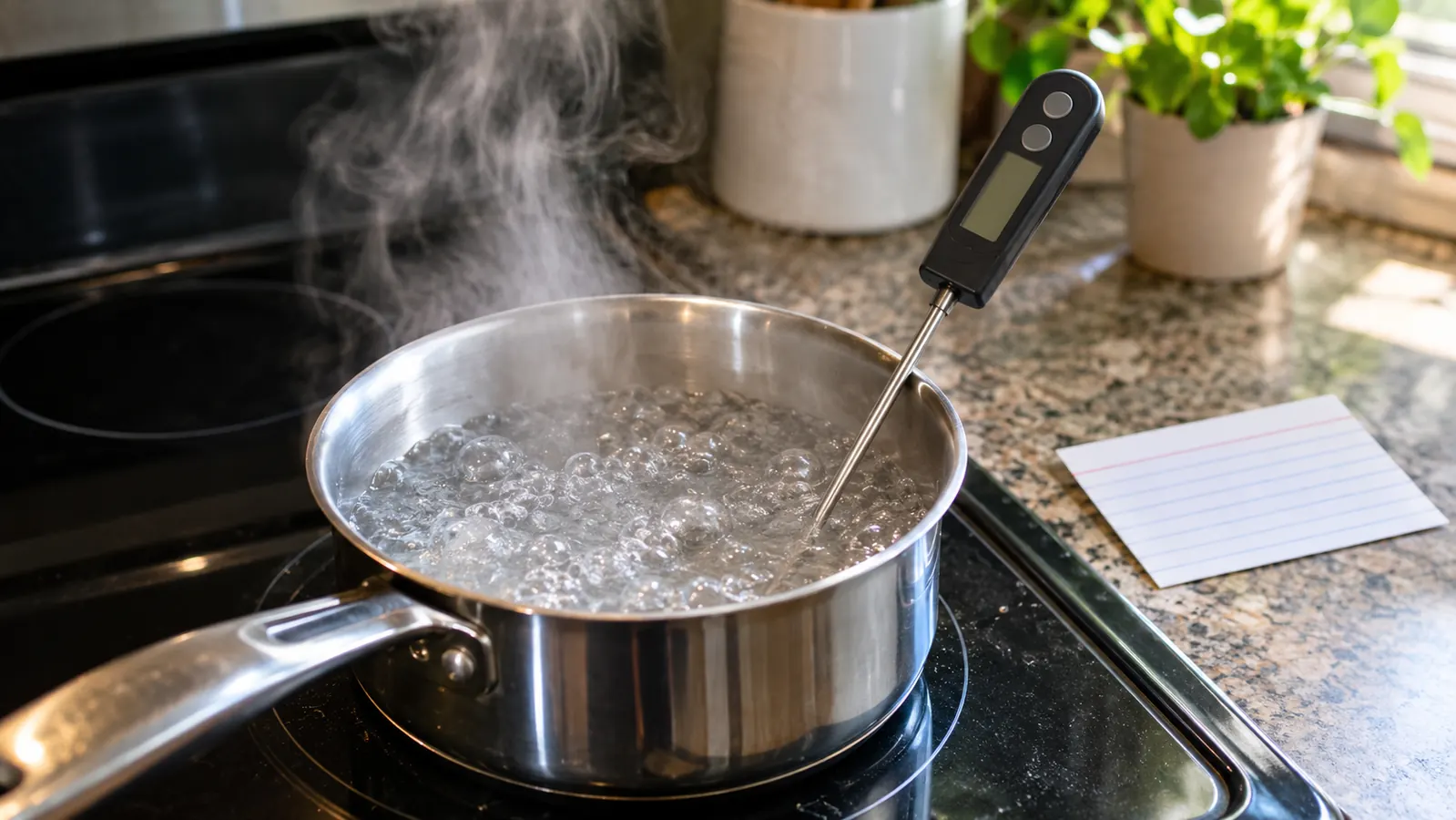
Here is the routine, and it is the reason I can say the TempPro reads true rather than merely fast. Fill a small saucepan with water and bring it to a rolling boil. Hold the probe in the water without letting it touch the bottom or the sides, both of which run hotter than the water and will lie to you. At my elevation the honest number is a shade under 210 Fahrenheit, which I looked up once and wrote on a card that lives in the drawer. If the reading is within a degree or two, you are fine. Then a glass of ice water, stirred and not just poured, which should read 32. One check at each end and you know whether the instrument is drifting or steady.
That card has 210 written on it in pencil, along with a note that ice water is 32, because I have reached the age where a number I do not use often is a number I do not remember. The whole business takes four minutes and I do it on the first Sunday of the month, before the grandkids arrive, while the kitchen is still quiet and the kettle is out anyway. Then the thermometer goes back in the drawer by the stove and I stop thinking about it until the next month. It is the cheapest insurance in the kitchen and it costs nothing but attention.
Most people never do this, and I understand why. The tool works, dinner works, nobody gets sick, so why bother. The reason is that a thermometer is the one thing in the kitchen you reach for precisely because you do not trust your eyes. If it lies to you quietly, you will cook to the wrong number for months and blame your oven, your pan, or the meat. One caution on the ThermoMonster: I have not run this check on the one I handled, so I can tell you how it feels in the hand and nothing at all about how true it reads. If you buy it, boil a pot of water the day it arrives. That advice costs nothing and it applies to every thermometer ever made.
The one I actually cook with, eight months in
One AAA battery, a screen that turns to face you, and a number that settles before you lift your eyes. It lives in the drawer by the stove and it comes out almost every night.
Amazon See the TempPro TP19H on Amazon →Who Should Buy Which
Buy the TempPro TP19H if you cook protein most nights and you are tired of guessing. The rotation matters, the speed matters, and the fact that it survives being dropped on laminate matters more than any spec sheet will tell you. It is also the one to buy if you are the sort of person who will actually boil a pot of water once a month to keep an instrument honest, because it rewards that habit. Ruth has watched me do this four times now and still calls it my science project, which is fair. It is also the reason the Sunday roast has not been overdone since spring.
Consider the ThermoMonster if drawer space is genuinely tight, if you want the plainest tool that will do the job, or if you are buying a thermometer for a camper, a boat, or a kitchen where it will get knocked around and you do not want to fuss over it. It is a reasonable tool and I would not talk you out of it. What I would tell you is this: whichever one you carry home, check it in boiling water before you trust it with a roast. Buy the one that fits how you actually cook, then spend four minutes a month making sure it is telling you the truth.
A last word on the thing nobody mentions in the listings. Both of these expect to be maintained, and maintenance here means a wipe, a dry, and a spot that is not the bottom of a drawer full of metal. My first slow dial thermometer died because the stem got bent against a skillet and I kept using it anyway for another year, which is how I ended up guessing at pork chops for twelve months. If you treat either of these the way you treat a cheap spatula, you will be buying another one before the year is out, and it will not be the tool's fault.
If you cook meat most nights, this is the one
The TempPro TP19H does one job and does it in about a second. Wipe the probe, check it in boiling water once a month, and it will outlast the drawer it lives in.
Amazon Check availability on Amazon →