
The pork loin that finally broke me was a Sunday dinner in February. I had cooked it to what my old dial thermometer called 145 degrees, rested it under foil, and sliced it in front of Ruth and two grandkids who had been promised roast pork. It was gray from edge to center. Ruth took one bite and said, with more kindness than the situation deserved, that she would need more gravy. I had been cooking dinner most nights for thirty-five years, and I still could not tell when a piece of meat was done.
The problem was not the oven. It was the thermometer. My old dial model took a slow reading, measured the outside of the meat more than the middle, and had to be left in while I guessed. By the time it settled, the roast had moved on. I bought the TempPro TempSwift TP19H in the first week of March, along with a few other pieces of gear I had been putting off replacing, and it has been in the drawer by the stove ever since. I paid for it myself. Nobody sent it to me to write about, and nobody asked me to say any of this.
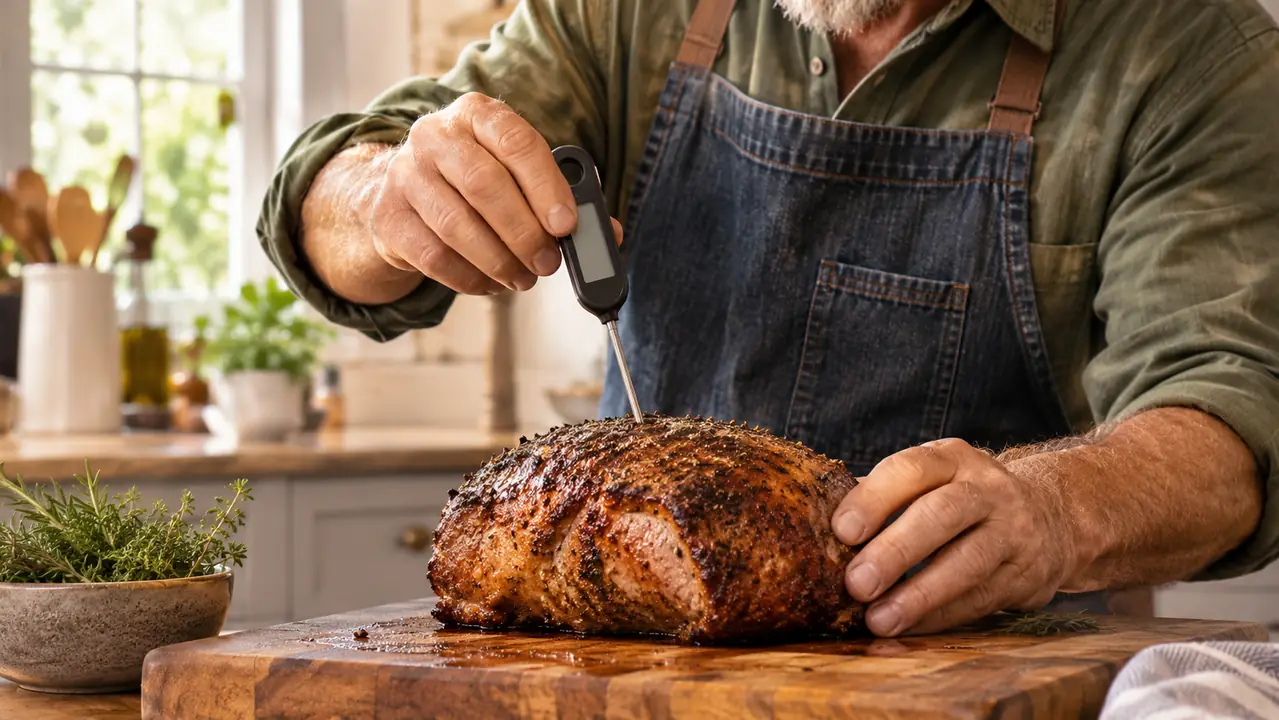
What I wanted was not a gadget. I wanted to stop guessing. The TP19H gives a reading in about a second, accurate to within 0.9 degrees Fahrenheit, and the display is two inches across and rotates 180 degrees so it faces me whether I am holding it right or left handed. That last part sounds small. It is not small when you are leaning over a hot oven with a roasting pan pulled halfway out and trying not to touch the rack.
The first thing I cooked with it was not a roast. It was chicken thighs on a Tuesday, the kind of dinner nobody photographs. I pushed the probe into the thickest part, waited a beat, and read 178 degrees. I had been aiming for 175. I pulled the pan, and for the first time in a long while the meat was juicy instead of chalky. That is the whole review, really. It told me the truth a minute before I would have guessed wrong.
Since then I have used it almost every night. I check bread for the Sunday loaf, oil before I fry, and the water when I am proofing yeast. The resolution is 0.1 degrees, which is finer than I need for a pork chop and exactly right for bread. The probe is 4.3 inches long, long enough to reach the center of a decent roast without me burning my knuckles. I also like that it is stainless steel. It looks like a tool, not a toy, and it has survived being dropped on the tile twice.
The difference is not that it reads fast. It is that I finally trust the number, so I stop opening the oven to check.
Stop Guessing at 145 Degrees
The TempPro TP19H gave me a reading I could act on in about a second. If your roast is still dry, the thermometer is the simplest fix in the kitchen.
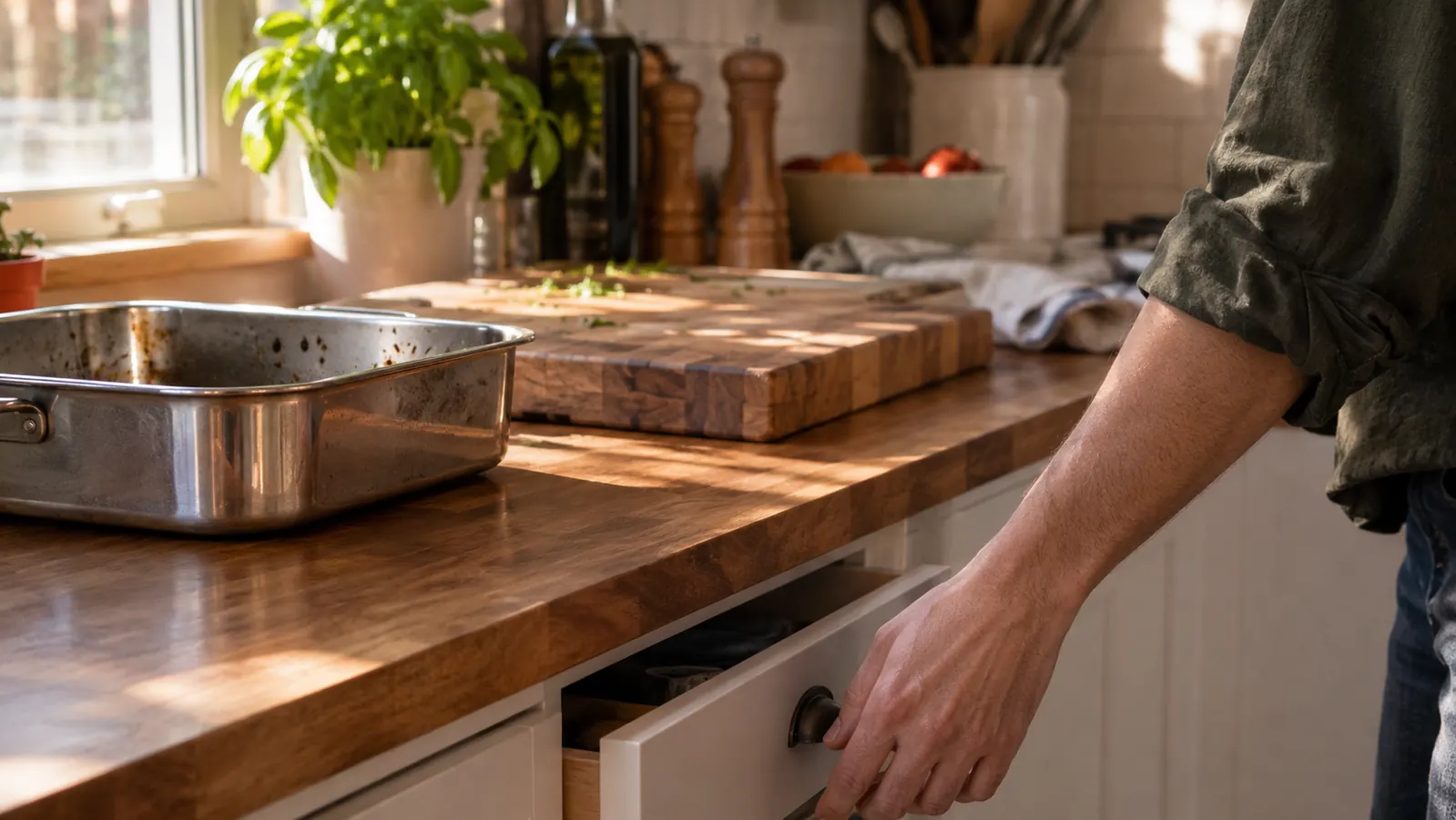
Amazon Check Today's Price on Amazon →I keep it in the drawer next to the knife, which is where I keep things I actually use. It runs on one AAA battery, included, and the listing says up to 3,000 hours. Mine is still on the first battery after eight months. It wakes when I pick it up and goes to sleep on its own, so there is no button dance before I can take a reading. I hand wash it and dry it right away. The instructions say hand wash only, and I believe them.
Once a month or so I check it in boiling water. It has stayed within a degree of where it should be, which is more than I can say for the old dial. I am not a professional cook and I have no lab in the kitchen. I taught high school chemistry for thirty-one years, so I do like a measurement that repeats. A thermometer that reads the same way twice is worth more than one with a long list of features.
What it is not: it is not a leave-in probe. It does not sit in the oven and tell you when dinner is ready. It is a hand tool, and if you want a unit that stays in the meat and sounds an alarm, this is not that. The display is backlit, which helps at 6 p.m. in January, but it is still a small screen, and you will need to hold it steady. And it is hand wash only, so if you are the sort who throws everything in the dishwasher, this will annoy you.
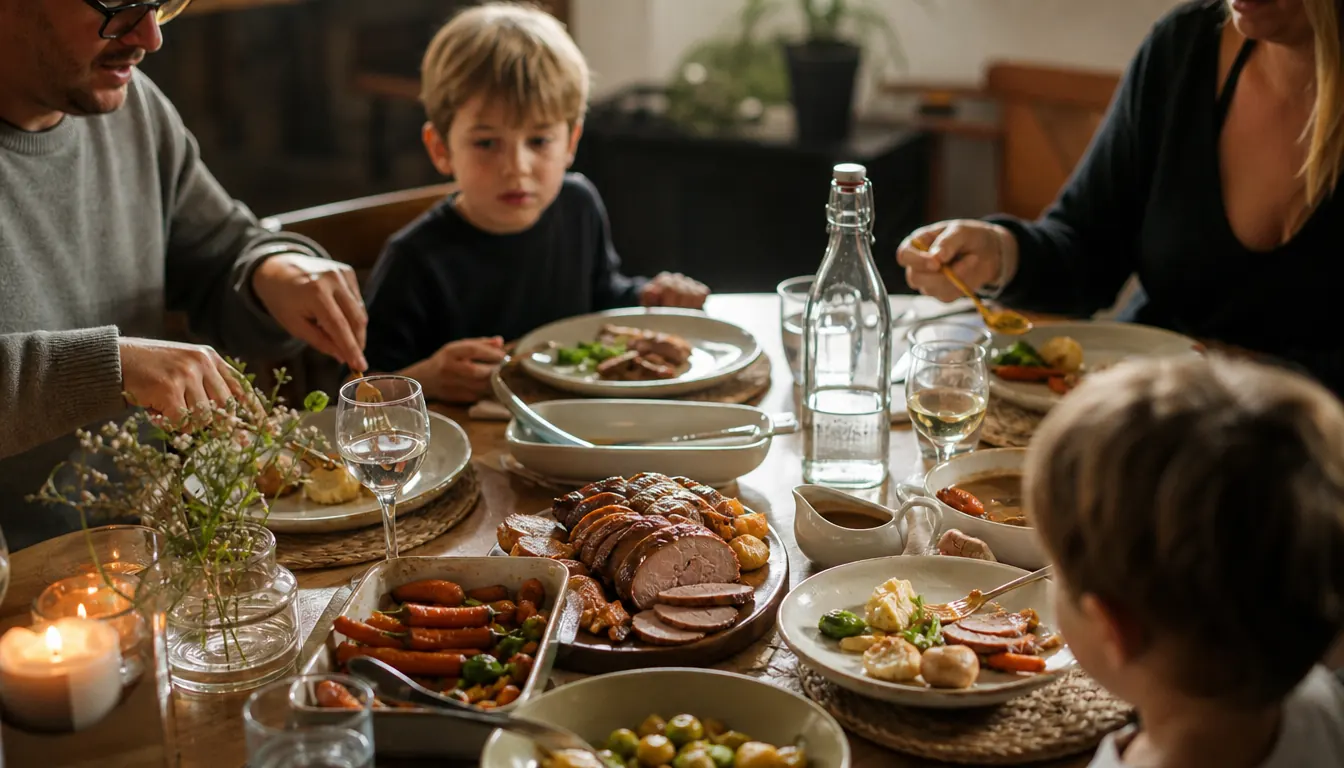
The first Sunday dinner I cooked with it was a pork loin again, the same cut that had embarrassed me in February. I pulled it at 140 degrees, let it rest, and sliced it while Ruth watched. It was faintly pink in the middle and juicy at the edge. Nobody asked for gravy. I am not going to pretend that a thermometer made me a better cook. It removed one way for me to get it wrong, which is most of what good gear does.
Ruth uses it now for her occasional baking. She does not cook much, and she has no patience for gear that needs explaining. She picked it up, pushed it into a loaf, read the number, and put it back. That is the highest compliment a kitchen tool can get in this house.
What I'd Tell You If We Were Sitting at My Kitchen Table
I would tell you that the thermometer is not the interesting part. The interesting part is what happens when you stop guessing. You stop opening the oven every four minutes. You stop cutting into a roast to see if it is done and letting the juice run out. You stop serving gray pork with an apology. The TP19H is a small thing, and it will not make you a better cook on its own. It will give you one honest number at the moment you need it, and that is enough to change how dinner goes. If you already have a thermometer you trust, keep it. If you have one of those slow dial numbers that lives in a drawer and lies to you, replace it. That is the whole advice.
The Roast You Don't Ruin Is the One You Check
Eight months in, the TempPro TP19H is still the first thing I reach for when the oven door opens. Start with one honest reading tonight.
Amazon Check Today's Price on Amazon →