
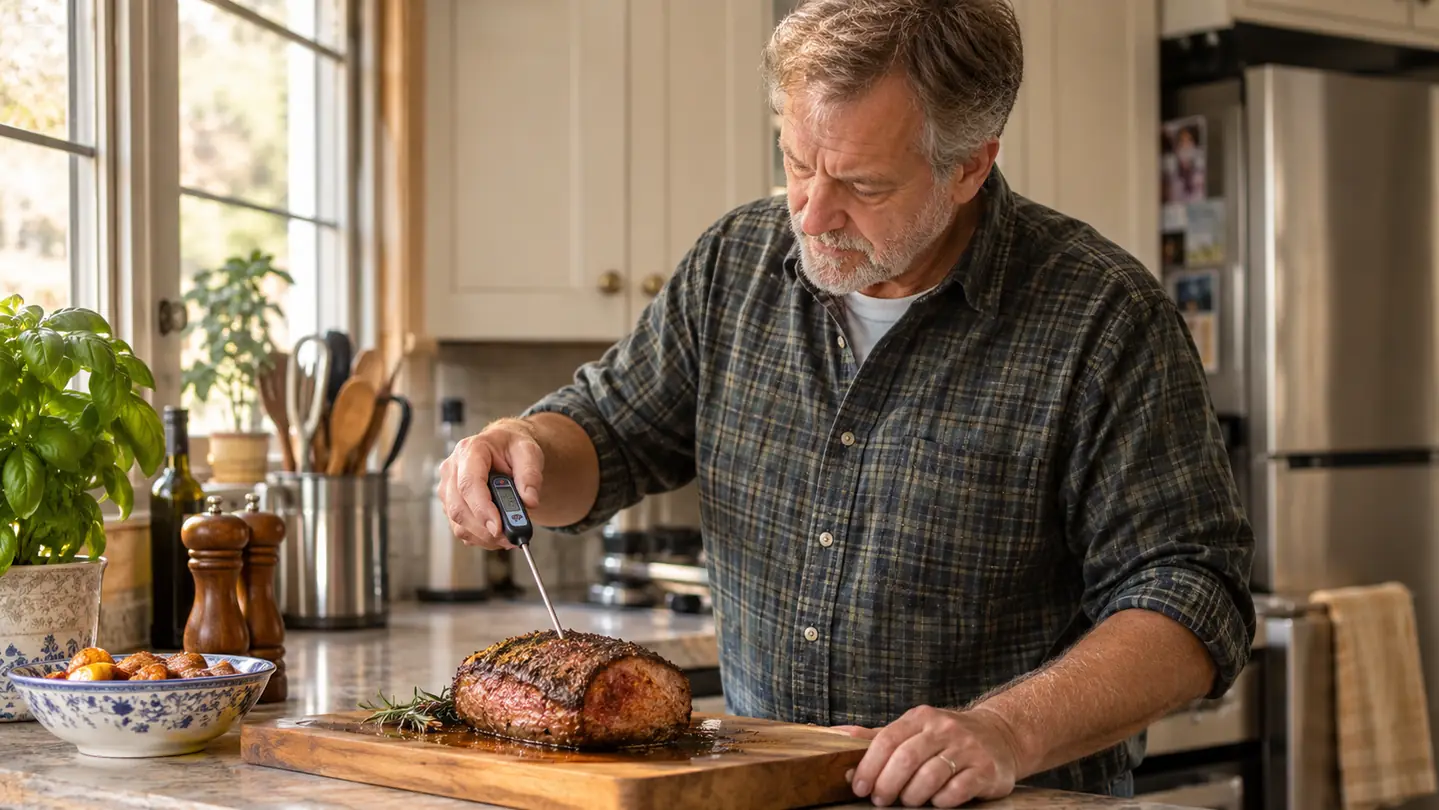
For thirty-five years I cooked dinner by feel. I pressed a pork chop with my index finger, compared the resistance to the base of my thumb, and guessed. Sometimes I was right. More often I was wrong, and we ate dry chicken while I explained that the oven runs hot. When I retired from teaching high school chemistry three years ago, I finally had time to be curious about what was actually happening in the pan. The answer was temperature. The tool that told me was a TempPro TempSwift TP19H I bought with my own money in the first week of March, and it has been picked up almost every night since.
Below are ten reasons it earned that spot in the drawer by the stove, written for anyone still cutting into the middle of a chicken breast and hoping. I am not a chef and I have never cooked for pay. I am a retired teacher with an electric glass-top range, about eight feet of laminate counter, and a wife named Ruth who will tell me the truth about dinner.
Guessing is not a technique. It is a coin flip.
The TempSwift TP19H reads in about a second and has a 2.0-inch display that turns to face you. Mine has been in the drawer next to the knife since March, and I have not cooked a piece of meat without it.
Amazon Check Today's Price on Amazon →You get a number in about a second, so the pan never waits
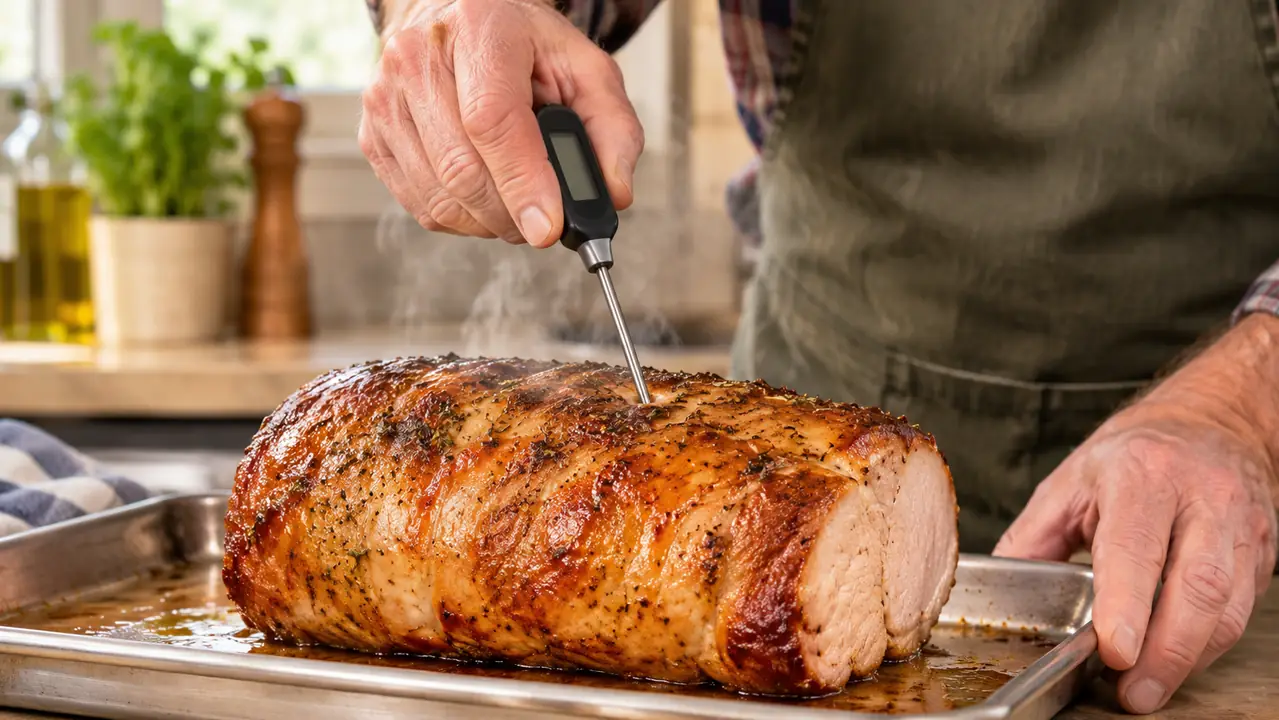
The listing says one second and the readings back it up. I push the probe into the thickest part, count to one, and read the screen. Speed matters more than it sounds, because a chicken breast in a hot skillet is gaining heat the whole time you stand there holding a slow thermometer. Check early, act on what you see, and pull the pan while there is still room to correct. The stated accuracy is plus or minus 0.9 degrees Fahrenheit, which is finer than any decision I actually make.
The 2.0-inch display rotates 180 degrees to face you
Most thermometers make you lean over the pan and read sideways. This one has a large backlit display that auto-rotates, so whether I am holding it at an angle over a skillet or standing at the cutting board, the number turns toward me. The backlight matters in an ordinary kitchen too. My counter lighting is one fixture over the sink, and by six in the evening in winter the pan is bright while the thermometer is not.
0.1 degree resolution lets you watch a loaf finish
Bread is where the resolution earns its keep. A loaf moves from 190 to 205 degrees quickly, and the difference between underbaked and right lives in that gap. Seeing the number in tenths of a degree means I can pull it at 203 instead of opening the oven door three times to guess. Same for a thick pork loin, where I want to catch it near 140 and let carryover carry it the rest of the way. A needle dial cannot show you movement that small.
4.3 inches of probe gets past the surface and away from bone
A short probe reads the outside of the roast, not the middle, which is how people end up with a perfect number on an underdone chicken. This probe reaches the center of a thick roast or a whole bird from the side, and it stays clear of bone, which reads hot and lies to you. That was the most common mistake I made for years. A longer probe fixed it more completely than any technique I picked up afterward.
It reads up to 300 Celsius, so oil and bread are both covered
300 Celsius is 572 Fahrenheit, far above anything I do on purpose. It means the thermometer is comfortable reading frying oil at 350, sugar work, and a loaf of bread at 200 without me worrying about the top end of its range. I check the oil before the first piece of chicken goes in, and I no longer judge it by dropping in a crumb and watching. The crumb test still works. It is just a story I tell myself instead of a measurement.
It wakes when you pick it up and sleeps when you set it down
There is no button to hold and no sequence to remember. Lift it and it is on. Set it down and after a while it sleeps. The battery is one AAA, included, and the listing claims up to 3,000 hours from it. I have not changed mine since March, which tells you roughly how much of that claim I have tested. It is a small thing that matters every night, because a tool that takes two steps to wake up gets left in the drawer.
NSF certification is a food safety claim, not a marketing one
Poultry at 165 degrees is not an opinion, and the difference between 160 and 165 is the difference between dinner and a bad night. This thermometer is NSF certified, which means an outside body looked at the accuracy rather than the company grading its own homework. For a home cook that is worth something specific. When I tell Ruth the chicken is done, I am not guessing and I am not relying on my thumb. I am reading a number somebody else checked.
Stainless body, hand wash, and the listing says oven safe
The body is food grade stainless steel, the probe is stainless too, and the care instructions say hand wash only. I wash it under warm water, dry it on a towel, and put it back in the drawer, which takes about eight seconds. The listing also says oven safe, and I will be honest that I still pull mine out before I close the oven door. Habits from twenty years of cheap thermometers die hard, and I would rather keep this one working.
It settled a twenty-year argument I was having with a dial
My old dial thermometer lived in the drawer and read whatever it felt like. I finally tested both in a rolling boil. At our elevation water boils near 209 degrees, not 212, and the dial read 201. The TempPro read 209. That is an eight-degree lie I had been trusting on pork chops for years. The dial is in the junk drawer now. I check the new one in boiling water every month or so, and it has not drifted yet.
It turns a good dinner into one you can repeat
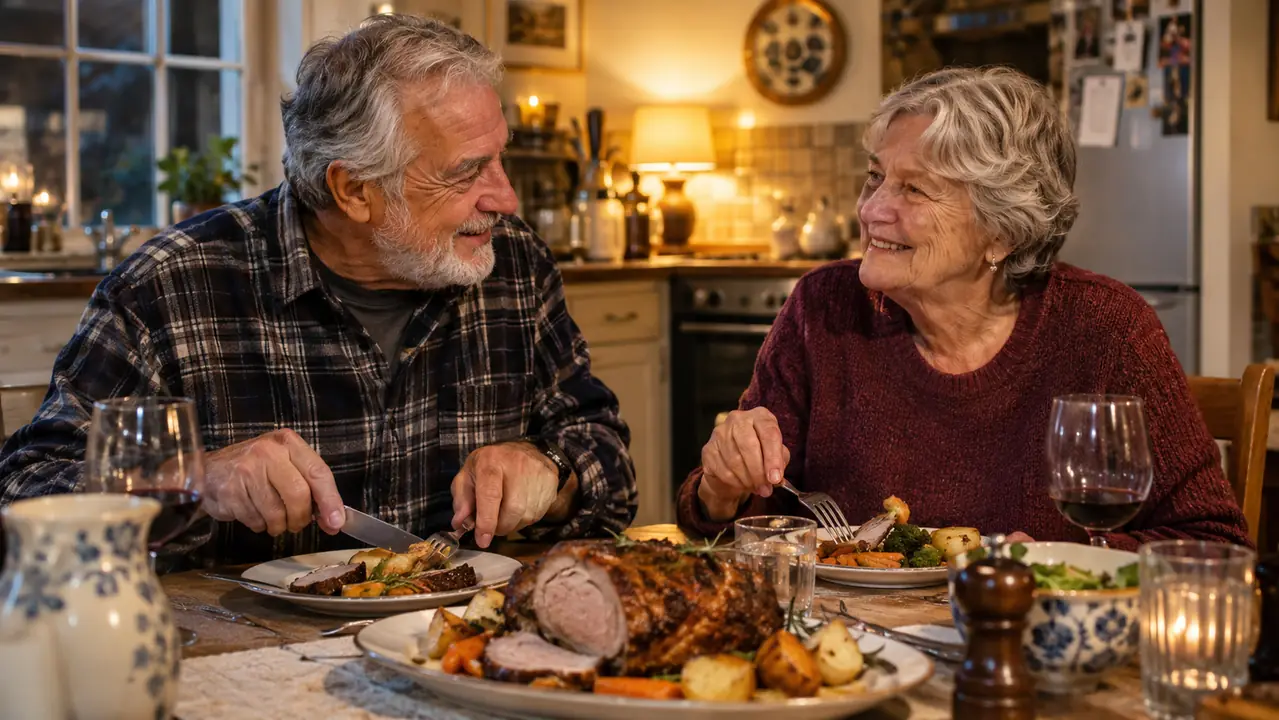
I keep a small notebook of temperatures that worked. Pork loin pulled at 142, bread at 203, chicken thighs at 175 for the texture Ruth prefers. Those notes are worthless without a thermometer that reads the same way every time. Now Sunday dinner with the grandkids is not a performance I hope goes well. It is a set of numbers I already know. That is the whole return on a small tool, and it is why this one is the first thing I reach for.
What I'd Skip
Not everything sold alongside a thermometer is worth owning. I would skip the doneness charts printed on oven mitts and fridge magnets, because they describe someone else's pan, someone else's cut thickness and someone else's oven. I would skip the pop-up thermometer pushed into a supermarket turkey, since it fires late and only once. I would skip infrared surface thermometers for meat, because they read the surface of a grill or a pan, not the middle of your roast, and I have watched a friend measure the outside of a steak with enormous confidence. And I would skip anything that needs a phone to tell me a number when I am standing three feet from the pan.
The dial read 201 degrees in a rolling boil. At our elevation water boils near 209. The TempPro read 209, and that eight-degree gap was the entire reason my pork chops were dry.
One small tool, and the guessing stops tonight
I bought mine in March, I own exactly one, and it lives in the drawer by the stove. If you are still pressing meat with a finger and hoping, this is the smallest change in the kitchen with the largest effect on dinner.
Amazon Check Today's Price on Amazon →