
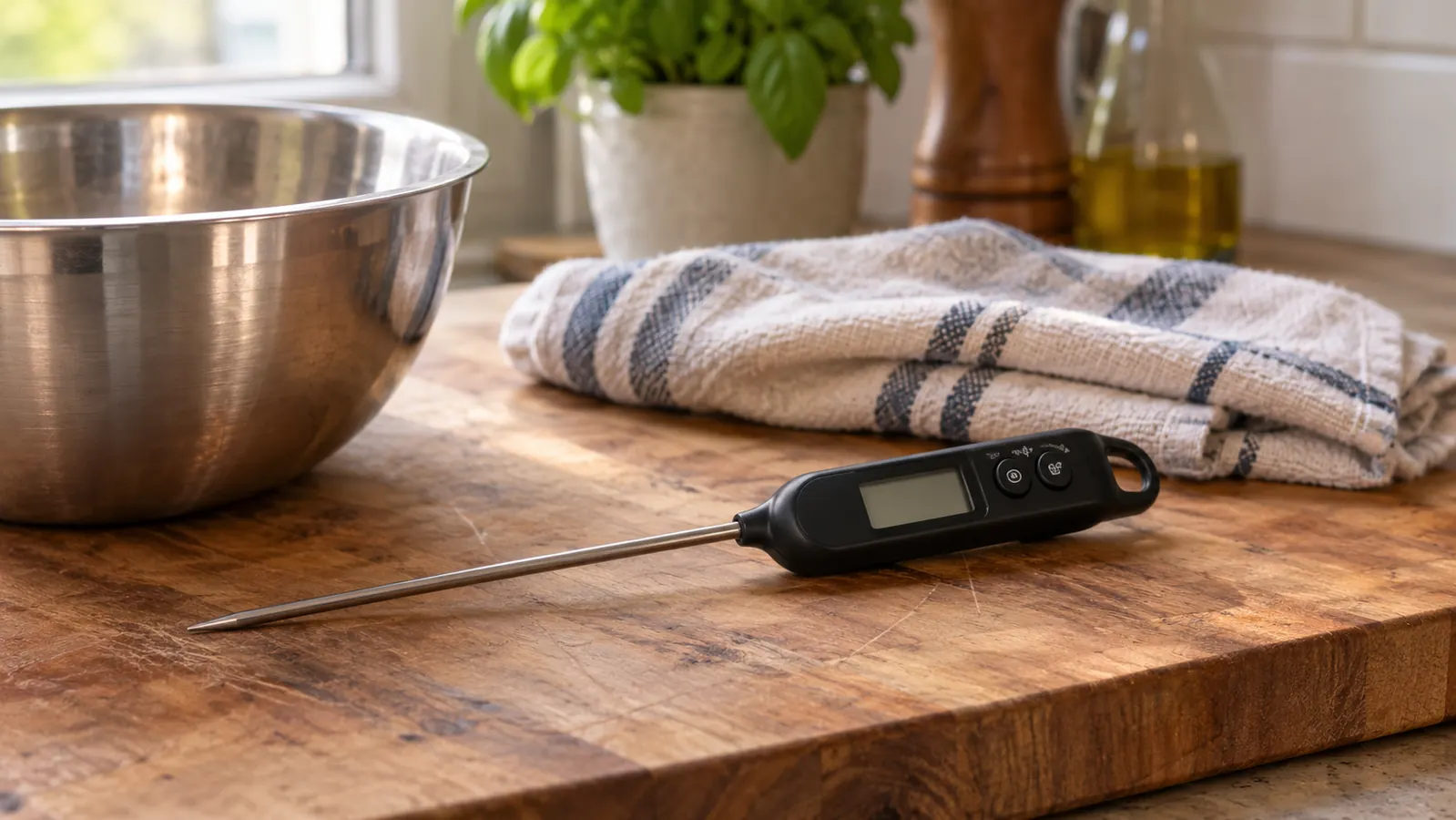
Ruth gave me a dial thermometer for my birthday sometime in the late nineties. It had a face about the size of a quarter and a needle that moved the way a tired man climbs a staircase. I used it for close to thirty years. I want to be honest about why, because the reason was not loyalty. It never technically failed. It was always just slow enough and just vague enough that I could finish cooking without ever having to find out whether it was right.
In the first week of March I replaced five worn-out pieces of kitchen gear in one go, with my own money, after three years of retirement and a lot of reading about technique. The TempPro TP19H instant-read thermometer was the purchase I expected to think about least. It takes up less room than the stand mixer, does exactly one job, and asks nothing of me but a dry drawer. Eight months later it has changed my weeknight cooking more than anything else I bought that week. That surprised me, and I have had eight months to get used to it.
The Quick Verdict
Reads in about a second, still agrees with my boiling water check after eight months, and quietly fixed the part of my cooking I was worst at. Hand wash only, and no way to leave it in the oven and watch from across the kitchen.
Amazon Check Today's Price →The end of opening the oven to poke at things
One second to a number I trust, accuracy of ±0.9°F, and a display I can read from whatever angle the oven door leaves me. It is the most-used item in my kitchen drawer and the plainest thing I own.
Amazon Check Today's Price on Amazon →How I've Used It
It lives in the drawer to the right of the stove, next to the Victorinox chef's knife. I reach for it almost every night, and I have reached for it almost every night since the first week of March. Chicken breasts on a Tuesday, a pork loin on Sunday when the grandkids are coming, bread most weekends, and oil whenever I fry, which is less often than I would like and more often than my doctor would. The old dial thermometer sits in the junk drawer now, which is where it belongs and where I will probably find it in ten years and feel a small pang of misplaced loyalty.
What replaced it does the job in about a second. That sounds like a minor improvement until you have stood in front of an open oven with the door down, one hand in an oven mitt, the other wrist near the top rack, waiting for a needle to climb to a number you are not sure you believe. The oven loses heat while you wait. You lose your patience. And because the wait is annoying, you stop checking as often as you should, which is exactly how a pork loin goes from 143°F to 152°F while you are not looking.
The first thing I did with it, because I am who I am, was check it in boiling water. Asheville sits a little above 2,100 feet, so water boils a couple of degrees below 212°F here. I boiled a pot, took a reading, wrote the number on a scrap of paper, and taped it inside a cabinet door. I have repeated that check every couple of months since. It has not drifted. That is not proof of anything and I do not need it to be. It is the same check I ran on lab thermometers for thirty-one years, and it is why I now trust a number instead of tolerating one.
Ruth does not cook much, but she is the honest taste tester in this house and she has an opinion about the thermometer, which is that it is easier to read than the old one ever was. Coming from a woman who has never once cared how a piece of equipment works, that counts for something.
What the Numbers Actually Mean
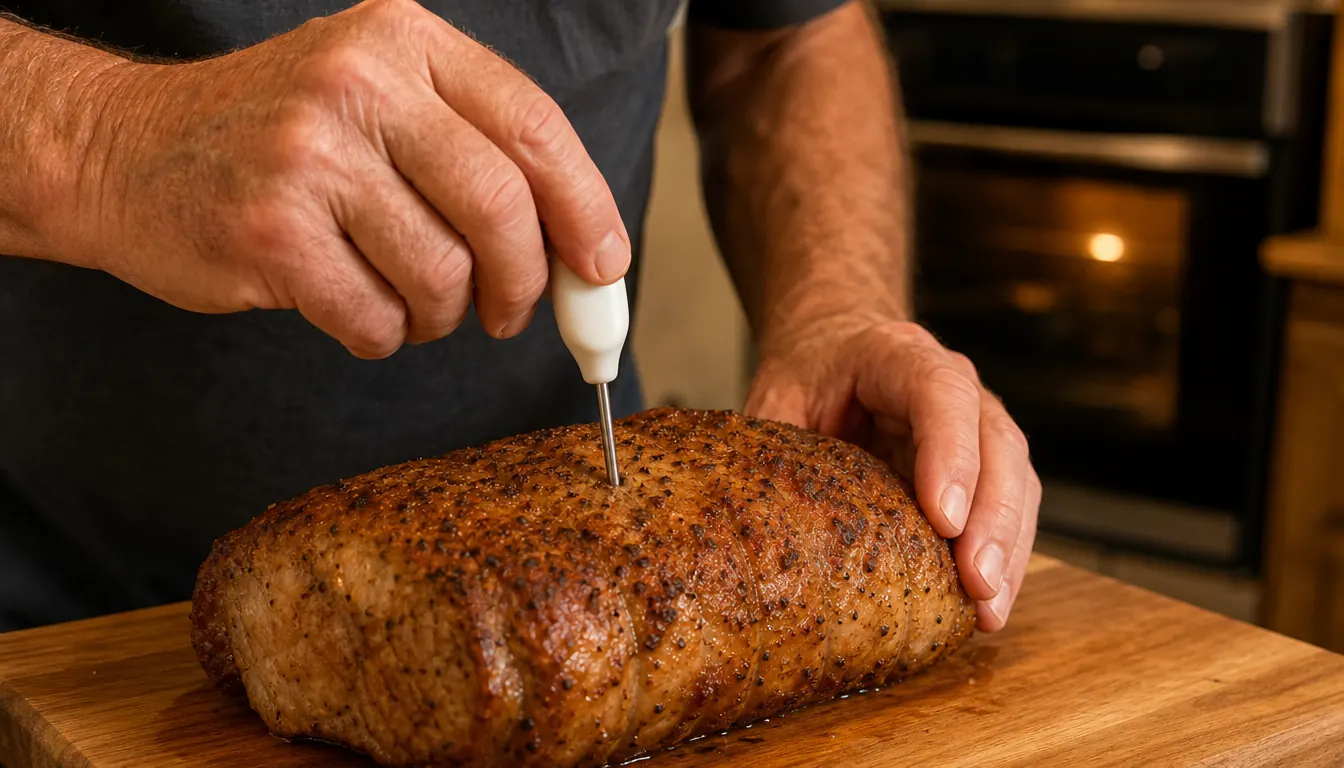
The TempPro listing gives an accuracy of ±0.9°F and a resolution of one tenth of a degree. Those are two different things and the difference is worth thirty seconds of your time. Resolution is how finely the display slices the number. Accuracy is how close that number is to the truth. A thermometer can show you 143.6°F with enormous confidence and still be nearly a degree off. In a kitchen, neither of those is the figure that matters most. What matters is repeatability: put the stem in the same spot twice in a row and get the same answer. Mine does, and after eight months it still does.
A reading that takes about a second is not a luxury. Carryover cooking is real. A roast pulled at 145°F will coast up several degrees on the counter, and the difference between pulling it at 143°F and pulling it at 149°F is the difference between Sunday dinner and a lesson. You cannot manage a two-minute window with a thirty-second instrument. You can with this one.
There is a second effect, and it is the one I did not anticipate. When checking is easy, you check more. I probe a chicken breast in three places now instead of one, because three placements cost me three seconds. That alone has done more for my cooking than any technique I have read about since I retired.
The range runs to 300°C, which is 572°F, far past anything I do on purpose in a home kitchen. The immersion depth is 4.3 inches, and that spec matters more than people realize. If you push the stem in half an inch you are reading the surface of the meat, which is always hotter than the middle, and you will pull a roast out early and wonder why it is raw near the bone. Four point three inches of stem is plenty for a pork loin and plenty for a pot of oil. It is more stem than I need for a hamburger patty, and I have learned to go in from the side on anything thin.
Power is one AAA battery, included, rated for up to 3,000 hours. It wakes when I pick it up. It goes to sleep if I set it down and wander off, which I do more often than I would admit. The whole thing weighs 77 grams, so it does not drag a shirt pocket down and it does not feel like something I have to be careful with. In eight months I have not changed the battery. It is also NSF certified, which I noticed after I bought it and which I would now look for on purpose.
The Display, Which I Did Not Expect to Care About
The screen is 2.0 inches, backlit, and it rotates 180 degrees so the number is always right side up no matter how I am holding the thing. I assumed that was a feature for people who like features. It is not. When the stem is buried in a roast on the cutting board and I am standing at the counter, the display is aimed at my chest and I have to lean over it. When it is in a pot of oil, I am holding it out at arm's length. The rotation means I read the number the first time, every time, instead of tilting my head like a confused dog.
The backlight earns its keep from about mid-November to March, when it is dark at five in the afternoon and the kitchen light is behind me rather than over the counter. It is a small thing, and it is also the kind of small thing that decides whether you bother checking. It dims out quickly on its own, which protects the battery and mildly annoys me at the exact moment I want a second look.
Bread and Oil, Where It Earned Its Keep
I bought this for meat. It has been more useful for bread. Dough that finishes mixing at 78°F behaves differently from dough that finishes at 84°F, and until this year I had no idea which one I was making. Now I take the temperature of the water before it goes into the bowl and adjust from there, and I take the dough's temperature after the first mix. My Sunday loaves have been more consistent since March than they were in the three years before it, and I am not going to pretend that is all technique.
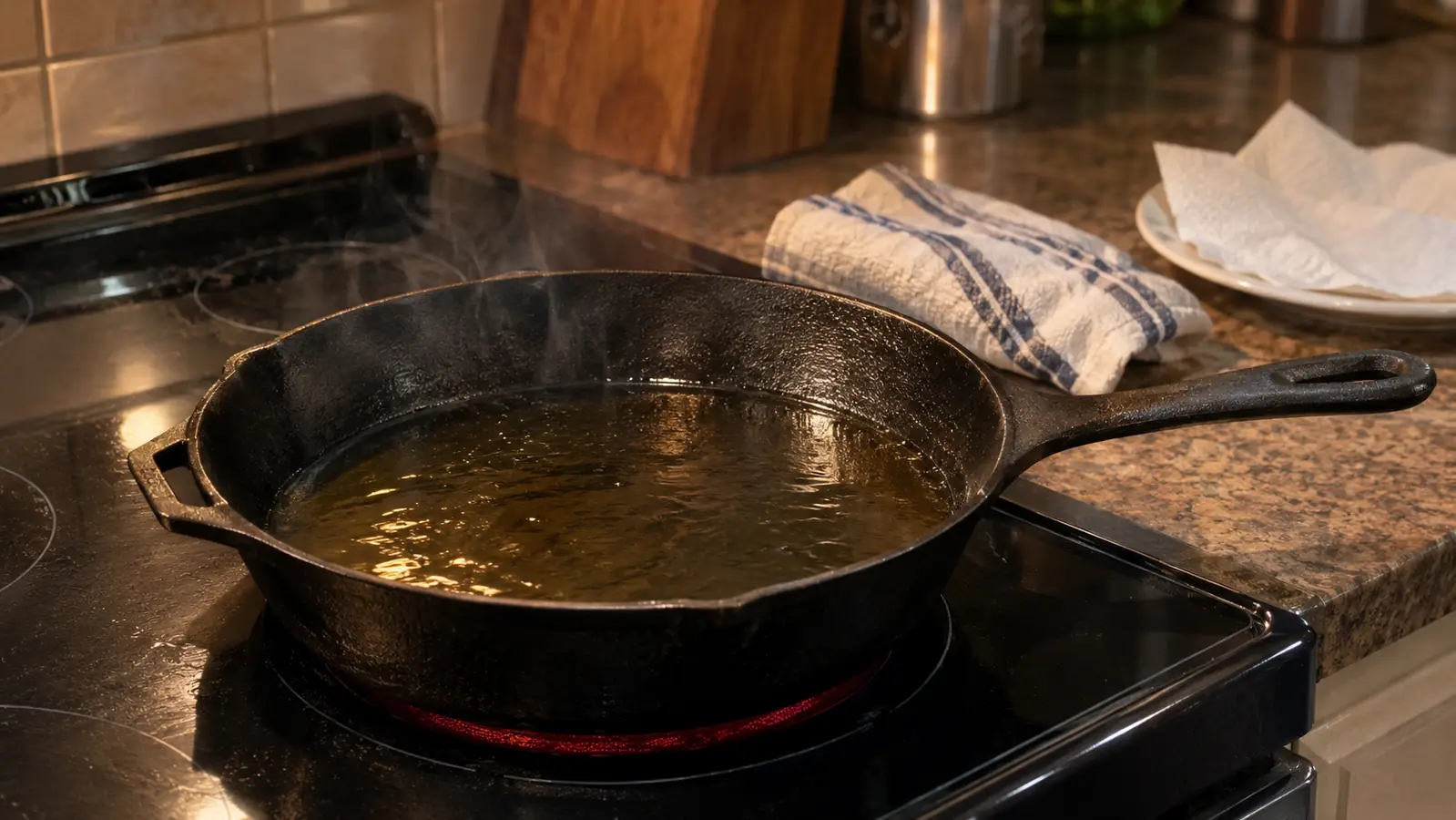
Oil is the other case. Frying wants somewhere between 350°F and 375°F, and the gap between those two numbers is the gap between crisp and greasy. A dial thermometer takes long enough that the oil has moved on by the time you read it. This one gives me a number before my hand gets tired. The upper end of 300°C means I am nowhere near the ceiling of what it can do, which is the way I prefer to run most equipment.
Where It Fumbled
The care instructions say hand wash only, and I hand wash it, right after use, the same way I treat the chef's knife. It takes about ten seconds and it has not harmed my life. But if you are the sort of person who puts everything in the dishwasher and hopes, understand that this is not that item. A thermometer is an instrument with a seal in it, not a spoon.
It also demands technique, and for the first month I blamed the tool for my own mistakes. Push it in too shallow and you read the surface. Hit a bone and you read the bone. Once I stopped stabbing and started placing, the numbers got boring, which is the highest compliment I can pay a measuring device.
And it is not a leave-in probe. If you want something that sits in the oven and reports to your phone while you set the table, this is the wrong purchase for that job, and no amount of liking it will change the fact.
What I Liked
- Reads in about a second, so I check three spots instead of one
- Held its accuracy across eight months of nightly use and six boiling water checks
- The 2.0 inch backlit display rotates, so the number reads correctly over a hot pan or a low cutting board
- A 4.3 inch immersion depth reaches the center of a pork loin and goes deep enough for a pot of oil
- Wakes when picked up and is still on the original AAA battery after eight months
Where It Falls Short
- Hand wash only, no dishwasher
- Not a leave-in probe, so it cannot watch a roast while you do something else
- Thin cuts like burger patties are awkward because the stem wants more depth than the meat has
- It rewards good placement, and a careless angle gives you a number you should not trust
Eight months in, my boiling water check still lands on the number I taped inside the cabinet door in March.
What I Would Tell You About the Alternatives
I own exactly one thermometer, this one. The other things people recommend, the leave-in probes and the models that talk to your phone, are tools with a different job, and I have read enough listings to understand why they exist. An instant-read answers the question is this done right now. A leave-in probe answers the question tell me when it gets there. For weeknight cooking, which is most of my cooking, the first question comes up far more often. It also happens to carry a 4.7 average across more than 56,000 ratings on Amazon, which is the kind of number that usually means a product is fine and unremarkable. This one is fine and slightly better than unremarkable.
I should say plainly that I bought the TempPro myself, at full price, in that first week of March, and nobody sent me one to write about. That matters less than it used to, I know. It matters to me. The reason I keep reaching for it is not that I have something invested in defending the purchase. It is that eight months in, it still answers a question I ask five times a night, and it answers it before my hand gets tired. A tool that removes friction from a good habit is worth more than a tool that adds a feature to a bad one, and that is the whole of my thinking on the subject.
Who This Is For
You cook meat more than a couple of times a week and you are still cutting into it to see. You bake bread and you have never once measured the temperature of your water. You fry in a skillet and you have been guessing at the oil. Or you own a dial thermometer that you silently stopped believing around 2011. Any of those and this is an easy yes, because the entire benefit is that checking becomes cheaper than not checking. I am sixty-three, I taught chemistry for thirty-one years, and I still needed a tool to make me honest about doneness. There is no shame in that.
Who Should Skip It
If you want a probe that stays in the oven and talks to your phone, this is not it, and it never will be. If you cook a roast twice a month and you are happy with the results, keep what you have and spend the money on better meat. If you will not hand wash a small item, buy something you can abuse and accept that it will be slower and vaguer. And if you want one device that does everything, understand that this one does a single job well, which is a different kind of value than a drawer full of compromises.
One second, one honest number, and a lot fewer cuts into the middle of the roast
The TempPro TP19H has been in the drawer by the stove since March. It is the simplest thing I bought this year, and the one I would replace first if it broke.
Amazon Check Today's Price on Amazon →