
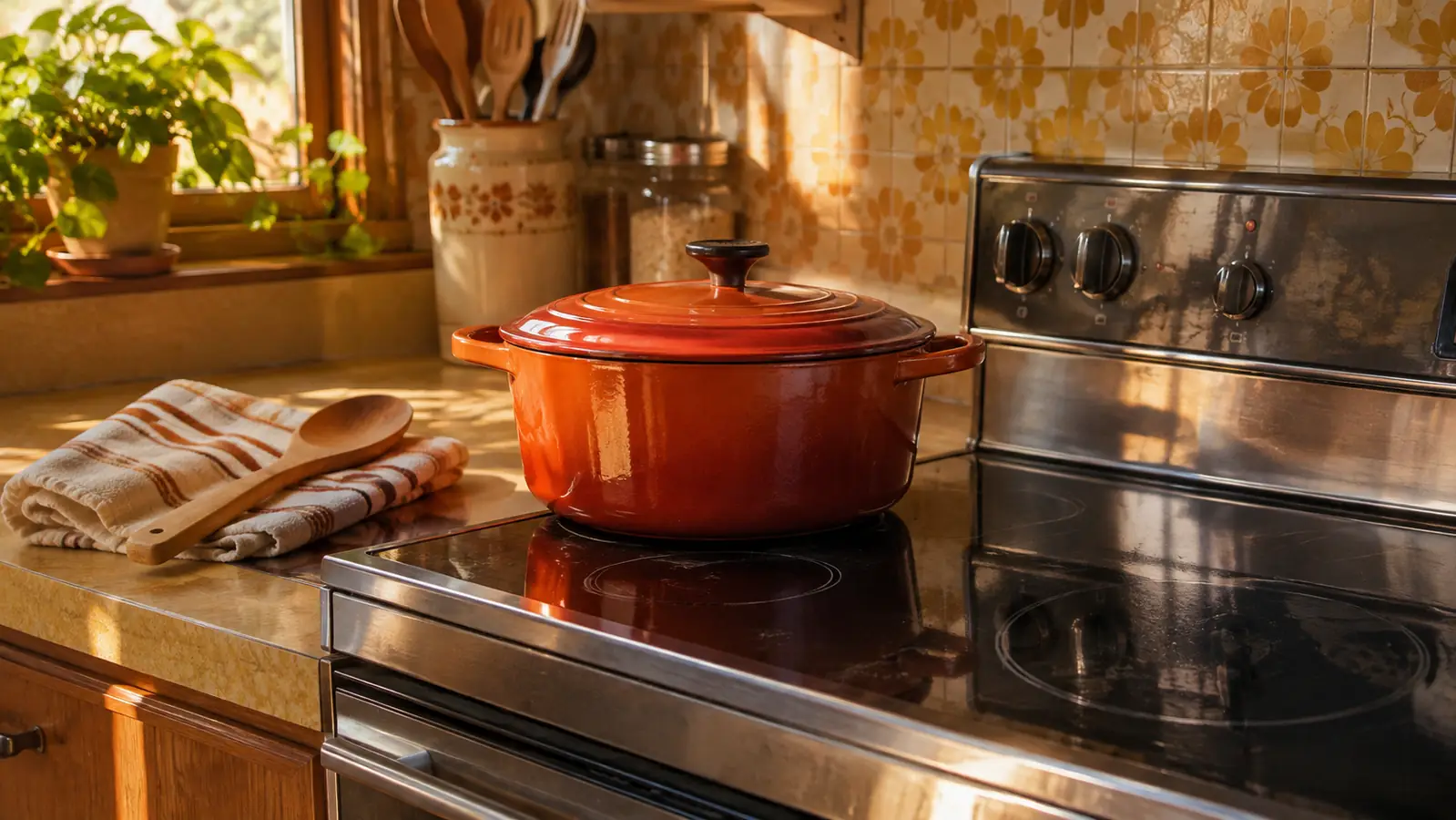
Two round enameled cast iron pots, both sold as the last Dutch oven you will ever need. I own the Lodge Essential Enamel 6 quart. It has sat on the back left burner of my electric glass-top range two or three times a week since the first week of March, plus every Sunday dinner when the grandkids come, and it carries a small chip on the outer rim to prove it gets used hard. I do not own the Cuisinart Chef's Classic, and I am not going to write as if I do. What I have is its listing, the numbers sitting next to mine, and eight months of paying close attention to how enamel behaves on a home stove. That turns out to be enough to tell you where the paper beats the pot.
The short answer first. If you want one pot, one size, a heat ceiling printed where you can read it, and you are willing to lift 13.5 pounds with both hands, the Lodge is the one I would buy again tomorrow. If you are outfitting a first kitchen, cooking for two, or working with burners that a wide pot swallows whole, the Cuisinart Chef's Classic is a fair way in and I will not talk you out of it. Everything after this is the reasoning, including the parts where the Cuisinart wins and I say so plainly.
| Lodge Essential Enamel 6 qt | Cuisinart Chef's Classic | |
|---|---|---|
| Capacity | 6 quarts, round, 13.25 inches wide by 6 inches tall | Sold as a family of sizes and shapes, so you size it to your household |
| Oven ceiling | Listed oven safe to 500 F | Rated for oven use, but the ceiling is printed per model, so read the one you pick |
| Weight | 13.5 pounds empty | Cast iron as well, so plan on two hands and a trivet |
| Surface | Enamel over cast iron, no seasoning, deglazes, takes tomatoes | Enamel over cast iron, same advantages |
| Upkeep | Hand wash only per the listing | Hand wash in practice for any enamel, whatever the label says |
| Track record | 4.7 stars across more than 39,000 ratings | A long-running line with a large review base of its own |
| Cost of entry | The buy-it-once option | Less to walk out of the store with |
What Both Pots Actually Are
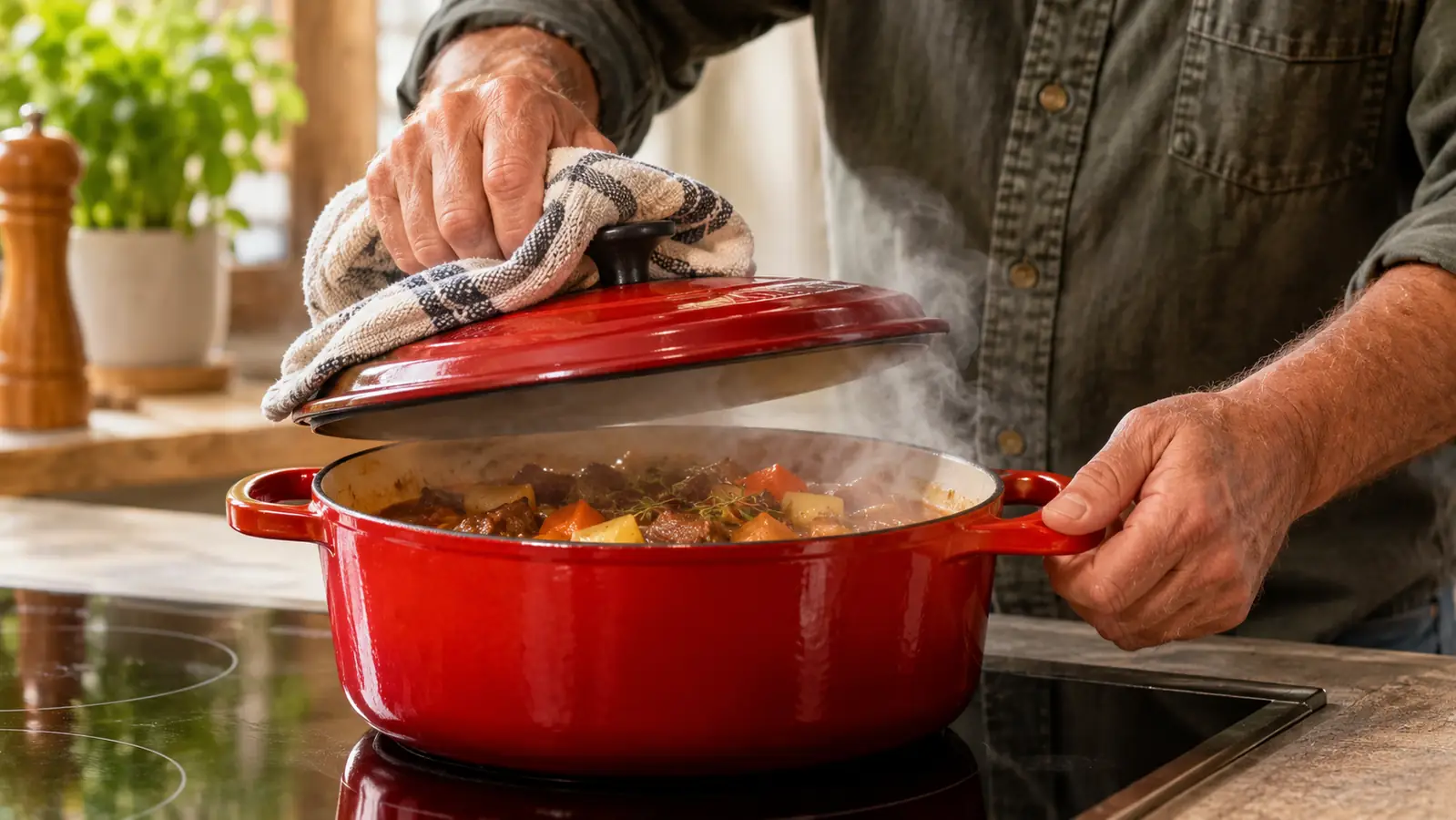
Both are enameled cast iron, which means a cast iron body coated in a glass-based enamel. You get iron's heat retention without the seasoning ritual. Neither pot needs to be seasoned, and neither one wants to meet a dishwasher no matter what the label suggests. You heat them gradually, you cook, you let them come down in temperature, and you do not hit hot enamel with cold water. That last rule belongs to every brand on the shelf, including the French names people say in hushed voices. It is the single most useful thing in this article and it costs nothing to follow. The reason is simple enough for a chemistry teacher to explain. Cast iron and enamel expand at different rates when they heat, and they contract at different rates when they cool. A fast change puts stress on the bond between them, and a crack or a chip is the bond letting go. So I put the pot on medium and let it come up over five or six minutes while I chop an onion. And I never set a hot pot in the sink. It goes on a dry trivet or a folded towel first, and the water comes later, after I have eaten.
The Lodge's numbers come straight from its listing: 6 quarts, round, 13.25 inches wide by 6 inches tall, 13.5 pounds, enameled finish, stovetop compatible, oven safe to 500 F, hand wash only, and a manufacturer warranty. That is a wide, moderately shallow pot, which is exactly what you want for braising. More exposed surface means more room to brown meat in batches and faster reduction when the lid comes off. In eight months I have not once wished it were deeper or narrower.
The Cuisinart Chef's Classic is also enameled cast iron, and it is sold as a family of sizes rather than a single pot, with different numbers printed on each listing. That is not a flaw. It is a difference in how the two companies sell. Lodge hands you one pot and one clear spec sheet. Cuisinart hands you a menu and trusts you to read the right line. If you already know what size you want, the menu is a feature. If you do not, it is one more decision standing between you and dinner.
The Part Nobody Puts in a Comparison Chart
13.5 pounds empty. Add a three pound chuck roast, two onions and a quart of stock and you are moving something near twenty pounds from the stove to the oven and back again. I take it with both hands on both handles and my forearms file a complaint. Ruth will not lift it full and I do not ask her to. If you have wrist, elbow or shoulder trouble, this single number matters more than every other difference between these two pots, and it is the one that almost never appears in a comparison table. The first Sunday in April I made that mistake in front of an audience. I had the pot going on the stove, the oven door open and two grandchildren at the table, and I tried to move it one-handed with a towel. I got about a foot before I set it down hard on the counter and said a word a retired teacher should not say. Nothing broke. But I have used two hands and both handles since, and I slide a folded towel under it on the counter so it does not scratch the laminate. That is the whole technique. Respect the weight and the pot lasts.
My range is an electric glass top, which is not the surface cast iron was designed around. The listing says stovetop compatible. It does not say glass top approved, and I am not going to put words in Lodge's mouth. Here is what I actually do. Medium heat, never high. I lift the pot to move it rather than sliding it, every single time, even when I am in a hurry. Eight months in, the glass is unmarked. The one chip on the outer rim came from my own clumsiness at the kitchen faucet in the first month, not from the stove, and the cooking surface is untouched.
The right pot is the one you will still be willing to lift in ten years. Mine weighs 13.5 pounds before the roast goes in.
Braising, Soup, and a Loaf of Bread
Where an enameled pot earns its shelf space is the long cook. Chuck roast, onions, a spoon of tomato paste, stock, three hours at 325 F with the lid on and forty minutes with it off. The iron holds temperature through the small swings my oven makes, which is a real advantage over the thin stainless stockpot this replaced. That stockpot scorched a braise badly enough that I threw out the bottom layer, and that was the week I stopped pretending it was fine. The enamel also lets me deglaze with wine without stripping a seasoned surface, and I can cook a tomato sauce in it without the metallic note bare iron gives you. The first braise I made in it was a lesson in restraint. I had come off a thin pot that lost heat every time I opened the lid, so I cranked the burner to high to compensate. The flour I had dredged the roast in caught and went bitter on the bottom in the first ten minutes. I have made the same roast six or seven times since at medium, with the flour knocked off and the heat given time to recover between batches, and the difference is not subtle. Brown, not black. That is the whole rule.
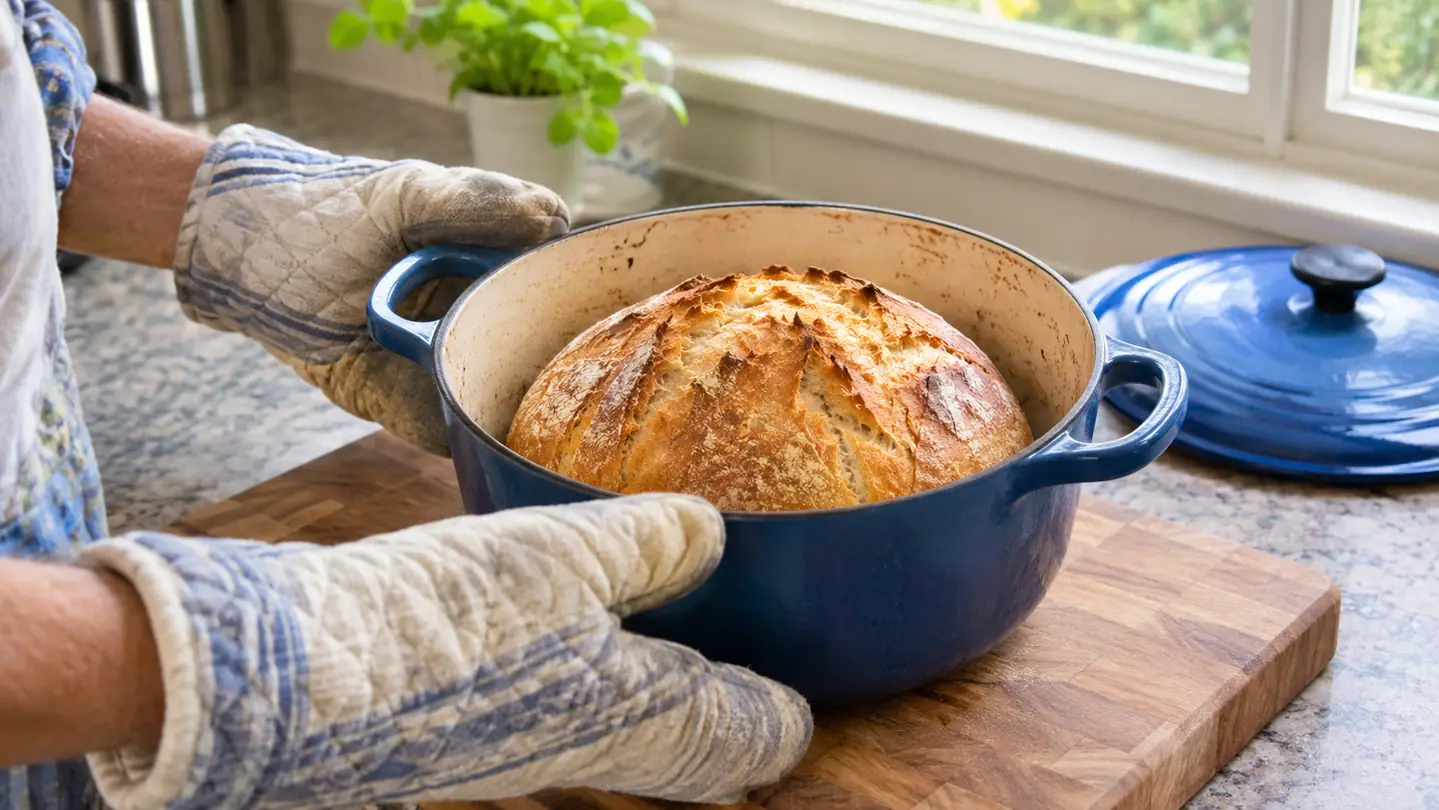
Soup and chili are the same story, two or three times a month through the winter. Bread about once a month: I heat the empty pot in the oven at 450 F, lower the dough in on parchment, lid on for twenty minutes, lid off for twenty more. That is well inside the 500 F ceiling and the enamel has neither stained nor crazed. I check the interior after every wash because I am the sort of person who checks, and it looks much the way it did in March.
What I Liked
- Holds heat through a three hour braise without babysitting
- Enamel lets you deglaze with wine and cook tomatoes without a metallic taste
- Full spec sheet published: capacity, dimensions, weight, 500 F ceiling, care
- 13.25 inch width browns a three pound roast in two batches instead of four
- 4.7 stars across more than 39,000 ratings
- Oven safe to 500 F, which leaves room for bread at 450 F
Where It Falls Short
- 13.5 pounds empty, near twenty pounds full
- Hand wash only, no dishwasher
- Outer enamel will chip if you bump it against a faucet, mine did
- One size only, so it is the wrong pot for a household of two
- Not marketed as glass-top approved, so you lift rather than slide
Where the Lodge Wins
Lodge wins on documentation, and that is not a small thing. Capacity, exterior dimensions, weight, heat ceiling and care instructions are all printed in one place, so I knew what was arriving before the box did. When you are spending real money on cookware you intend to keep for a decade, a clear spec sheet is worth something. The 13.25 inch width is the practical half of that win: I brown a three pound roast in two batches instead of four, and the browned base builds faster and darker, which is most of the flavor in the finished braise.
Lodge also wins on the surface holding up under daily use. Mine has been deglazed with wine, scrubbed with a soft sponge, and left to soak exactly once, and the interior is still smooth. The 4.7 star average across more than 39,000 ratings tells you I am not the only one getting that result. The warranty exists and you should read what it actually covers before you buy, because warranty language is where cookware companies go quiet and start using small type.
Where the Cuisinart Chef's Classic Wins
Cuisinart wins on choice, full stop. If your household is two people and a wide six quart pot overwhelms your burners or your cabinet, the Chef's Classic line lets you pick a smaller size without giving up enameled cast iron. That is a genuine advantage and I will not pretend otherwise. The qualities people love about enameled cast iron, the steady heat, the no-seasoning surface, the ability to deglaze, are properties of the material rather than of one brand. Cuisinart can deliver all of them, and the line has sat on shelves long enough to have a track record of its own. Here is the concrete version. My six quart pot takes up a full burner and then some, and when it is full of chili it is a two-hand job to move it off the heat. A smaller pot of the same material would fit my glass top better and Ruth could move it herself. If that is your kitchen, the Chef's Classic line's size menu is solving a problem the Lodge simply does not offer to solve. One pot, one size, is confidence when you are right and an obstacle when you are not.
It also costs less to walk out of the store with, and that is the honest reason most people will choose it. Nothing about braising a roast requires the more expensive pot. I would check three things before buying any enameled Dutch oven, and they are the same three I would check on a display model: whether the rim under the lid is bare iron or enameled, how the lid sits when you press down on one corner, and how the size you picked feels when you lift it empty. If those three pass, you have a braising pot, whatever name is on the bottom.
The pot I reach for two nights out of three
6 quarts, 13.5 pounds, oven safe to 500 F, hand wash only. Mine has been on the stove since March and the cooking surface is still smooth.
Amazon Check Today's Price on Amazon →Who Should Buy Which
Buy the Lodge if you cook for a family, if Sunday dinner is a real event in your house, if your stove runs on gas or induction, and if the person doing the lifting is comfortable with thirteen and a half pounds before anything goes into it. Buy it if you want to look up one set of numbers and be done deciding. It is the pot I reach for without thinking, and after eight months of near daily use I would make the same choice again without hesitating.
Buy the Cuisinart Chef's Classic if you cook for two, if you are setting up a first kitchen on a budget, or if a smaller pot simply fits your stove and your storage better than a wide one does. Buy it if you like having a size menu to choose from. And if you already own a Dutch oven you are happy with, buy neither. The difference between a good enameled pot and another good enameled pot is far smaller than the difference between cooking dinner at home and ordering it in.
One pot, one spec sheet, and a lid that fits
If the short answer above was your answer, the Lodge Essential Enamel is the 6 quart I have cooked in since March. Check the current listing for today's price and the size that fits your stove.
Amazon See It on Amazon →