
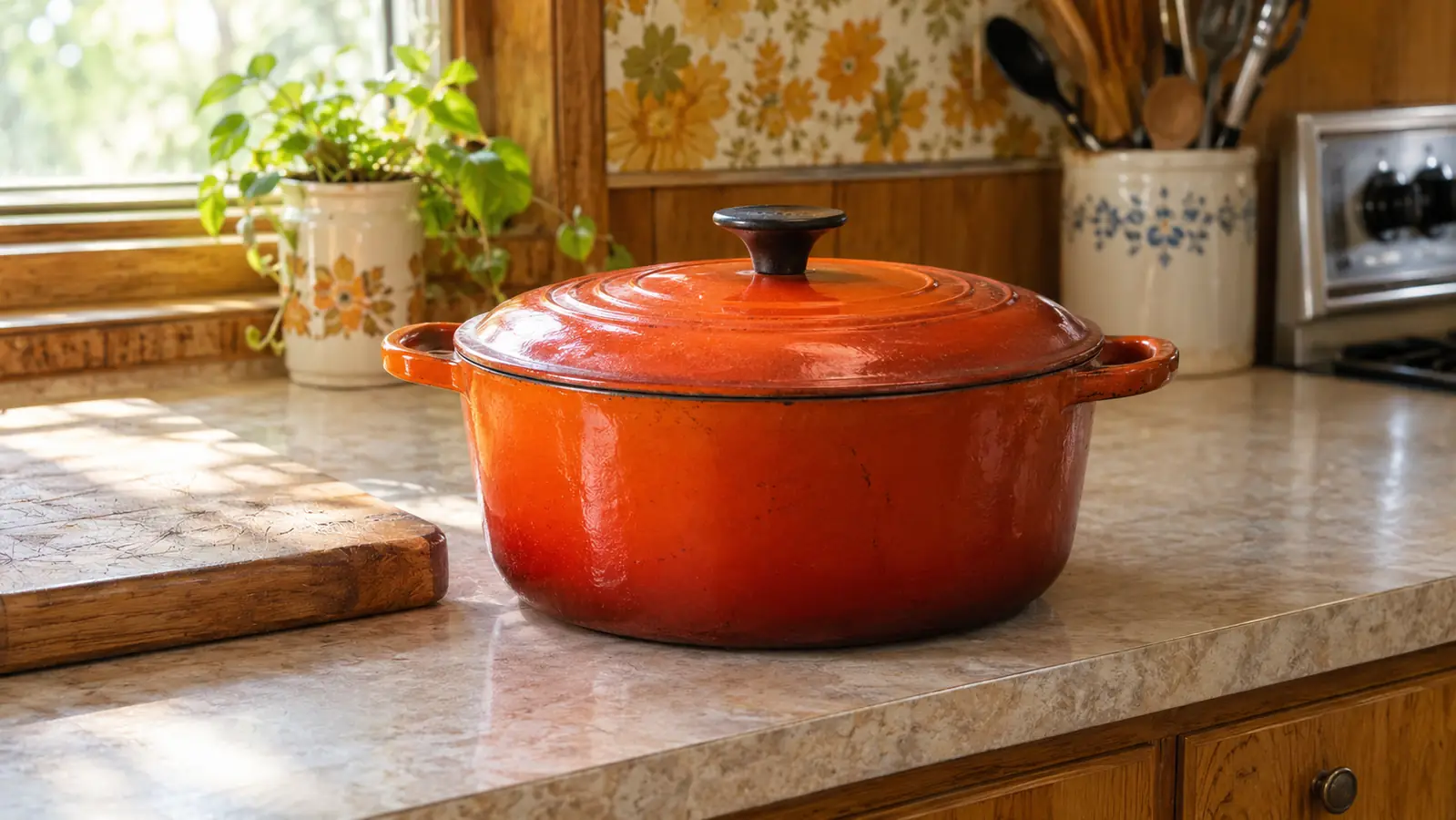
There is a chip on the outer rim of my Lodge Dutch oven about the size of a grain of rice, and I know exactly when it happened. Fourth week of March, I was rinsing it at the sink, I bumped the rim against the faucet, and I stood there for a minute feeling foolish. The cooking surface was untouched. Eight months later I can report that the chip has not grown, nothing has rusted, and the braise I made that same evening came out the way it always does. I mention it first because it is the only flaw I have found, and I put it there myself.
I am 63 and retired after 31 years teaching high school chemistry, and I have cooked dinner in this Asheville house almost every night for 35 years. For most of that time my equipment was whatever was cheapest and still worked. Then I retired, and with the extra hours I started paying attention to technique the way I used to pay attention to a titration: change one variable, hold the rest steady, write down what happened. Ruth will tell you this has made me insufferable about soup. She is not wrong.
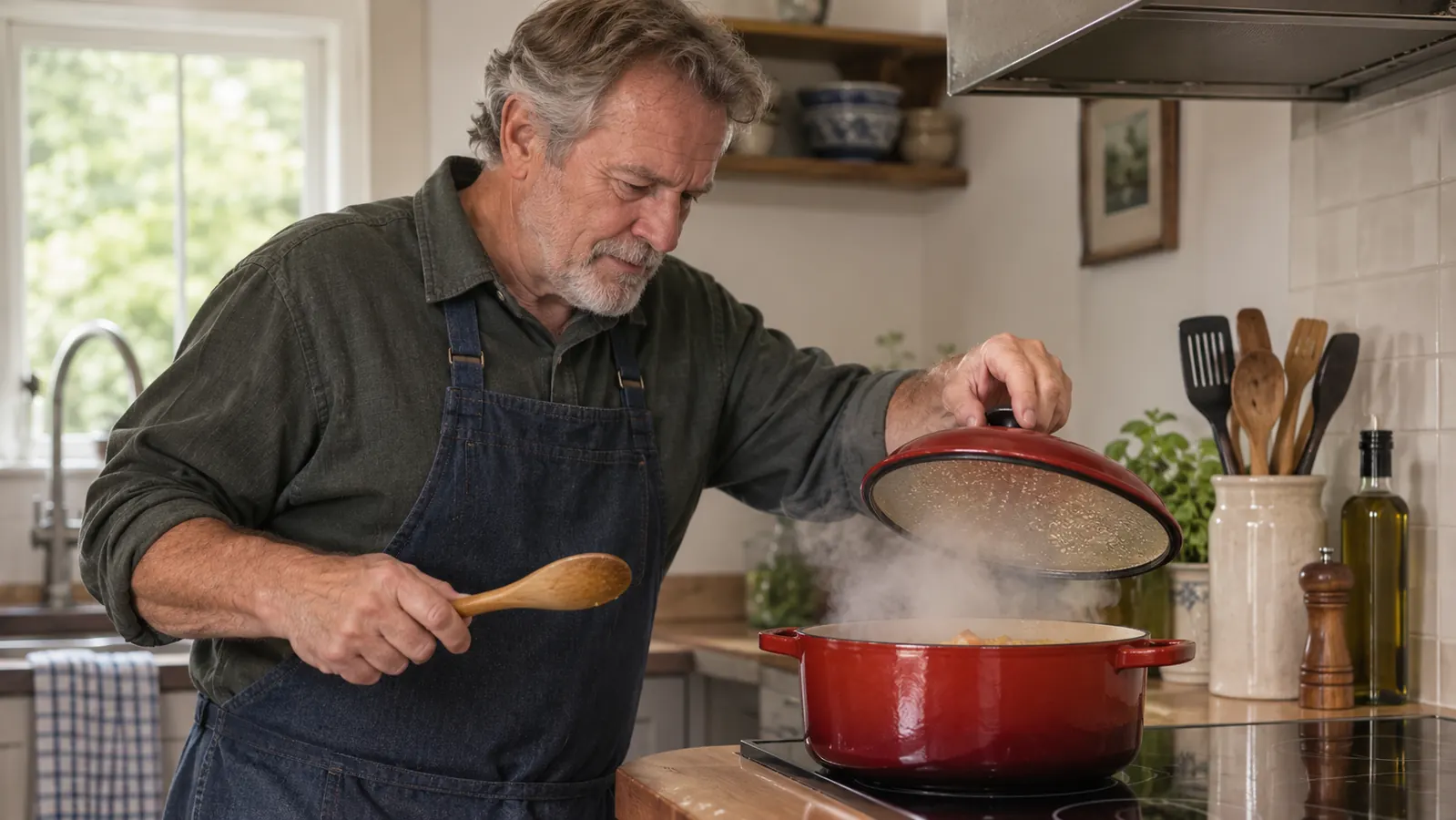
The pot came into the house in the first week of March, when I replaced five pieces of worn-out gear in one go. The thing it replaced was a thin stainless stockpot, and I want to be fair to that stockpot: it was not a bad pot. It was a bad pot for braising. Thin metal moves heat fast and unevenly, and on my electric glass-top range the bottom of a long braise would scorch before the meat was anywhere near ready to fall apart. That pot now lives in the lower cabinet and gets used for pasta water, which it does very well.
The Lodge is 6 quarts, round, enameled cast iron, and it weighs about 13.5 pounds before you put anything in it. That number matters more than any other. Ruth will not lift it when it is full and I do not blame her, so on Sundays I carry it to the table myself and set it down on a trivet. When it is not in use it sits on the back left burner, because it is too heavy to be worth putting away and too useful to be worth storing.
On the glass top I use medium heat, and I lift the pot on and off rather than sliding it across the surface. I have no idea whether the manufacturer approves of glass cooktops and I am not going to claim they do. I only know what eight months of careful handling has produced, which is a cooktop without a scratch on it and enamel without a crack.
Eight months, two or three times a week, and the worst thing that has happened to it is a chip I put there myself.
The pot I would buy again tomorrow, chip and all
Lodge Essential Enamel, 6 quarts, round, oven safe to 500 degrees Fahrenheit. Rated 4.7 by more than 39,000 buyers.
Amazon Check Today's Price on Amazon →Here is the part my chemistry background cannot leave alone. Cast iron is dense, which means it holds heat instead of surrendering it to whatever cold thing you have just dropped in. When I brown chicken thighs in batches, the pot recovers between batches instead of sulking for five minutes. That recovery is the difference between browning and steaming, and it is most of the reason the braises stopped scorching.

The enamel lining is what makes this livable in an ordinary kitchen. Bare cast iron wants seasoning and does not want tomatoes, and I make chili and a tomato braise more often than I should admit. Enamel is non-reactive, so acid is a non-issue. The care instructions say hand wash only, and that is what I do: a short soak, a soft sponge, two minutes at the sink. I do not put it in the dishwasher and I would not.
It also bakes bread, which surprised me. A round 6 quart pot with a lid traps steam around the loaf for the first part of the bake, then you take the lid off and let the crust go dark. My first attempt in April was a rock. My fifth, in June, my granddaughter ate two slices without being asked, which is the only review that counts. The grandkids come some Sundays, and that is the shape of the day now: something in the pot, bread in the oven, a table with too much food on it.
The honest drawbacks. It is heavy. It owns a burner for the better part of an afternoon. It holds heat so well that you have to start with less flame than your instincts suggest, and I burned the first onions I cooked in it because I did not yet believe that. The enamel can chip, as mine did, though not from cooking. And if lifting a full pot is difficult for you, this is not a small consideration.
What I'd Tell You If We Were Sitting at My Kitchen Table
I would tell you that most of what a good pot does for you is invisible until you have cooked beside a bad one. You do not notice a braise scorching on the bottom until you taste the burnt note underneath everything. You do not notice uneven heat until half your onions are done and half are still raw. So I would not tell you to buy this because it is handsome, though it is, and blue looks right in my kitchen, and Ruth picked the color, not me. I would tell you to buy it if you make soups, chili, braises and the occasional loaf on a regular basis and you are tired of arguing with your equipment. If you boil pasta and scramble eggs and nothing else, keep your money and keep your stockpot.
I would also tell you to buy one and not two. One is a workhorse. Two is a storage problem. Mine has been in near constant rotation since March, two or three times a week, and I have never once wished for a second.
If your braises keep scorching, the pot is a fair place to look
6 quarts, round, enameled cast iron, oven safe to 500 degrees Fahrenheit, hand wash only. Eight months of Sunday dinners and it has not let me down yet.
Amazon Check Today's Price on Amazon →