
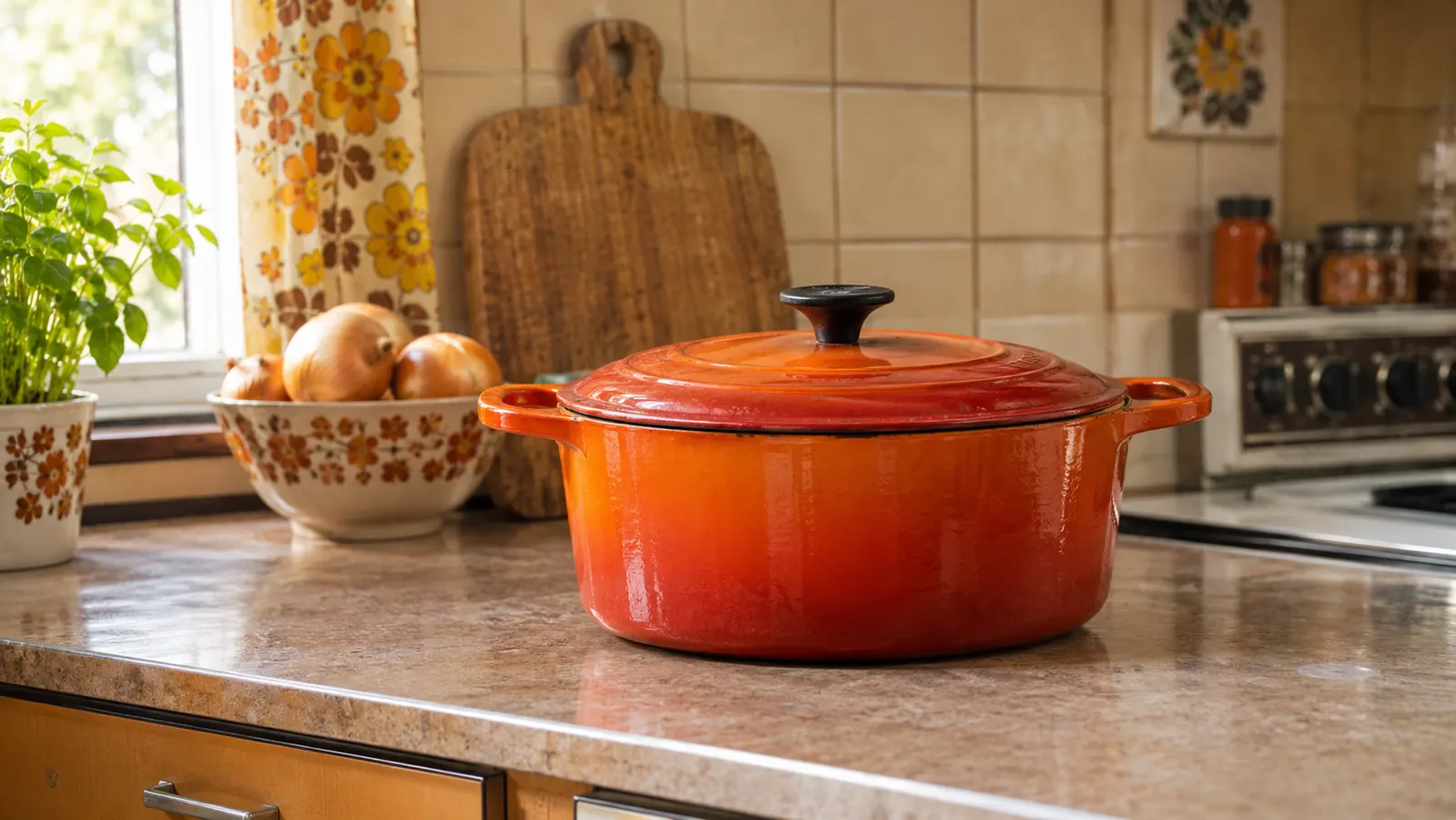
The first pot I bought with my own money was a thin stainless stockpot, and I braised in it for twenty years. It scorched. Every time. I assumed the fault was mine, that I had the heat too high or had walked away too long. When I retired from teaching high school chemistry after thirty-one years, I finally had the hours to read about cookware the way I used to read about reaction rates, and I learned that a thin pan moves heat too fast and too unevenly to hold a gentle simmer for three hours. In the first week of March I replaced my starter gear in one go. The Lodge Essential Enamel Dutch oven, 6 quarts, is the piece I expected the least from and now reach for the most.
It comes out two or three times a week here in Asheville: chili on a Tuesday, a braise on a Thursday, and always something for Sunday dinner when the grandkids visit. Eight months in, there is one small chip on the outer rim where I bumped it against the faucet in the first month, and the cooking surface is still fine. What follows is not a list of features. It is the ten reasons this pot has earned permanent counter space in a kitchen with about eight feet of laminate and no room for decoration.
Six quarts, one burner, two or three dinners a week
The Lodge Essential Enamel Dutch oven is 6 quarts of enameled cast iron, oven safe to 500 F, and it lives on my back left burner instead of in a cabinet. Check the current price and the size options on Amazon.
Amazon Check Today's Price on Amazon →It holds a low simmer for three hours without scorching
My stockpot scorched because its base was thin. The element under my glass-top range is one hot circle, so the middle of a thin pan runs hot while the walls run cool, and anything that needs three hours at a bare bubble pays for it. Cast iron spreads that heat slowly and holds it. I keep the Lodge at medium, lift it off when I want the heat gone, and never slide it across the glass. I am not going to claim the manufacturer approves of my glass top. I will claim that in eight months nothing has scorched.
It moves from the burner to a 500 degree oven to the table
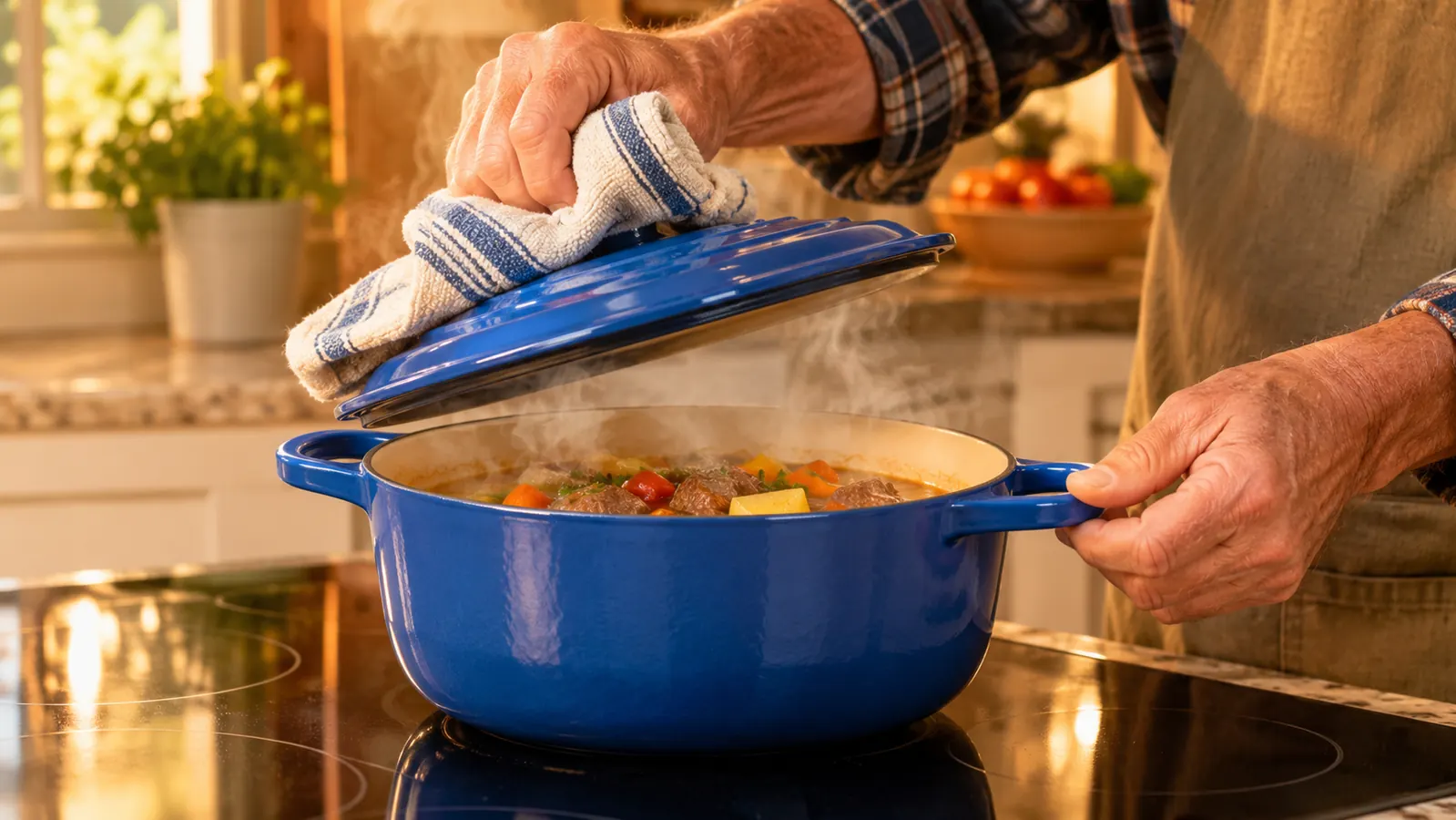
One pot instead of three. I brown on the stovetop, set the lid on, slide the whole thing into the oven, and carry it to the table when it is done. The pot is rated oven safe to 500 F, which covers every braise I make and the hot oven I use for bread. The round body fits my standard oven without crowding the rack, and the handles are wide enough to grab with a dry towel in one hand.
The enamel means there is no seasoning ritual
Bare cast iron asks something of you every time you use it. This is cast iron under a fused enamel finish, so the cooking surface is smooth and there is no seasoning to build, keep, or repair. I wash it by hand, which the care instructions require, dry it with a towel, and set it back on the burner. That is the entire routine, and it is the reason the pot does not sit in a cabinet waiting for a day when I have more patience than I have tonight.
Six quarts matches a family and still leaves leftovers
Six quarts looks big on the shelf and turns out to be the practical middle. A three pound chuck roast with onions, carrots and stock fills it about two thirds, which leaves room for the simmer. Chili for four, with two lunches left over, fits with an inch to spare. It measures 13.25 inches wide and 6 inches tall, wider than it is tall, and that width is browning area. My old stockpot was narrow and deep. I did not understand what that cost me until I cooked in something else.
Sunday bread comes out with a crust worth the wait
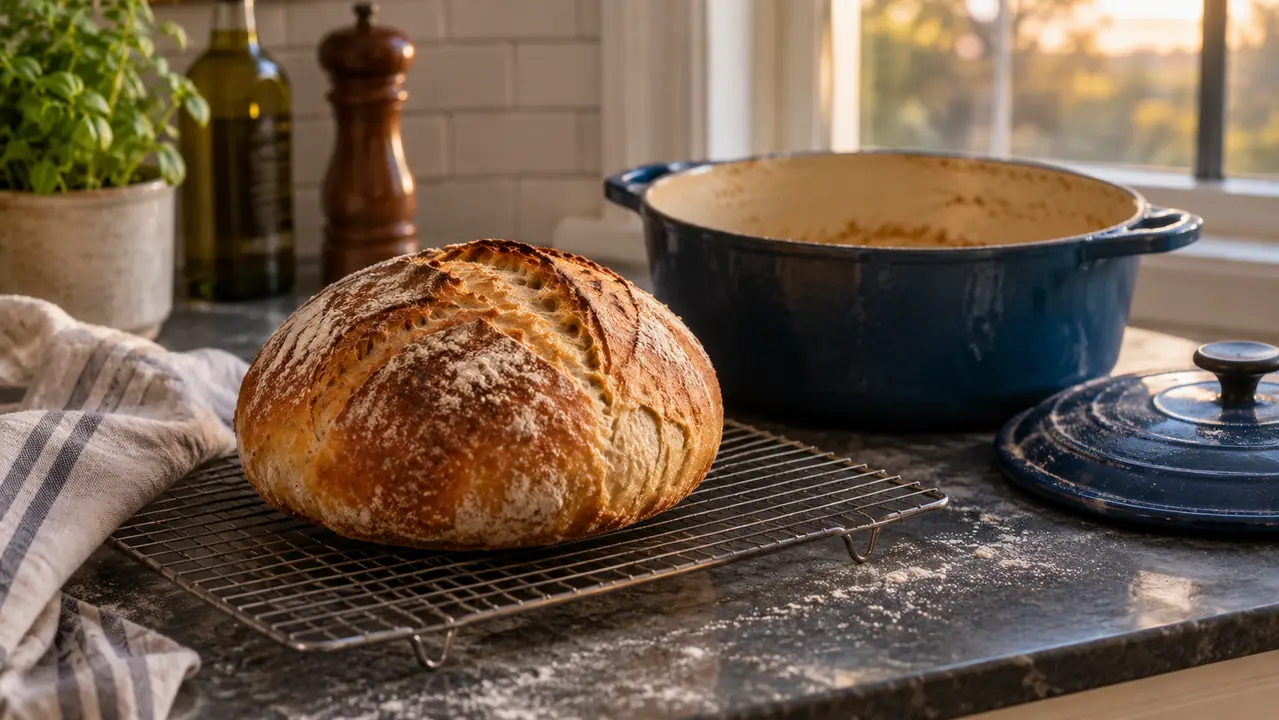
I bake in it at 450 F. Lid on for the first stretch so the steam stays in and the crust does not set too early, lid off at the end to brown. The pot is rated to 500 F, so there is margin. I have baked about a dozen loaves in it since March and two were bad, both because I underproofed the dough and not because of the pot. The proof that matters is the loaf my granddaughter ate half of before anyone called dinner.
It weighs 13.5 pounds empty. Ruth will not lift it full, so I carry it, and it stays on the burner where I can reach it.
Cheap cuts come out like a Sunday roast
Braising is chemistry I can actually explain to a grandkid. Tough cuts are full of collagen. Hold them at a low simmer in liquid long enough and that collagen becomes gelatin, and gelatin is what makes a sauce coat the back of a spoon. The pot's only job is to hold that temperature evenly for two or three hours. Chuck, short rib, pork shoulder, lamb shank. These are the cuts that used to disappoint me, and now they are the ones I buy on purpose.
The weight is the trade, and it is a fair one
13.5 pounds empty, and heavier full. There is no version of this where a cast iron pot becomes light, and anyone who tells you otherwise has not carried one across a kitchen. My right shoulder complains some mornings. What I do is leave the pot where it works rather than move it to a shelf, and lift with both hands and a towel. If your wrists or shoulders are worse off than mine, take that seriously. It is the honest drawback and I will not talk you out of it.
It gives a distracted cook some margin
Thermal mass is a buffer. A thin pan reacts in seconds, which is wonderful for a stir fry and awful for anything that needs to sit. When the phone rings and I come back four minutes later, this pot has not punished me for it. That margin matters more at 63 than it did at 40. It is also why I stopped reaching for the stockpot for anything except pasta water, where a fast reaction is exactly what I want.
It lives on the back left burner because it gets used
That is its home, not a cabinet. My stockpot lives in a cabinet and comes out twice a month. There is a plain lesson in that, one I wish I had learned at 35: equipment you can see gets used, and equipment you cannot see does not. With about eight feet of laminate counter, I do not have room for a pot that is decoration. The Lodge stays out because it is the thing I grab, not because it is handsome.
Cleanup is a soak and a soft sponge
Enamel lets go of braise residue better than stainless does. I set the pot in the sink with warm water while we eat, then wash it by hand with a soft sponge and dish soap, dry it, and put it back on the burner. The care instructions say hand wash only and oven safe, and eight months in I have followed both. Five minutes on a normal night. The chip on the outer rim came from the faucet in month one and has not grown.
What I'd Skip
I would skip everything sold alongside this pot that is not the pot. Lid rests, silicone handle covers, a dedicated scrub brush, a second size in a shape I do not need. One 6 quart round pot covers braises, soups, chili and bread, and most people who buy a second one buy a duplicate of the first. I would also skip buying it to look at. If it does not end up on a burner you can reach, it becomes a heavy object in a cabinet. For the longer accounting of eight months of use, there is a full review on the site, plus a straight comparison against the Cuisinart Chef's Classic for anyone weighing both.
If you only own one heavy pot, make it this one
Eight months in, the Lodge has one small chip on the outer rim and a cooking surface that still releases a braise clean. 6 quarts, 13.5 pounds, hand wash only. Check today's price on Amazon.
Amazon Check Today's Price on Amazon →