
The first steak I cooked sous vide came out the color of a boiled potato. Perfectly pink from edge to edge, medium rare all the way through, and about as appetizing as a hospital tray. I ate it standing at the counter, disappointed in myself, and then I worked out what I had done wrong. I had skipped the last ninety seconds.
That was eight months ago, in the first week of March, when the Anova Culinary Precision Cooker Nano 2.0 arrived and I decided to learn on a cheap sirloin instead of ruining a good ribeye. Forty steaks later, I can tell you the machine is the easy part. It holds a pot of water at a temperature and it does not get bored, which is more than I can say for myself. The hard part is everything around it: buying a steak thick enough to be worth the trouble, salting it early enough to matter, and drying it well enough that the pan actually browns it instead of steaming it. Get those three things right and the cooker does the rest without being asked twice.
The cooker that made me stop guessing at steak
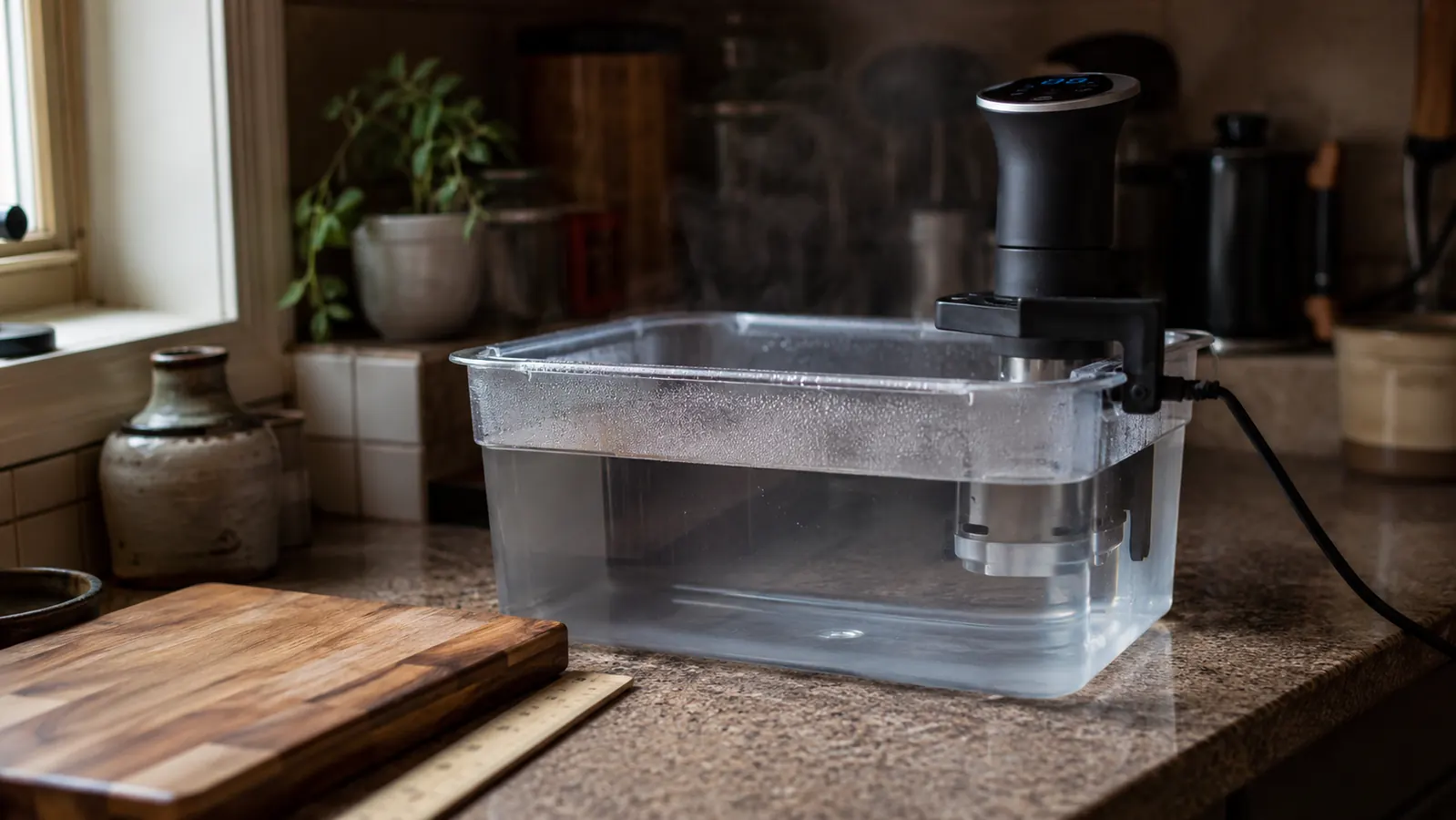
The Anova Culinary Precision Cooker Nano 2.0 holds a container of water within a degree of where you set it, which is the entire trick. I set the temperature on the machine itself and use the free app for timers and recipe temperatures.
Amazon Check Today's Price on Amazon →Step 1: Buy a steak thick enough to measure
Thickness is the variable that decides everything else in this process. A one inch steak needs about an hour in the bath. A one and a half inch steak needs closer to two. A thin cut, the kind that comes four to a package and curls up at the edges, is a bad candidate, because by the time you build a crust on it the inside has gone past medium. I keep a wooden ruler in the utensil drawer and I am not embarrassed about it. Ask the person behind the counter for the thickest one in the case.
Ribeye, strip, and sirloin all work. Marbling matters more than the grade on the label, because the fat is what carries flavor through a gentle cook. Trim only the loose flaps that would hang over the edge of the pan and burn; leave the rest alone. This is not the place to be neat.
One more thing that took me a few tries: let the steak sit on the counter for twenty minutes before it goes in the bag. Not for safety, and not because it changes the cook much, but because a cold steak drags the water temperature down and the cooker has to spend ten minutes climbing back to where you set it. Eight hundred watts is plenty for a twelve quart container, but it is not magic, and it does not enjoy being ambushed.
Step 2: Salt it early and get the air out
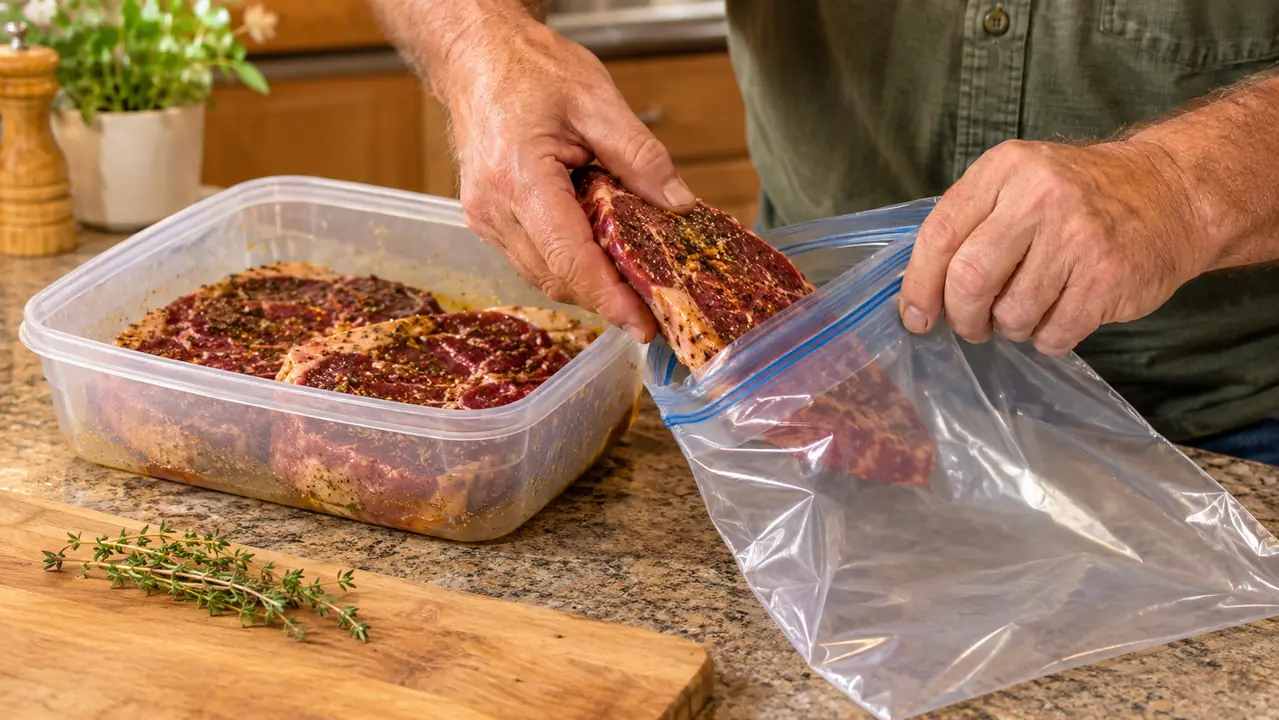
Salt both sides as soon as you get home, more than looks reasonable, and leave it uncovered on a rack in the refrigerator. Forty minutes is the minimum. Overnight is better. What happens is simple chemistry: the salt pulls moisture to the surface, dissolves in it, and that brine slides back into the meat. The seasoning ends up inside the steak instead of sitting on top of it, and the surface dries out at the same time, which is a gift for the sear later.
I do not own a vacuum sealer. I use a heavy duty zip-top freezer bag and the water displacement method. Put the steak in the bag with a sprig of thyme if you have one, lower the bag into the water with the top still open, and let the pressure of the water push the air out. Zip it closed when the water is an inch below the seal, then drape the top of the bag over the rim of the container. It will float a little. That is fine. Just keep the seal above the waterline so nothing siphons in.
About butter in the bag: I tried it and I stopped. Butter is a fat, and fat absorbs the volatile oils in garlic and thyme and holds onto them, so a knob of butter can turn the whole steak bitter over a two hour cook. If you want butter, put it in the pan at the very end, where it belongs and where it can brown instead of sulk.
The water bath does not brown anything. Until it hits a hot pan, a perfectly cooked steak looks like a prop from a medical drama.
Step 3: Set the temperature for the doneness you actually want
Here is the uncomfortable part. You have to decide before you cook. The cooker will not guess and neither will I. I set 130 degrees for medium rare, which is where Ruth and I both landed after thirty six years of negotiation. If you want it a shade pinker, 126. If you want medium, 137. The Nano holds anywhere between 32 and 197 degrees, so a steak sits comfortably in the bottom quarter of what the machine can do.
I set the temperature directly on the cooker, and I use the free Anova Culinary app mainly for timers and for looking up temperatures when I forget them, which is more often than I would like. The app can run the whole cook if that suits you. I am 63 and I still prefer a control on the machine that I can work with wet hands, so that is the one I reach for.
Fill the container with hot tap water rather than cold. Water out of the tap here in Asheville runs warm enough that the cooker reaches 130 in a few minutes instead of twenty, and there is no prize for patience at this stage. Leave room for the steak to displace the water. The water should cover the meat with an inch to spare and stay comfortably below the top of the container.
Step 4: Wait, and know what the wait is doing
Timing runs off thickness. One inch gets an hour minimum. One and a half inches gets two hours. I do not go under those numbers, because I want the center to actually reach the water temperature, and I do not go past four hours, because the texture starts to change. Nothing is burning and nothing is overcooking in the usual sense. The water never climbs above the number I set. But muscle fibers held warm for six hours give up, and the steak goes soft, closer to sliced deli meat than to a steak.
That is the whole point of sous vide, and it took me three cooks to trust it. A pan on a burner is a moving target: the surface of the steak is at 400 degrees while the center is at 90, and you are guessing the entire time. A water bath is a fixed target. Once the middle of the steak reaches 130 degrees it stops there and stays there for as long as you leave it. That is chemistry, not cooking skill, and I find it restful.
A word on safety, because I taught chemistry to teenagers for 31 years and I cannot help myself. Whole cuts of beef are essentially sterile inside. The bacteria live on the surface, which is exactly where the heat of the sear lands anyway. A bath at 130 degrees for an hour or two is not a gamble for a solid piece of muscle. It is a different story for blade-tenderized meat, the kind that has been needled or injected, because that pushes surface bacteria into the middle. If the label says enhanced or tenderized, cook it at 145 or skip the water bath for that one.
Step 5: Dry it, sear it, and leave it alone
Take the bag out, cut a corner, and drain the liquid, which is a surprising amount and is all water the salt pulled out of the meat. Pat the steak dry with paper towels on both sides, then pat it again. A wet surface cannot brown. The water has to boil off first, and while it is boiling, the meat underneath is steaming. This is the mistake I made on steak number one, and it is the mistake almost everyone makes.
If you are not eating right away, drop the bag into a bowl of ice water for ten minutes. That cools the surface so the steak can sit in a hot pan long enough to build a crust without pushing the center past medium rare. If you are eating right away, skip the ice bath, but know that you are working with a smaller margin and be quick about it.
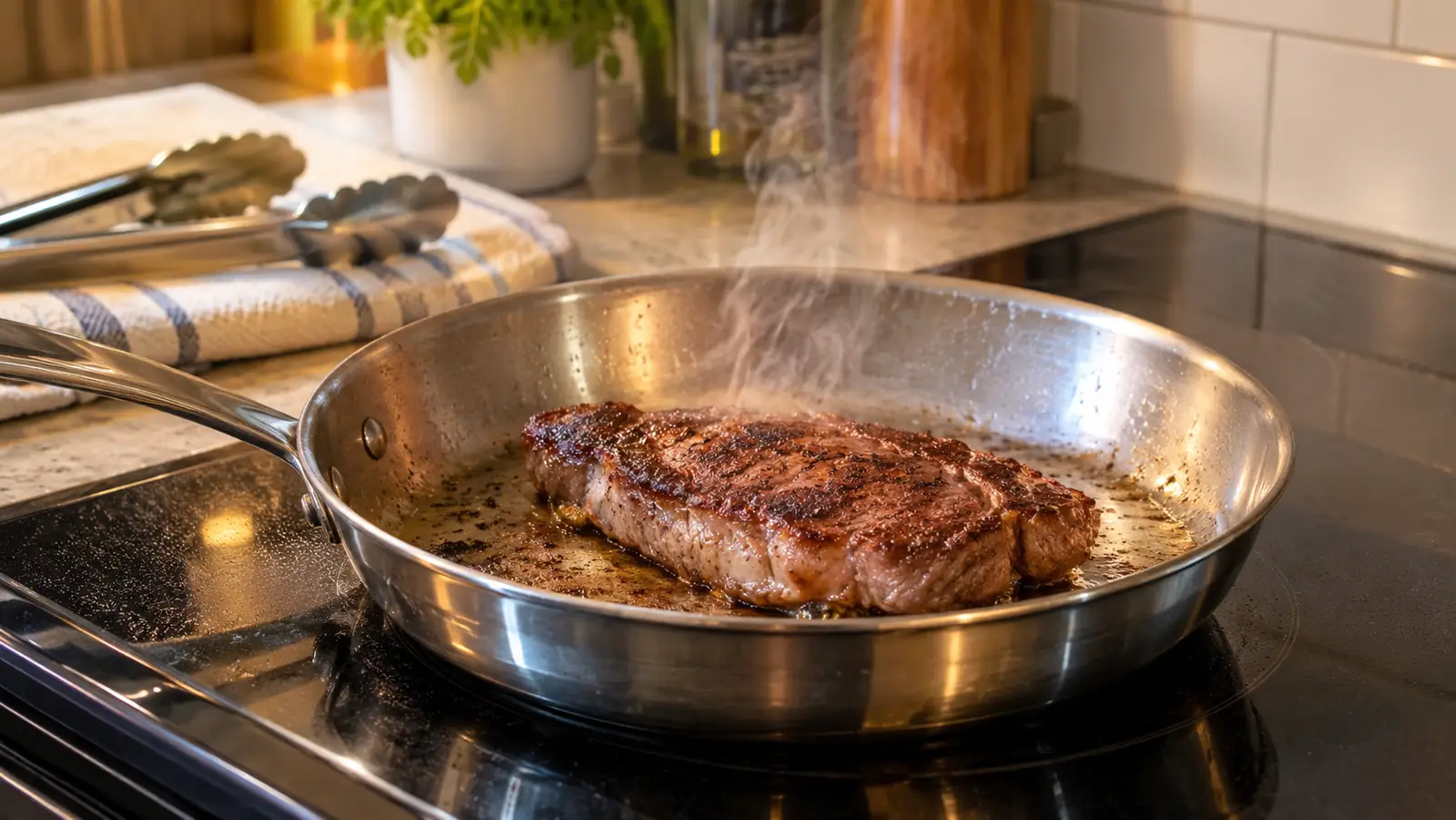
I use my old 12 inch stainless skillet on the electric glass-top range, preheated on high for a good four minutes with a thin film of oil. Lay the steak down away from you and do not move it. Forty five seconds to ninety seconds a side, depending on how hot the pan actually got, pressing it flat with a spatula for the first few seconds so the whole surface makes contact. Then rest it five minutes, slice it against the grain, and salt it one last time at the table. That is the ninety seconds I skipped the first time, and it is the difference between dinner and a science demonstration.
Three Mistakes I Made So You Do Not Have To
I seared a cold, wet steak on medium heat and got a gray band a quarter inch deep on each side with a stripe of pink down the middle. The steak was cooked correctly and the crust did not exist. Heat and dryness, in that order, and neither one is negotiable.
I left one in the bath for six hours because dinner got delayed by a phone call. It was safe, it tasted fine, and the texture was wrong: soft and uniform, like something from a cafeteria steam table. Four hours is my ceiling now, and I set a timer.
I put four steaks into a twelve quart container at once without thinking about the water. They dropped the temperature, the cooker worked hard to climb back, and the first hour went to recovering instead of cooking. Two steaks at a time is what that container wants. If you are feeding a crowd, cook in batches or go up a container size, and give the water ten minutes to come back between them.
What Else Helps
An instant-read thermometer is not strictly necessary for the bath, since the cooker is holding the temperature for you, but it earns its place at the sear. I check the center of the steak before it goes into the pan so I know how much room I have before it passes medium rare. I check the water at the start too, mostly out of habit, and I test the thermometer in boiling water every few months. Mine lives in the drawer next to the knife.
A pair of tongs, a rimmed sheet pan for carrying things back and forth, paper towels within reach, and a sharp knife for slicing. That last one matters more than people expect. A dull knife tears a steak instead of cutting it, and you lose the juices onto the board. Slice against the grain, which on a strip means across the short side, and go thinner than feels natural.
The one piece of equipment I would buy again without thinking is the cooker itself. The Anova Culinary Precision Cooker Nano 2.0 is 12.8 inches tall and 1.7 pounds, so it goes into the drawer under the oven when I am finished and does not live on my eight feet of counter. It carries a two year warranty. Eight months in, the only maintenance it has needed is a wipe down with a damp cloth.
Steak night stops being a guess
Set the temperature, walk away, and sear it at the end. That is the whole method, and the Anova Culinary Precision Cooker Nano 2.0 handles the part that requires patience instead of attention.
Amazon Check Today's Price on Amazon →