
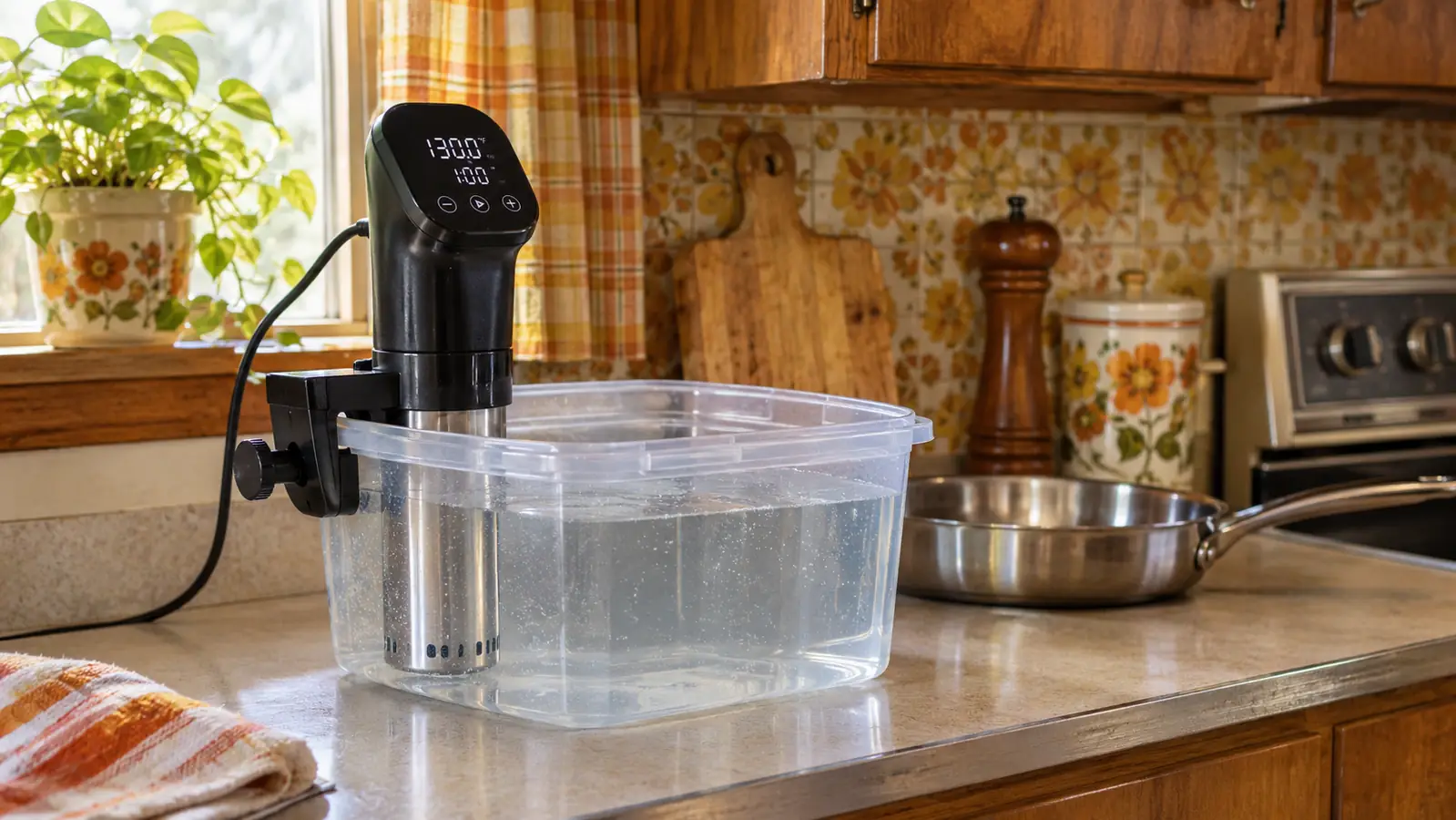
Ruth and I have eight feet of laminate counter in a 1970s kitchen. That is the whole argument. When I retired from teaching chemistry after thirty one years and decided to cook seriously, I assumed sous vide was for people with a second refrigerator and a pantry the size of my living room. Then I bought the Anova Culinary Precision Cooker Nano 2.0 in the first week of March, and it turned out to be the least demanding piece of equipment in the house. It lives in the drawer under the oven. It comes out once or twice a week. Nobody has to move anything to make room for it.
Here is what I tell people who ask. The cooker is 12.8 inches tall and weighs 1.7 pounds, which makes it smaller than my rolling pin. It clips to a 12 quart plastic food container that sits on the counter while it runs and goes in the closet when it does not. I have never owned a vacuum sealer and I have not needed one. The ten reasons below are the ones that actually changed how I cook dinner, not the ones printed on the box.
The smallest thing in my kitchen that changed the most dinners
Twelve and a half inches tall, 1.7 pounds, and it stores in the drawer under the oven. Eight months of weeknights and Sunday dinners, and it has not moved to a shelf yet.
Amazon Check Today's Price on Amazon →It fits in a drawer, which is the entire trick
The Nano measures 12.8 inches tall, 2.2 inches wide and 4.1 inches deep, and it weighs 1.7 pounds. Mine goes in the drawer under the oven, where the pot lids also live, and the drawer still closes. Compare that to the stand mixer in the corner or the Dutch oven on the back burner, both of which have permanent addresses because moving them is a chore. Sous vide equipment loses when it has to be found and assembled. This one does not have to be either.
The cooking vessel is a plastic container you already have room for
The Anova Culinary Nano clips to a 12 quart food container. That is enough water for four pork chops or two thick steaks, and when the cook is finished I pour the water down the sink, dry the container and put it away. No new pot, no dedicated bin, no lid with a hole cut through it. Ruth has strong opinions about appliances that demand their own storage, and this one has never triggered them once.
You do not need a vacuum sealer
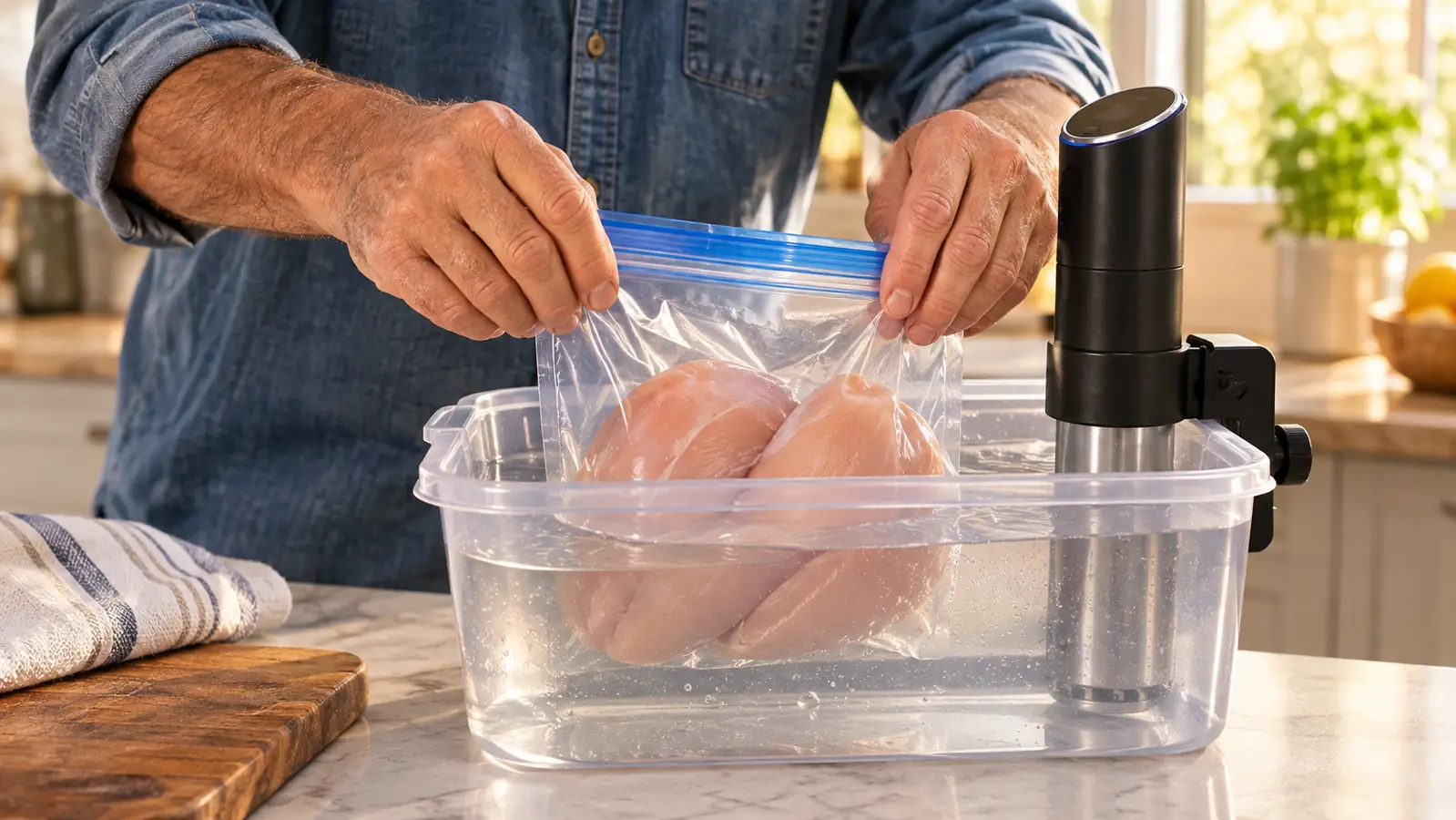
I use zip-top freezer bags and the water displacement method. Seal the bag most of the way, lower it into the bath, let the water pressure push the air out, then finish the seal. It takes about ten seconds and it works. A vacuum sealer is another box on the counter and another thing to clean, and it costs money I would rather spend on the meat itself. I have made roughly seventy cooks without one and I have not once wished I had it out.
It holds a temperature exactly, and that is the whole point
This is the chemistry teacher talking, so forgive me. Cooking is a set of reactions that happen at temperatures, and most of the damage on a stovetop comes from overshoot. The cooker circulates water at a set temperature anywhere from 32 to 197 degrees Fahrenheit and it stays there, because an 800 watt element in a small bath of water is not fighting much. I do not have to watch it. I do not have to poke at it. I set it and go do something else.
Steak night stops depending on my attention
Sunday dinner with the grandkids means a lot of moving parts and one oven. I set the cooker to 130 degrees, drop two steaks in, and walk away for an hour and a half. When everything else is nearly ready, I take them out, dry them well, and sear in my old 12 inch stainless skillet for about a minute a side. The steak comes out the same every time, and I did not have to guess once while the green beans were going.
Chicken breasts stop being a gamble
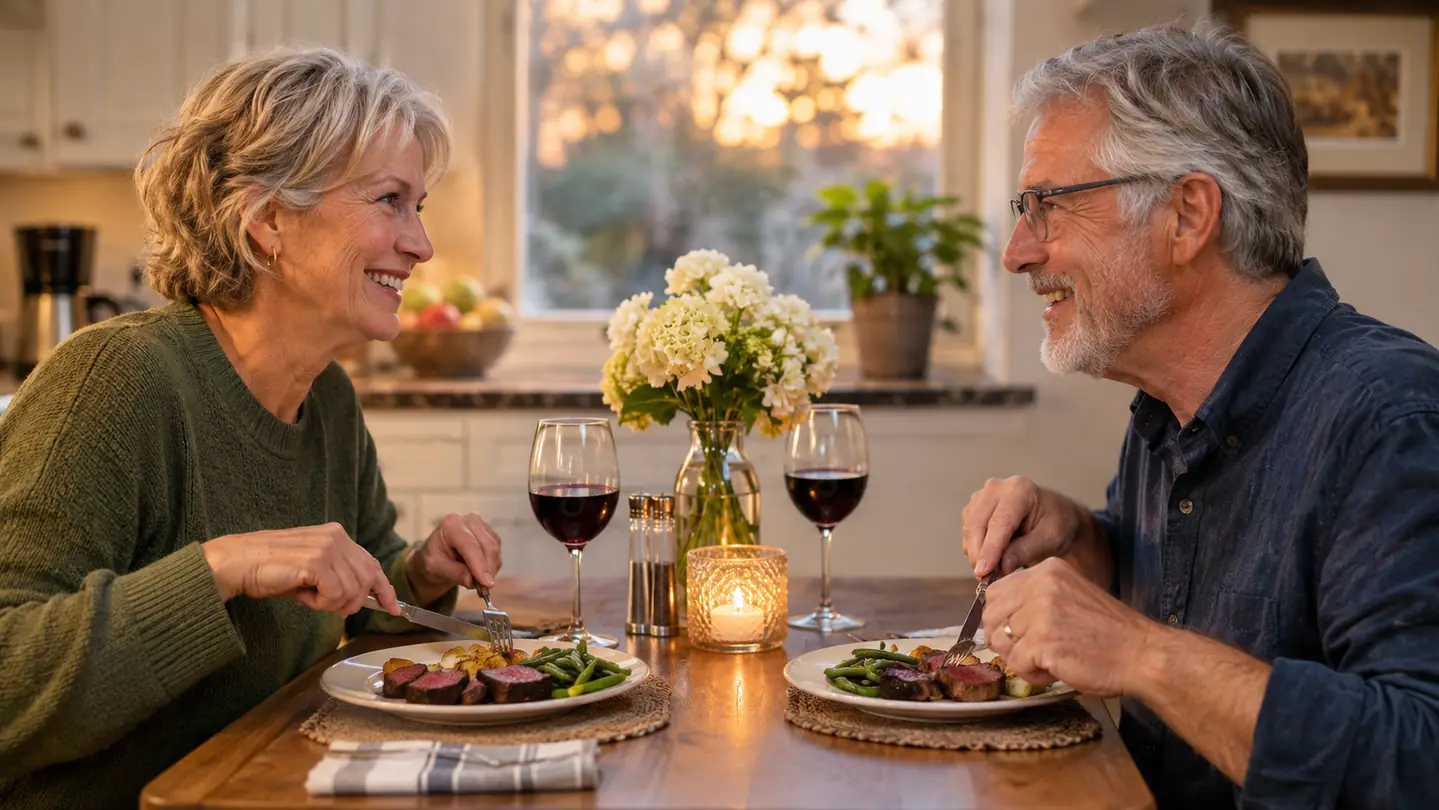
Chicken breast is the thing I ruined most in thirty five years of cooking, because the window between raw and sawdust is narrow on an electric glass-top range. Held at 145 degrees for long enough, it comes out sliceable and it stays that way. I do four at once on a Sunday and eat them cold on Monday. Same result both days, no thermometer anxiety, no apologies to anyone at the table.
Pork chops come out the way you actually want them
Ruth grew up on pork cooked to grey and she did not argue when I said I was trying something different. I cook thick chops at 140 and finish them in the skillet. They are pale in the middle and they stay juicy instead of drying out while I set the table. The first time, she asked me what I had done differently, which from her counts as a full written review.
Eggs that peel without a fight
This has nothing to do with impressing anybody. I cook eggs at 167 degrees for thirteen minutes, chill them in ice water, and the shells come off in two or three pieces. No green ring around the yolk, no gouged whites, no swearing at the sink. It is the cheapest demonstration of what controlled temperature buys you, and the whole job takes up about a coffee cup of counter space while it runs.
The sear happens in the pan I already own
The cooker does the part that needs precision. The skillet does the part that needs heat. My 12 inch stainless skillet predates all of this by a decade and it has not been replaced. That is the entire method: a bag, a bath, a dry off, and about ninety seconds of butter and high heat. The appliance does not ask for new cookware, which is more than I can say for a few things I have bought since I retired.
The counter stays clear while dinner happens
Because the Nano stands 12.8 inches and sits at the edge of the container, the working space in front of it stays open. I can chop, plate or make a salad right next to it without moving anything. The controls are on the cooker itself and in the free Anova Culinary app, which I use mostly for timers and recipe temperatures rather than for running the cook. It also carries a 2 year warranty, which mattered to me because this was my first sous vide cooker and I had no idea whether I would keep using it. Eight months in, I do.
What I'd Skip
Two things. The first is a vacuum sealer, for the reasons above. The second is the pile of accessories sold alongside these cookers: racks, weighted pouches, bins with cut lids. A 12 quart food container and a box of zip-top freezer bags have handled everything I have cooked for eight months, and the drawer under the oven is not getting any bigger. What I would not skip is a good instant-read thermometer, because the sear at the end is where dinner is actually decided, and mine gets used every night whether the cooker comes out or not.
It circulates water at a set temperature from 32 to 197 degrees Fahrenheit and it stays there. I do not have to watch it, and I do not have to poke at it.
Eight feet of counter and one drawer. That was enough.
If your kitchen is small, the question is never whether sous vide works. It is whether the equipment earns its space. This one stores in a drawer and comes out once or twice a week.
Amazon Check Today's Price on Amazon →