
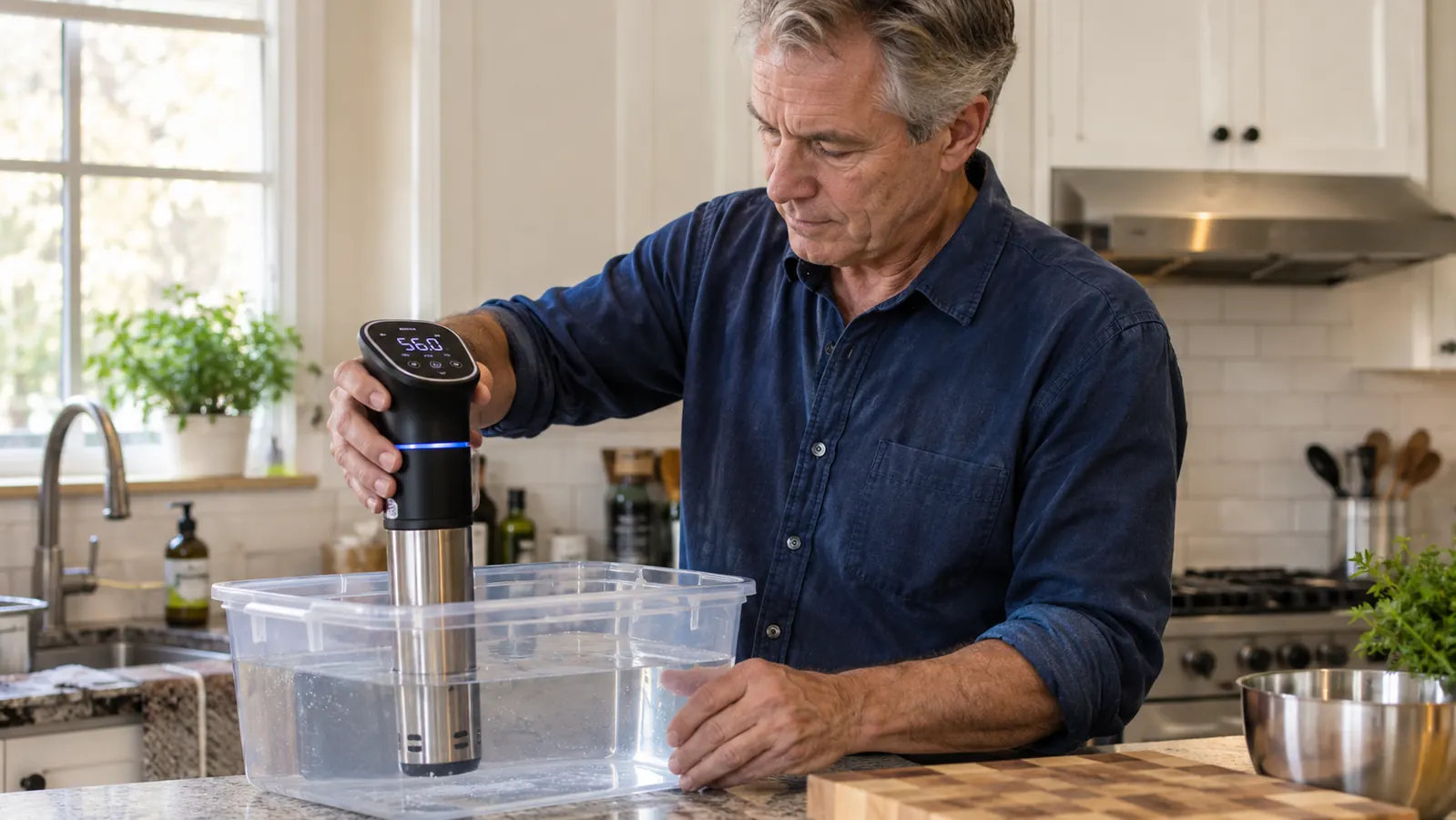
For 31 years I taught high school chemistry, and one of the first things I told a room of sophomores was that a water bath is the most patient tool in the building. It holds a temperature and it does not get bored. You would think I would have been first in line for a sous vide cooker. I was not. I thought it was a gadget for people with more counter space than sense, and I said so out loud at my own kitchen table more than once.
Ruth would like it noted that I was wrong, and that she remembers the exact evening. It was a Tuesday in early March. I had spent the afternoon reading about how proteins denature because I am that kind of retired person, and somewhere in the middle of it I realized I had been arguing against a technique I had never once tried. That is not science. That is stubbornness wearing a lab coat. The next morning I ordered the Anova Culinary Precision Cooker Nano 2.0, along with four other pieces of gear I had been putting off replacing, and I paid for all of it with my own money.
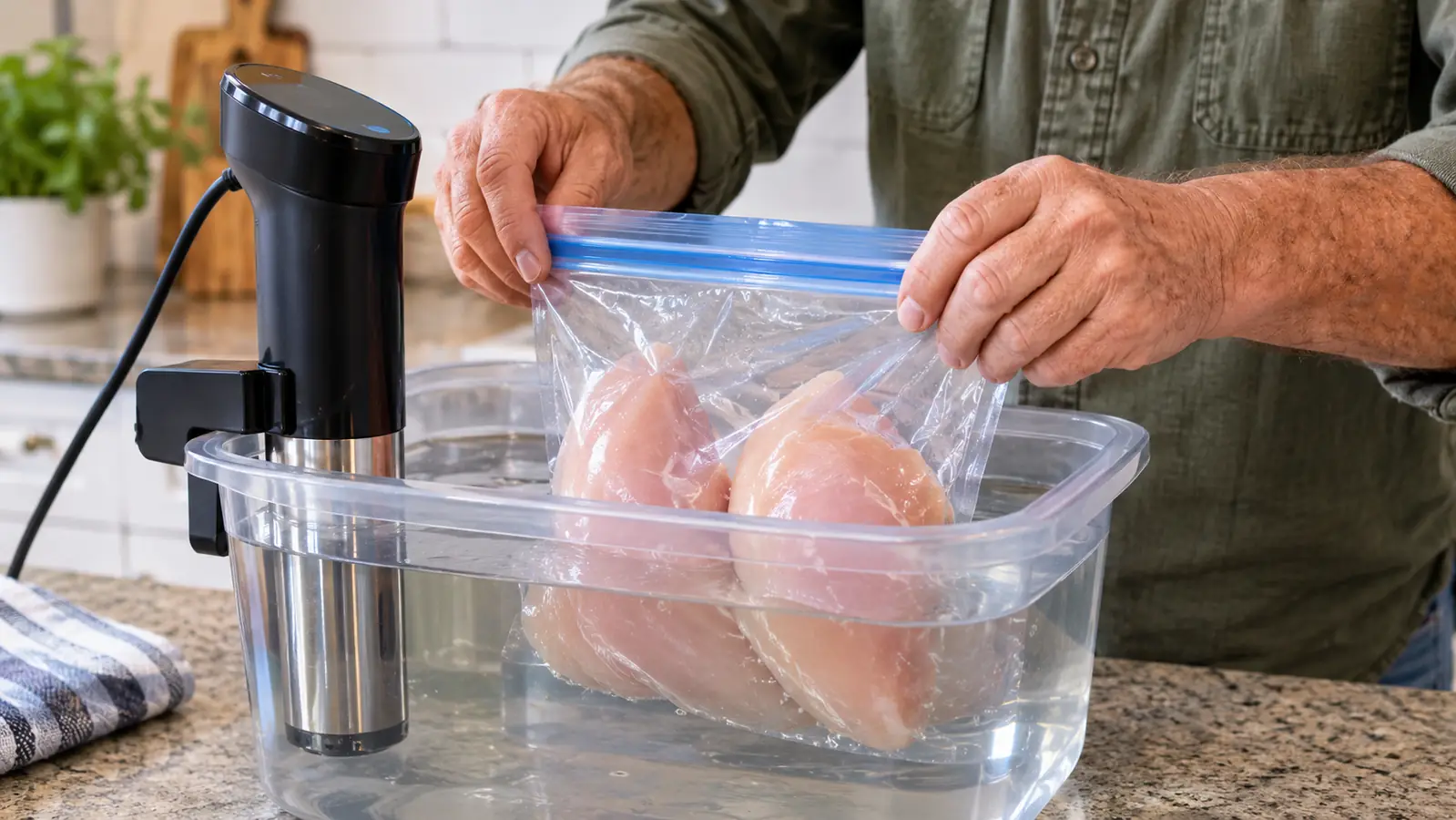
The first thing I cooked was chicken breasts, because chicken is the thing I had ruined more often than anything else in 35 years of weeknight dinners. I filled a 12 quart plastic food container with water, clipped the cooker to the side, and set the temperature on the machine itself. That last part matters to me. The Anova Culinary cooker has a free app, and I do use it, mostly for timers and for checking temperatures. But the cook gets set on the device. I am 63 and I do not want my dinner depending on whether my phone has finished an update.
Then came the waiting. Fifty minutes of a container of water sitting on the counter, humming quietly, not boiling, not doing anything you can see. I checked it four times like a man watching paint dry. This is the part nobody mentions about sous vide. The cooking is easy. The waiting is the work.
Fifty minutes in 145 degree water did what 35 years of a hot skillet and a guess had never done. It gave me chicken I could not overcook.
The machine that made my chicken breasts predictable
One cooker, one container of water, one temperature you set with your own thumb. That is the entire trick, and it took me 35 years to try it.
Amazon Check Today's Price on Amazon →Here is the part that worried me before I started, and it worries most people I talk to. I do not own a vacuum sealer. I use zip-top freezer bags and the water displacement method: put the meat in the bag, lower the bag into the water with the top held open, let the pressure push the air out, then seal it. It takes about ten seconds and I have not had a bag float on me yet.
Sous vide does not brown anything. Whatever comes out of the bag is pale and soft and a little alarming the first time. I finish everything in my old 12 inch stainless skillet, still the same pan I have had for years, on the electric glass-top range. A minute or so a side over medium heat. The skillet does the crust. The water bath did the part I used to guess at.
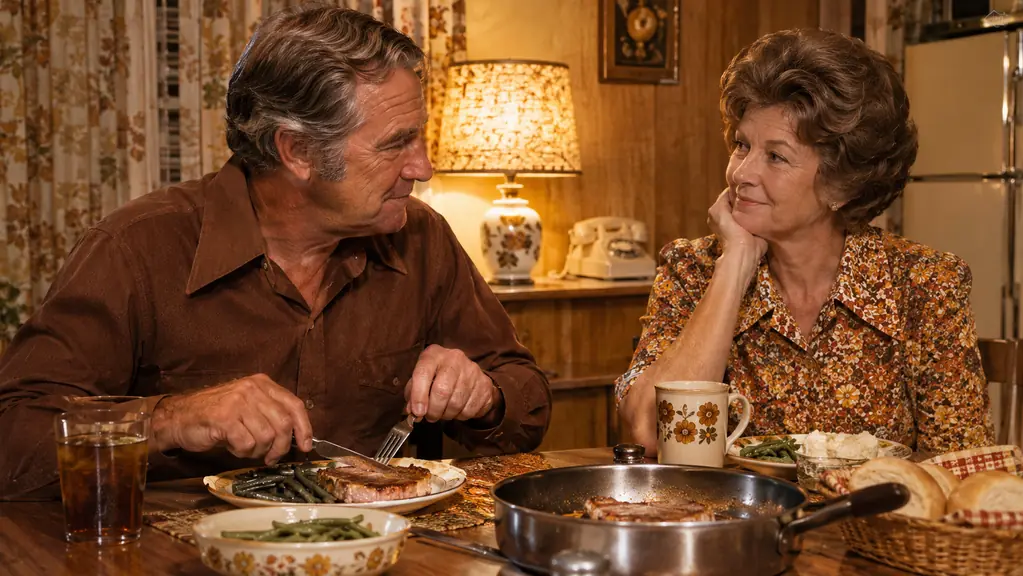
Pork chops were the second cook, and they were better than the chicken. Steaks come out evenly pink from edge to center in a way I could never manage by feel. I do eggs in it too, though eggs are fussier than people admit, because a minute one way or the other changes the texture completely. About once or twice a week this thing is running on my counter. Not every night. I still roast, braise and simmer the ordinary way most of the week.
The Anova Culinary cooker is 12.8 inches tall and weighs 1.7 pounds, so it lives in the drawer under the oven when it is not in use. That was the deciding factor for me. My counter is eight feet of laminate and every square inch is spoken for. A tool I have to leave out is a tool I stop using. This one goes in the drawer next to the whisk. It is 800 watts, the range runs from 32 to 197 degrees Fahrenheit, and it carries a two year warranty.
I will tell you what it does not do. It does not brown, it does not crisp, and it does not save you time on a weeknight when you get home hungry at seven and want dinner at seven thirty. It is a slow, patient, exact tool, and if you want fast you should use the skillet and skip the water bath entirely. I also had one bag leak in the first month, which was my fault and not the cooker's, and I learned to seal the top properly.
Ruth is the honest taste tester in this house. She does not cook much and she has no patience for my explanations. Her verdict on the pork chop was two words, and one of them was 'again.' That is the highest rating my cooking gets.
What I'd Tell You If We Were Sitting at My Kitchen Table
I would tell you to buy it if you are the kind of cook who wants the same result twice. That is the whole case for the Anova Culinary Nano. It is not faster, it is not magic, and it will not make you a better cook on its own. What it does is remove the guesswork from one specific thing, the internal temperature of meat, and it removes it completely. Thirty five years of poking a pork chop with my finger and hoping got replaced by a number I set with my thumb. I would also tell you to keep your skillet, because the skillet is still doing half the job. And I would tell you that the first cook will feel like a lot of waiting for very little, and the second one will not.
Eight months later it is still in the drawer and still in the rotation
One cooker, one container, zip-top bags you already own. Ruth asked for the pork chops again, which is the only review that counts in this house.
Amazon Check Today's Price on Amazon →