
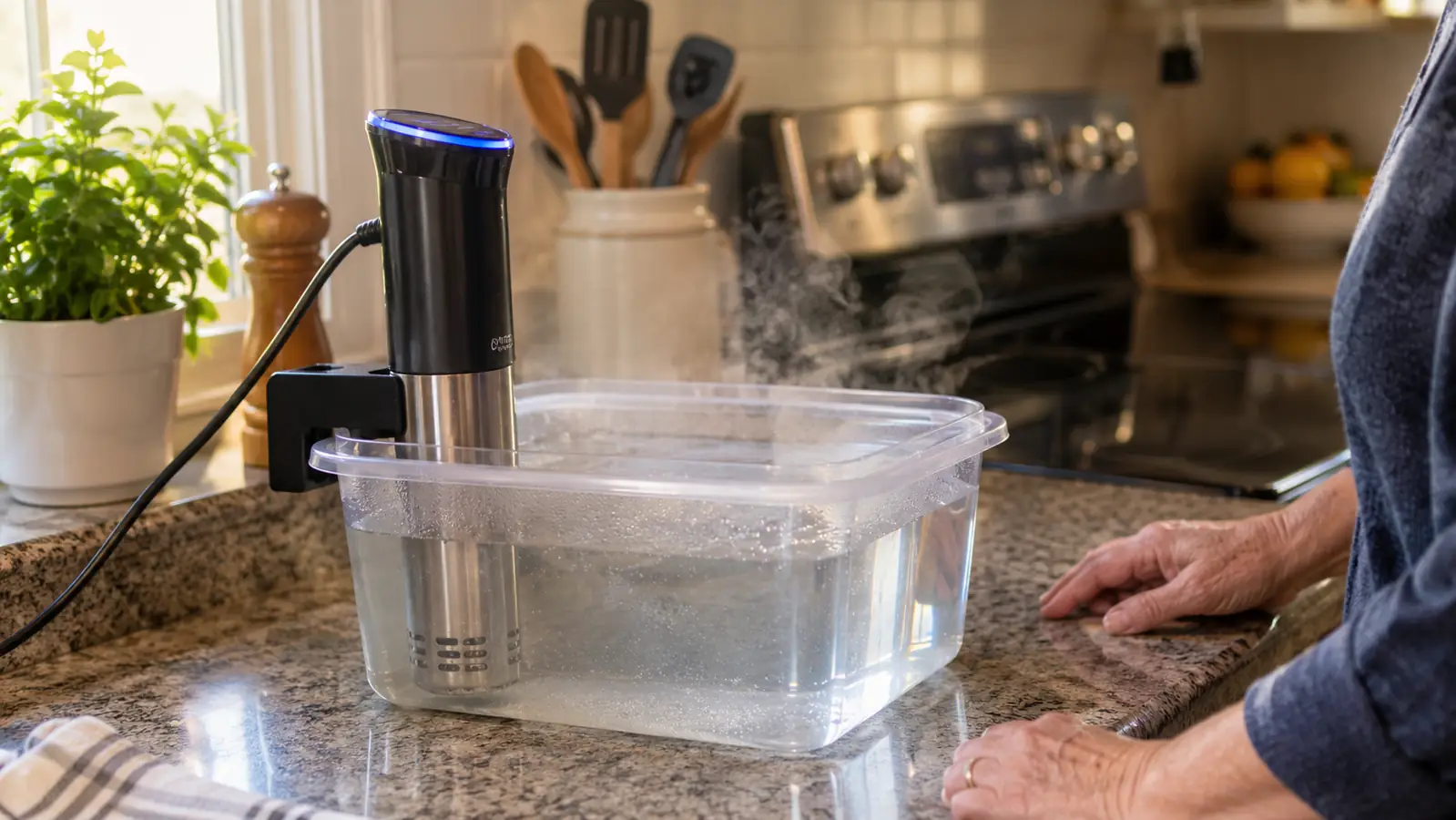
Ruth asked me why I needed another appliance in a kitchen with eight feet of counter. Fair question. I did not have a good answer at the time. What I had was a complaint I had been carrying for years: I could not hold a pork chop at 140 degrees. My electric glass-top range comes at you in waves. You chase the heat up and down, and by the time the middle of the chop is where you want it, the outside is gray and tired and the edges have given up. I taught high school chemistry for thirty-one years, so I know what a thermostat does. I also know exactly what my stove does not do. In the first week of March I bought the Anova Culinary Precision Cooker Nano 2.0 with my own money, along with four other pieces of gear I had been putting off for a decade. I have cooked with it once or twice a week since.
Sous vide is not a technique so much as a decision to stop guessing. You put food in a bag, you put the bag in water, and you tell the water a number. The water stays at that number. That is the whole idea, and if you have ever pulled a chicken breast off a pan at 155 degrees because you were tired and hungry, you already understand why it matters. What I did not expect was how much of the learning happened in the first two weeks and how little after that. I did ruin one piece of salmon by leaving it in far too long. I also cooked a cheap chuck roast for thirty hours and got something my son-in-law asked me to make again, which is the closest thing to a review I get from this family.
The Quick Verdict
Eight months of steady use, one ruined piece of salmon, and no repairs. It holds temperature and stows in a drawer. It stops at 197 degrees, which none of my dinners have needed.
Amazon Check Today's Price →The 12.8 inch cooker that lives in the drawer under my oven
It clips to a 12 quart container, holds the water at the number you set, and goes back in the drawer when dinner is done. Current price and the 2 year warranty are on the listing.
Amazon Check Today's Price on Amazon →How I've Used It
My setup is not fancy. I clip the cooker to a 12 quart plastic food container that sits on the counter while I am cooking and gets stacked behind the flour bin when I am not. I use zip-top freezer bags and the water displacement method, which means I lower the bag into the water with the seal open and let the pressure push the air out before I close it. I do not own a vacuum sealer and I have not missed one. For a steak I set the temperature on the cooker itself, walk away, and sear it afterward in the old 12 inch stainless skillet that came with the house. The skillet is not part of the sous vide story, but neither is any sear that happens after the water bath, so it belongs in the telling.
The pattern of my week looks like this. Monday or Tuesday I cook chicken breasts, because they are the thing my stove has always done worst. Thursday or Friday I cook pork chops or a steak. Sunday morning, if the grandkids are coming, I do eggs in the shell at 145 degrees for about an hour and a half, then crack them into a bowl, and they come out with yolks like soft custard and whites that are barely set. Ruth does not cook much, but she has opinions, and the eggs are the thing she asks for. The cooker sits in the drawer under the oven between uses, which matters more in this kitchen than I expected when I bought it.
What surprised me is how the machine changed my attention rather than my skill. When I pan cooked a steak, the whole ten minutes was the steak. I stood at the stove moving it, watching the clock, listening for the sound to change. With the water bath I set the number, clip the bag, and go read or pay bills or help Ruth with the crossword. Then ten minutes at the end is the only ten minutes that demands anything from me. The net effect is that I cook the same dinner with a fraction of the standing and worrying, which at sixty three is not a small thing. It is most of the reason I kept using it after the novelty wore off in week three.
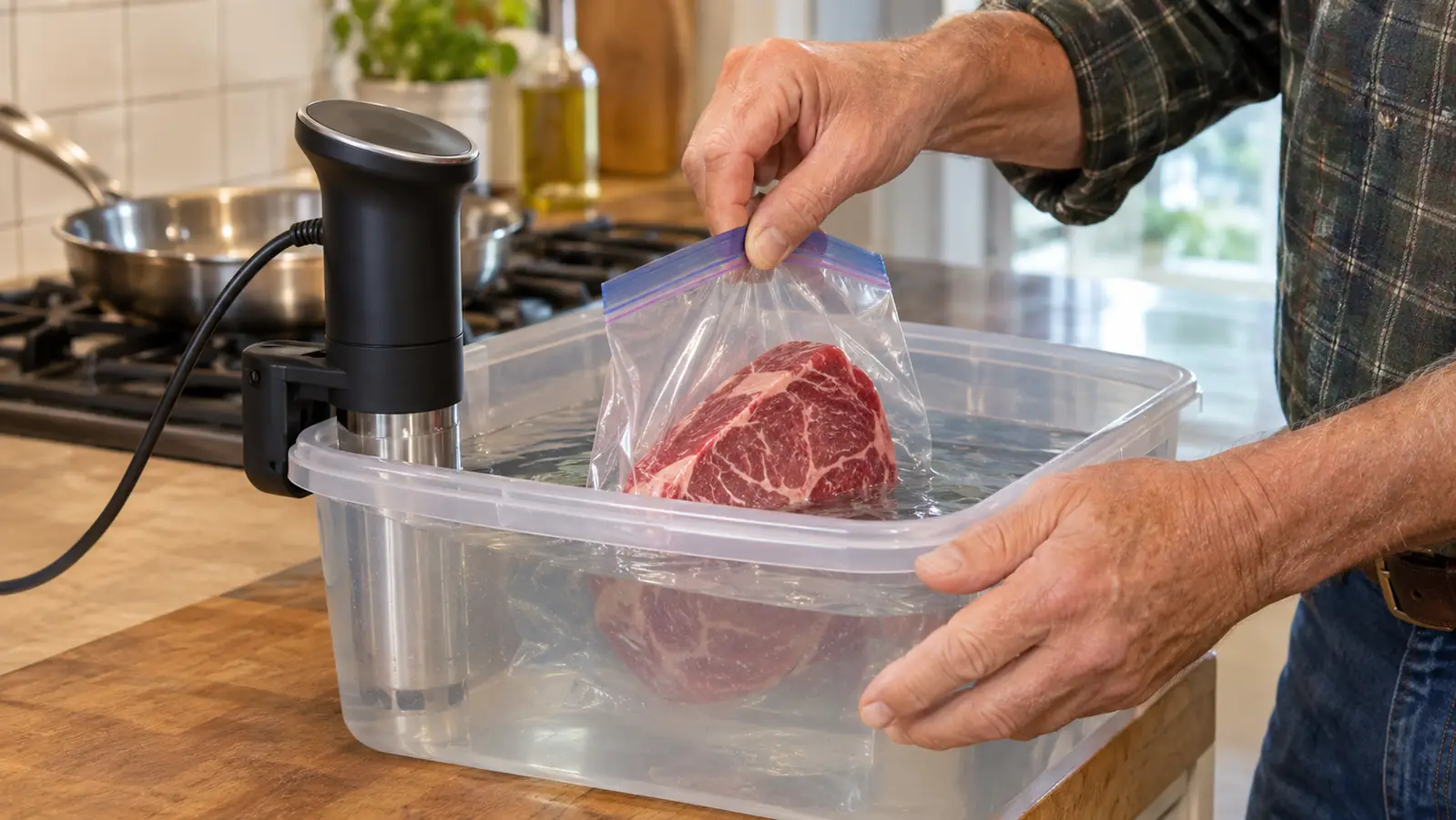
What 800 Watts Buys You, and What It Does Not
The Anova Culinary Nano runs at 800 watts on standard 120 volt household current, and it holds the water anywhere from 32 degrees up to 197 degrees. I want to be plain about the top of that range, because people assume sous vide means boiling and it does not. 197 degrees is below a simmer. It is fine for vegetables and it is fine for custard, but if you want to cook dried beans at a rolling temperature or make stock, you want a stove and not this. Eight hundred watts is genuinely enough for a 12 quart container, and I have had no trouble bringing that volume up to temperature and keeping it there. The housing is plastic, the whole thing weighs 1.7 pounds, and it measures about 4.1 inches deep, 2.2 inches wide and 12.8 inches tall, which is exactly why it fits in a drawer where a stockpot never will.
The smaller number that nobody talks about is the bottom of the range. 32 degrees means you can set the water cold, but the useful everyday floor is whatever your tap runs and your food safety demands. What I actually use is a narrow band: 130 to 135 for steak, 145 for chicken and pork, 145 for eggs, and 185 to 190 for carrots with butter when I am feeling patient. That is a small window inside a big range, and the honest truth is that the cooker is not to blame for that. It is holding a setpoint. If you set a setpoint you do not like, it will hold that one just as faithfully, which is a lesson I learned the hard way with a pork tenderloin in April.
One practical note on containers. Twelve quarts is enough for four chicken breasts or two decent steaks side by side, and it is what I would buy again. If you are cooking for a crowd you will want more water and more room between the bags, and you should know that a fuller container takes longer to come up to temperature. I cover mine with foil while it runs, which cuts the warm up time noticeably and keeps the water from disappearing over a long cook. I did not read that anywhere clever. I noticed the water level dropping during a chuck roast and solved it the way a chemistry teacher solves things, which is to say slowly and with foil.
Steaks, Chicken, Pork Chops and Eggs
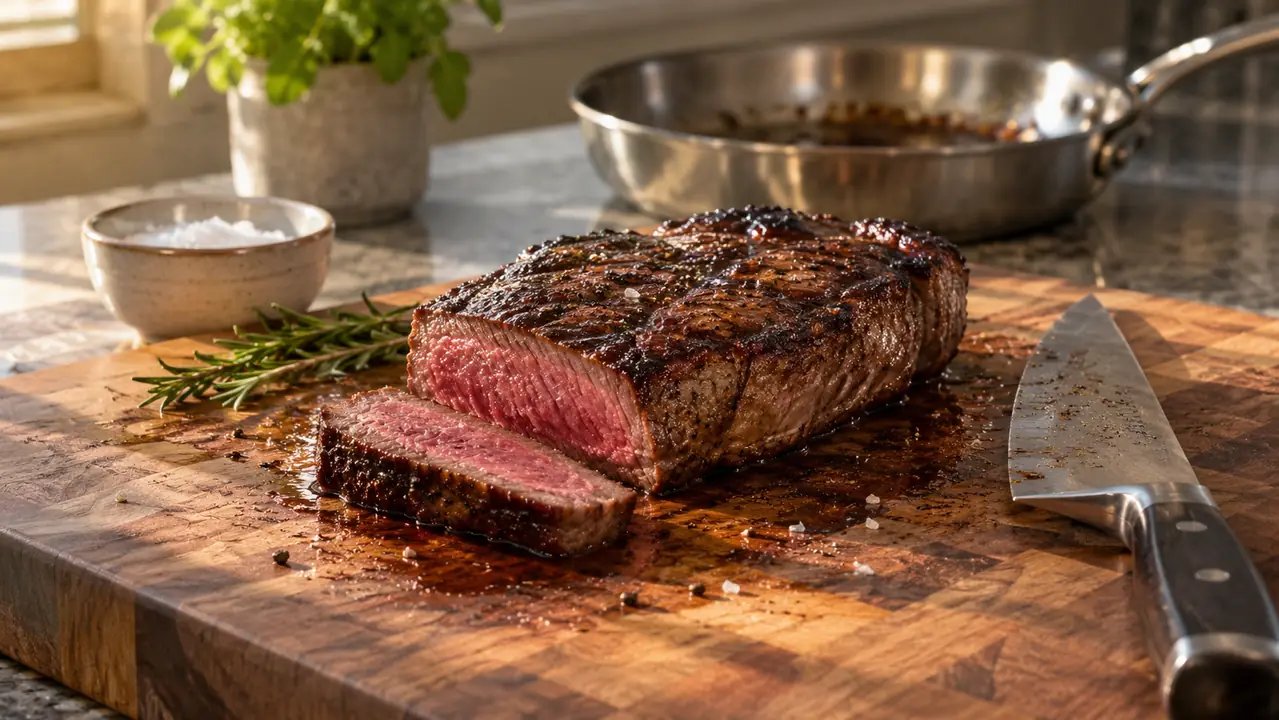
Steak is where most people start and where the technique earns its keep. A one inch strip at 130 degrees for about an hour comes out an even medium rare edge to edge, which is something I could never do on the glass top without a gray band under the surface. The sear afterward takes sixty to ninety seconds a side in a skillet I have heated hard. If you skip the sear you will get a piece of meat that is technically correct and texturally wrong, so do not skip the sear. I pat the steak dry first. A wet surface steams, and steamed steak is a sad thing to put in front of your wife.
Chicken breasts improved the most. At 145 degrees for about an hour and a half they come out juicy in a way that a pan cannot manage reliably, and the difference between a good one and a dry one is no longer a matter of how carefully I stood there. Pork chops at 145 are the same story. My mother cooked pork to gray as a matter of principle, and I ate it for twenty years without knowing any better. A pork chop cooked to 145 and seared for a minute is a different food. Ruth, who is a fair judge and not a generous one, said so without being asked, and then asked me to do it again the next week.
Eggs deserve their own paragraph because they surprised me. You cook them in the shell, unbagged, at 145 degrees for an hour and a half, and then you crack them into a bowl. What comes out is a yolk that is thick and custardy and a white that is barely opaque. You cannot peel them and you should not try. They will not look like anything you have made before, and the first time you make them you will think you have done something wrong. I did. Then I put them on toast with salt and a little pepper and made the same thing the following Sunday. If you have grandchildren who will eat eggs at seven in the morning, this is a thing worth knowing.
Eight months, somewhere near sixty cooks, and the only thing I have had to replace is the water.
The App, the Cooker Itself, and the Ceiling
The Nano can be run two ways: from the controls on the unit itself, or from the free Anova Culinary app on your phone. The listing calls the control method App, and the app does carry the recipe temperatures that I would otherwise guess at and get wrong. But I want to be clear that you do not need a phone in the kitchen to cook with this. I set most cooks on the cooker directly because that is my preference, and it is not a knock on the app. When I do open it, it is for two things: a timer on a long cook, and the recipe temperatures. That is the whole of my use, and it has been enough.
The ceiling at 197 degrees is the one limitation I would want a buyer to hear from me rather than discover. It is a fine number for vegetables, custards and reheating, and it is not a number for anything that needs a boil. I found that out on a night I wanted to blanch green beans and did not want to dirty a second pot. I dirtied the second pot. The other limit is that this is a single purpose tool. It does one thing, it does that thing well, and it will not sear, brown or crisp anything. Everything I cook in it needs a second step afterward, and I have made peace with that because the second step is short.
There is a rhythm to it that took me a month to trust. Early on I kept opening the bag to look, which is the sous vide equivalent of opening the oven door every four minutes. Once I stopped, the results got better, which tells you more about me than about the cooker. The other thing I had to learn was to season before the bag, not after. Salt in the bag, pepper after the sear. Pepper in the bag at 145 degrees for an hour and a half turns bitter, and I learned that the way I learn most things, by making it and then eating it.
What Held Up Over Eight Months
Eight months in, the Anova Culinary cooker has not failed. The clip is still firm on the rim of the container, the housing has not discolored or cracked, and the water has stayed where I set it as far as I can tell without a second instrument to compare against. I have not tested it against a lab thermometer, and I am not going to pretend otherwise. What I can tell you is that the results have been consistent, and consistency is the only proof that matters to me. The unit comes with a 2 year warranty and I have not needed it. I wipe the housing with a damp cloth, I do not put it near the sink full of dishes, and I unplug it and let it come to room temperature before it goes back in the drawer.
What I would change is small, and it is the same complaint I have about most modern appliances. The cooker wants you to use an app, and the app wants an account, and the account wants your patience. You can ignore all of that and use the controls on the unit. I did, mostly. But if you are the kind of person who resents a phone in the kitchen, you should know going in that the machine will nudge you there. That is a preference and not a defect, and it is the only thing in eight months that has made me sigh at my own counter.
What I Liked
- Holds the water at the set temperature for hours, which is the entire job
- 12.8 inches tall and 1.7 pounds, so it fits in a drawer between cooks
- 800 watts brings a 12 quart container up to temperature without drama
- Runs from the controls on the unit, no phone required
- 2 year warranty, and nothing has needed it in eight months
Where It Falls Short
- Tops out at 197 degrees, so no boiling, blanching or stock
- Single purpose, so every cook needs a sear or a second step afterward
- The app nudge gets tiresome if you would rather not use a phone
- Long cooks need the container covered or you will be topping up the water
Who This Is For
This is for someone who cooks the same handful of proteins every week and is tired of the gap between how they turn out and how they ought to. It is for a small kitchen, because the whole rig is a container and a 12.8 inch cylinder that goes in a drawer. It is for a person who does not mind a two step dinner, water bath then skillet, and who would rather set a number and walk away than stand at a stove watching a clock. It is also for anyone who has been quietly annoyed by dry chicken for a decade and assumed the problem was them. If that describes you, this will do the job for years and you will wonder why you waited until a Tuesday in March.
Who Should Skip It
Skip it if you want one appliance that does everything, because this does one thing and does not apologize for it. Skip it if you cook for a crowd most nights, since a 12 quart container fills up fast and you will want a bigger cooker and a bigger bath. Skip it if you resent apps on principle, unless you are willing to use the controls on the unit and ignore the rest. And skip it if what you actually want is browning and char, because that happens in a skillet and the skillet does not need help. I bought mine with my own money in the first week of March, I have used it once or twice a week since, and I would buy it again tomorrow. That is as clean a verdict as I know how to give.
If dry chicken is the problem, this is the fix that does not need a phone
Set the number on the cooker, clip the bag, walk away. It comes with a 2 year warranty and lives in a drawer when it is not working. Today's price is on the listing.
Amazon Check Today's Price on Amazon →