
The short answer first, because that is what you came for. If you cook for two and you are standing in the kitchen anyway, the Anova Culinary Precision Cooker Nano 2.0 does the whole job and then disappears into a drawer. If you want to fill a water bath at seven in the morning and check on it from your desk at noon, the Inkbird WiFi is built around exactly that idea. The rest of this is the reasoning behind those two sentences.
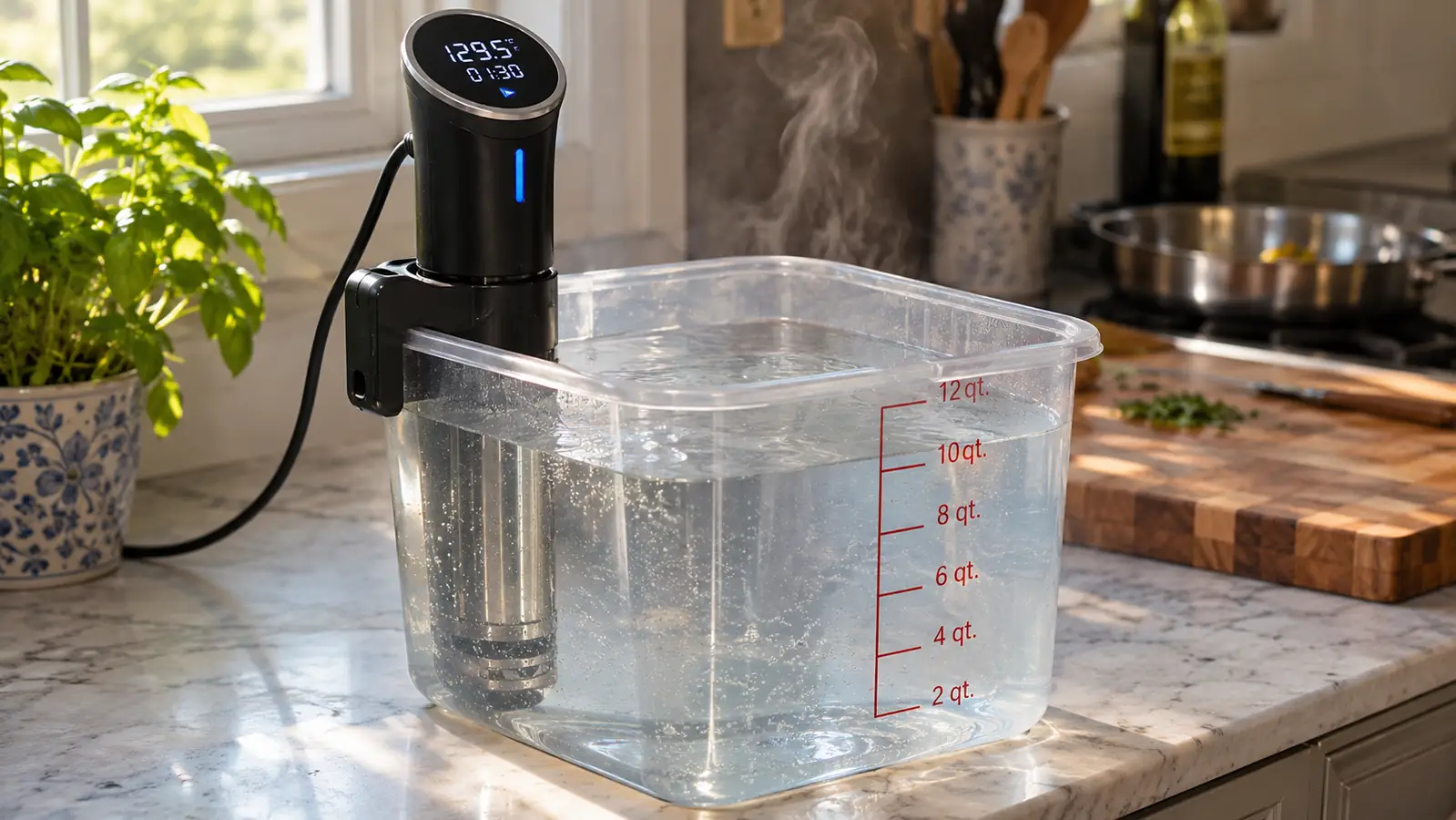
Now my position, so you can weigh what follows. I bought the Anova Culinary Nano 2.0 in the first week of March with my own money, in the same week I replaced four other pieces of worn-out kitchen gear in one trip. It is my first and only sous vide cooker. I have used it once or twice a week since, mostly steaks, chicken breasts, pork chops and eggs, clipped to a 12 quart plastic food container on the counter, with zip-top freezer bags and the water displacement method, because I never bought a vacuum sealer. I sear afterwards in a 12 inch stainless skillet I have owned for years.
And the honesty part: I have not cooked with the Inkbird. I read its listing, studied the photographs, and thought carefully about what its features ask of the person using them. Where I cannot confirm something, I say I cannot confirm it. A comparison written by a man who owns both is usually a comparison written by a man who was sent both.
| Anova Culinary Nano 2.0 | Inkbird WiFi Sous Vide | |
|---|---|---|
| Controls | Buttons on the cooker itself, plus the free app for timers and recipe temperatures | WiFi app control is the headline feature, so the phone is where the remote monitoring lives |
| Checking the bath from another room | The app is a timer and a temperature reference for me. I look at the water with my own eyes | WiFi means the cook can be watched from the next room, or from work |
| Counter footprint | 4.1 by 2.2 by 12.8 inches, 1.7 pounds, and mine stores in the drawer under the oven | A clamp-on circulator sized for a stockpot or container you already own. Measure before counting on a drawer |
| Bath size it suits | I run a 12 quart container, enough for two steaks or four chicken breasts, on 800 watts | The same job: a pot or container on the counter |
| Working temperature range | 32 to 197 F, listed on the product page | Confirm the range on the current listing against the cooks you plan |
| Warranty | Two years, stated on the listing | Not something I could confirm from what I read |
| Best for | One or two people cooking at home, on a schedule they control | Anyone who wants to start a cook before leaving the house |
What Both Machines Ask of You
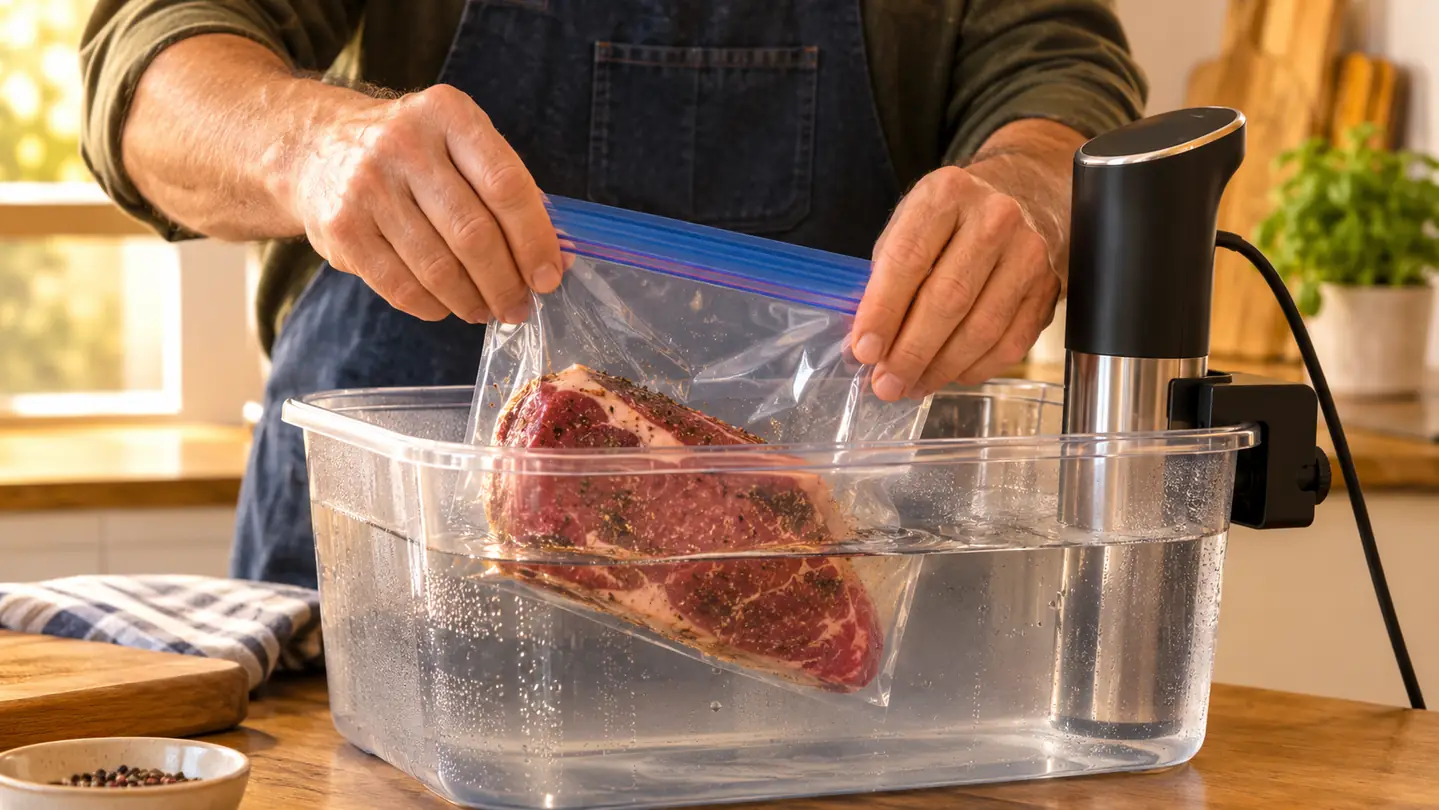
Here is the part that applies whichever one you pick. Sous vide is a container, a bag and a circulator, and the circulator is the least interesting of the three. I use a 12 quart plastic food container that cost less than a decent skillet, zip-top freezer bags, and the water displacement method: lower the open bag of seasoned meat into the water, let the pressure push the air out of the top, then seal it. That is the entire technique. A vacuum sealer is pleasant to own and not necessary, which is a useful thing to know before you start pricing one.
The other thing both machines ask is that you sear afterwards. A steak cooked at 130 degrees is perfectly done and pale as a boiled potato. Ninety seconds a side in a screaming hot skillet, vent fan on and Ruth making a face about the smoke, is what turns it into dinner. If you are not willing to do that step, sous vide steak will disappoint you and you will blame the machine. That is not a fair trial.
Where the Anova Culinary Nano 2.0 Wins
The size is what I notice every single day. The Nano is 12.8 inches tall, 2.2 inches wide and 4.1 inches deep, and it weighs 1.7 pounds. Mine lives in the drawer under the oven, and I have never once had to clear counter space for it. When I want to cook, I fill the container, clip the cooker to the side, and set the temperature on the machine itself. The listing says you can control the cook on the app or on the cooker, and I use both, the cooker for the temperature and the free app for timers and for looking up what a pork chop wants.
The 800 watts are enough for the bath I actually run. In a 12 quart container filled to a sensible line, two steaks or four chicken breasts come up to temperature in a reasonable time and hold there, which is the whole job of a circulator. The listed working range is 32 to 197 degrees Fahrenheit, and that upper number is worth pausing on. 197 is plenty for steak, chicken, pork, fish and eggs. It is not enough for anything that wants a rolling boil. If you were picturing this as a vegetable blanching tool, it is not that machine. There is also a two year warranty, an unglamorous detail that matters enormously at month fourteen.
One more thing I did not expect to care about: it is quiet. It has run on the counter while Ruth read in the next room, and she never asked what the noise was, because there was no noise to ask about. A circulator that announces itself every evening gets old by week three, and this one does not.
Where the Inkbird WiFi Sous Vide Wins
Remote monitoring, plainly. WiFi means the bath is not confined to the room you are standing in. Fill the container before work, set the cook, and you can look in on it from the next room, from the car, from the office. For anyone whose evenings are unpredictable, that is not a gimmick, and I will not pretend otherwise just because it does not suit me. My schedule is not unpredictable. I am retired. Dinner happens when Ruth gets home from the library, and I am twenty feet from the container anyway.
What I cannot tell you is how the Inkbird feels in the hand, how loud it runs, or how good its app is, because I have never cooked with one. What I can tell you is what WiFi asks of you. A wireless cooker is only as good as the network in your house and the software on your phone, and I have spent enough evenings restarting a router to be skeptical of any kitchen appliance that depends on one. If the connection drops mid cook, the water bath does not know or care. It keeps holding temperature. The remote view is the part that goes dark, and you find out when you get home.
The one that lives in a drawer and holds 130 degrees all afternoon
Eight months of steaks, chicken breasts, pork chops and eggs on the Anova Culinary Nano 2.0. If dinner happens in your own kitchen, this is the simpler machine.
Amazon Check Today's Price on Amazon →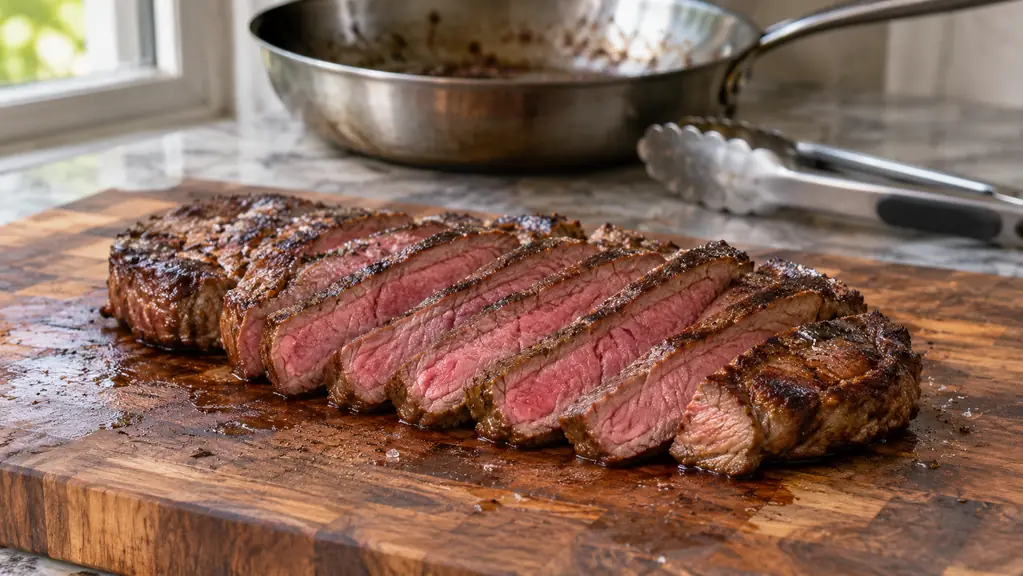
What Eight Months of Real Use Looks Like
The first cook was a pair of pork chops. I made the beginner mistake of oversalting them and the second beginner mistake of opening the bag to look. The machine did its part. I set 140 degrees on the front of the cooker, clipped it to the container, and walked away for an hour and a half. When I came back the water was exactly where I left it, which is a strange thing to be impressed by until you have cooked for thirty five years on an electric range that runs hot at the front left and cool at the back right.
A steak at 130 degrees for ninety minutes, then ninety seconds a side in the skillet, comes out the same shade edge to edge. That is the entire promise and it holds up. Chicken breasts at 150 for an hour and a half come out juicy in a way a skillet cannot manage without constant attention. Pork chops at 140 are a different food from pork chops cooked until grey. I have stopped ordering steak in restaurants, which Ruth finds funny given that I spent forty years ordering steak in restaurants.
The eggs are the sleeper. Forty five minutes at 145 degrees, cracked into a bowl with toast and too much black pepper, gives a texture somewhere between a poached egg and a soft custard that no other method gets near. Ruth, who does not cook and does not care about technique, asked what I had done differently. That is the highest compliment available in this house.
The fiddly parts are the parts nobody films. Bags float, so I clip the top of the bag to the container rim. Water evaporates over a two hour cook, so I cover the container with foil. A bag that is not fully submerged cooks unevenly, and you learn that by cutting into it. I ruined one chicken breast by letting the bag ride up against the side of the container. The cooker was not at fault.
Thirty five years of cooking on a range that ran hot at the front left and cool at the back right, and the first steak I cooked to the temperature I actually asked for came out of a plastic container.
The Upkeep Nobody Mentions
Every circulator in this category accumulates mineral scale, Asheville water included, and scale insulates the heating element from the water it is supposed to be heating. I run a vinegar and water solution through mine every couple of months, let it circulate warm for twenty minutes, and rinse it out. Ten minutes of tedium that keeps the machine honest. The rest is drying the body and the clamp before they go back in the drawer, and never running it below the minimum water line, which is a rule worth taping to the side of the container.
The other piece of upkeep is the one I did not anticipate. A 12 quart food container takes up more counter space than the cooker does, and mine sits out with the lid on between cooks, which is not how I pictured my kitchen looking at sixty three. I have made peace with it. It holds a batch of chili for the rest of the week, so it earns its square foot.
Who Should Buy Which
Buy the Anova Culinary Nano 2.0 if your cooking happens at home, on a schedule you control. If you are feeding one or two people, if you want a machine that stores in a drawer and sets up in ninety seconds, and if you are content to check the water with your own eyes, the Nano does everything. On 800 watts in a 12 quart bath it has never struggled to hold temperature for me, and eight months in it has given me no reason to think about replacing it.
Buy the Inkbird WiFi if the checking is the point. If you leave the house at seven and eat at seven, if you want to start a cook for a family member who gets home before you do, or if you simply like seeing the number on your phone from wherever you are, WiFi earns its place and the Anova Culinary approach will feel limited. What you give up is a machine I can vouch for from my own counter, and what you take on is a dependency on your home network that I am personally not willing to add to my evening.
And if you are still deciding whether sous vide is worth the counter space at all, my advice is to start with a container, a box of zip-top bags, and one cheap cut of beef. The machine is the easy half of that decision. The other half is whether you enjoy standing in your own kitchen for the ninety seconds it takes to sear.
The cooker I have run twice a week since March, with no vacuum sealer and no counter space given up
If the bath is going to sit twenty feet from your stove anyway, the remote monitoring is a feature you would pay for and never use. Two year warranty, stored in a drawer, set on the machine itself.
Amazon Check Today's Price on Amazon →