
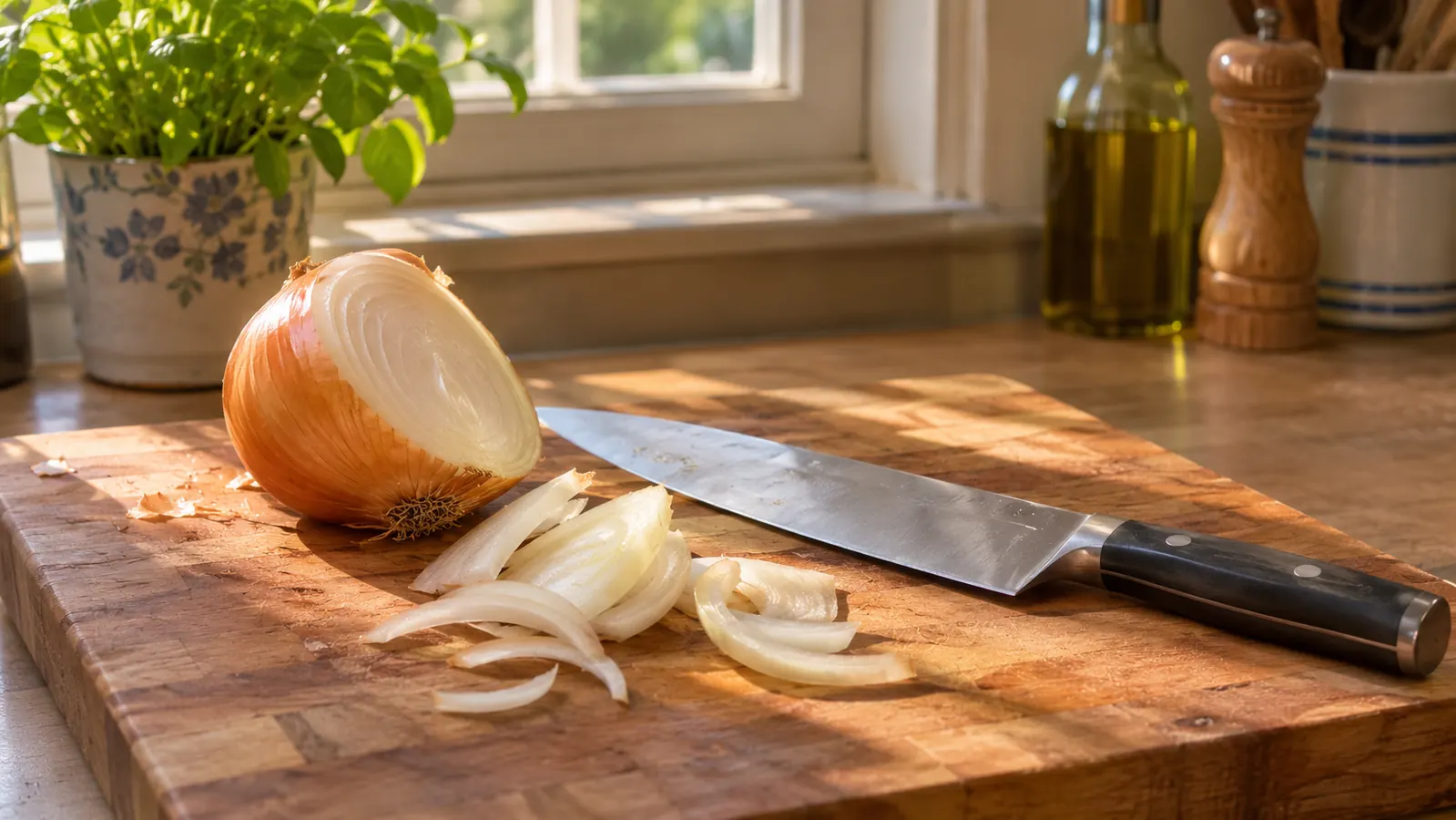
Here is the honest version. I bought the Victorinox Fibrox Pro in the first week of March, along with four other pieces of kitchen gear, because after thirty-five years of cooking dinner I finally admitted that my old knife block was making my life harder. Twenty years of department store knives that would not hold an edge. I sharpened them. I honed them. They were dull again by Thursday. The whole block now sits in a cardboard box in my garage and I have not opened that box since April.
This is not a love letter. The knife is good and I reach for it nearly every night, but it is a specific tool with specific limits, and most of the write-ups I read before buying skipped the parts that matter after eight months of nightly cooking. So here is what nobody tells you: what a stamped blade actually means in your hand, why the famous handle divides people, what that dishwasher claim really asks of you, and who should buy something else entirely.
The Quick Verdict
A light, genuinely sharp eight inch blade that rewards good habits and quietly punishes bad ones. It is the most useful thing in my kitchen and it is not the last knife I will ever buy.
Amazon Check Today's Price →If your knife is dull again by Thursday, start here
Eight months in, this is the knife I reach for first every night. An eight inch stamped stainless blade and a textured handle that stays put when my hands are wet. Check the current price before you decide.
Amazon Check Today's Price on Amazon →How I've Used It
One knife, one household, eight months of nightly cooking. I cook dinner most nights for my wife Ruth and me, and a larger Sunday dinner when the grandkids visit. Call it two hundred and thirty dinners, plus onions, garlic, carrots, potatoes, a chicken broken down every couple of weeks, and about forty loaves of bread that had nothing to do with this knife but kept me standing at the board anyway.
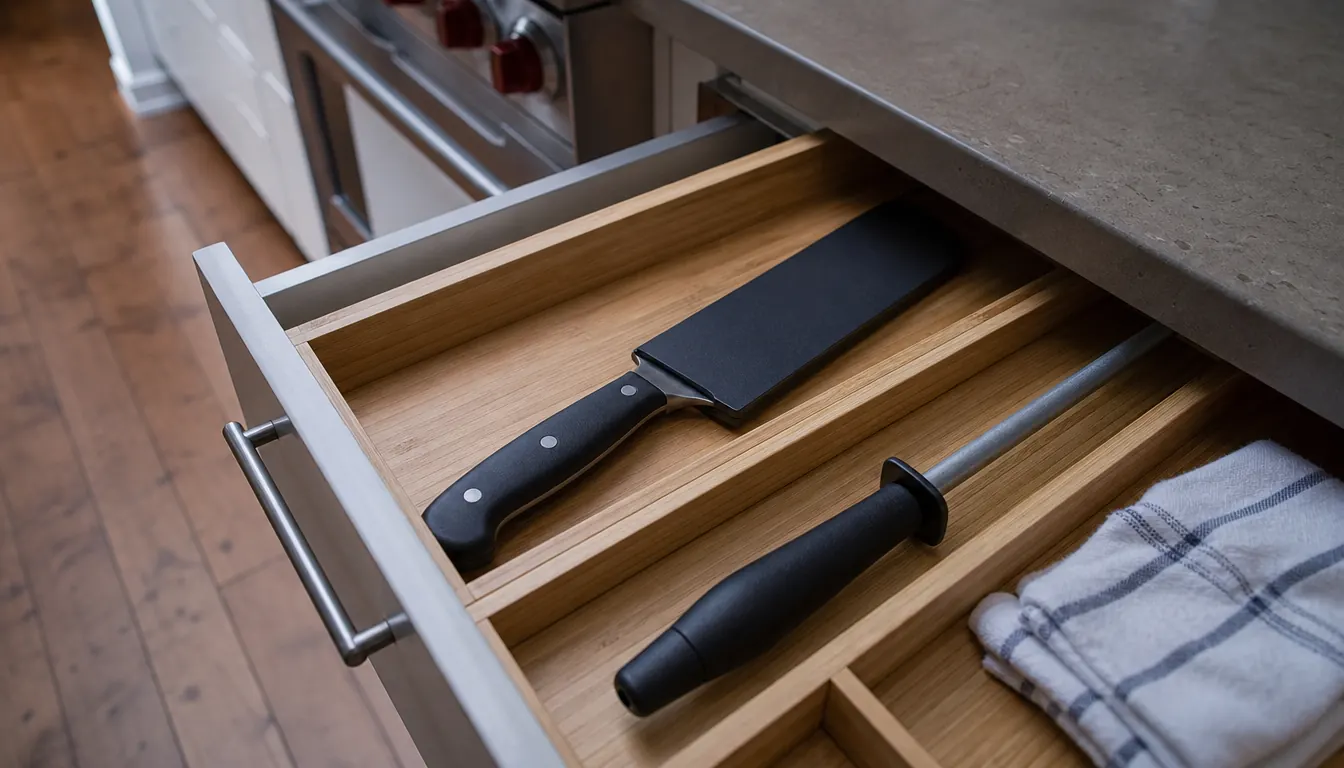
It lives in a knife guard in the drawer to the right of my stove. I rinse it, wash it and dry it straight away, even though Victorinox lists it as dishwasher safe, and I run it over a honing steel I already owned roughly once a week. That is the entire routine. No oil, no special storage, no ceremony, no ritual I would abandon by the second week.
My counter is eight feet of laminate and my board is butcher block, which turned out to matter more than I expected. A knife used on wood for twenty minutes a night has to feel right in a way a knife used twice a month does not. The first month I was aware of the handle. By the third I had stopped noticing it, which is the highest compliment I can pay a tool. That is what it looks like when a knife gets out of the way.
The Part Nobody Mentions: It's a Stamped Blade
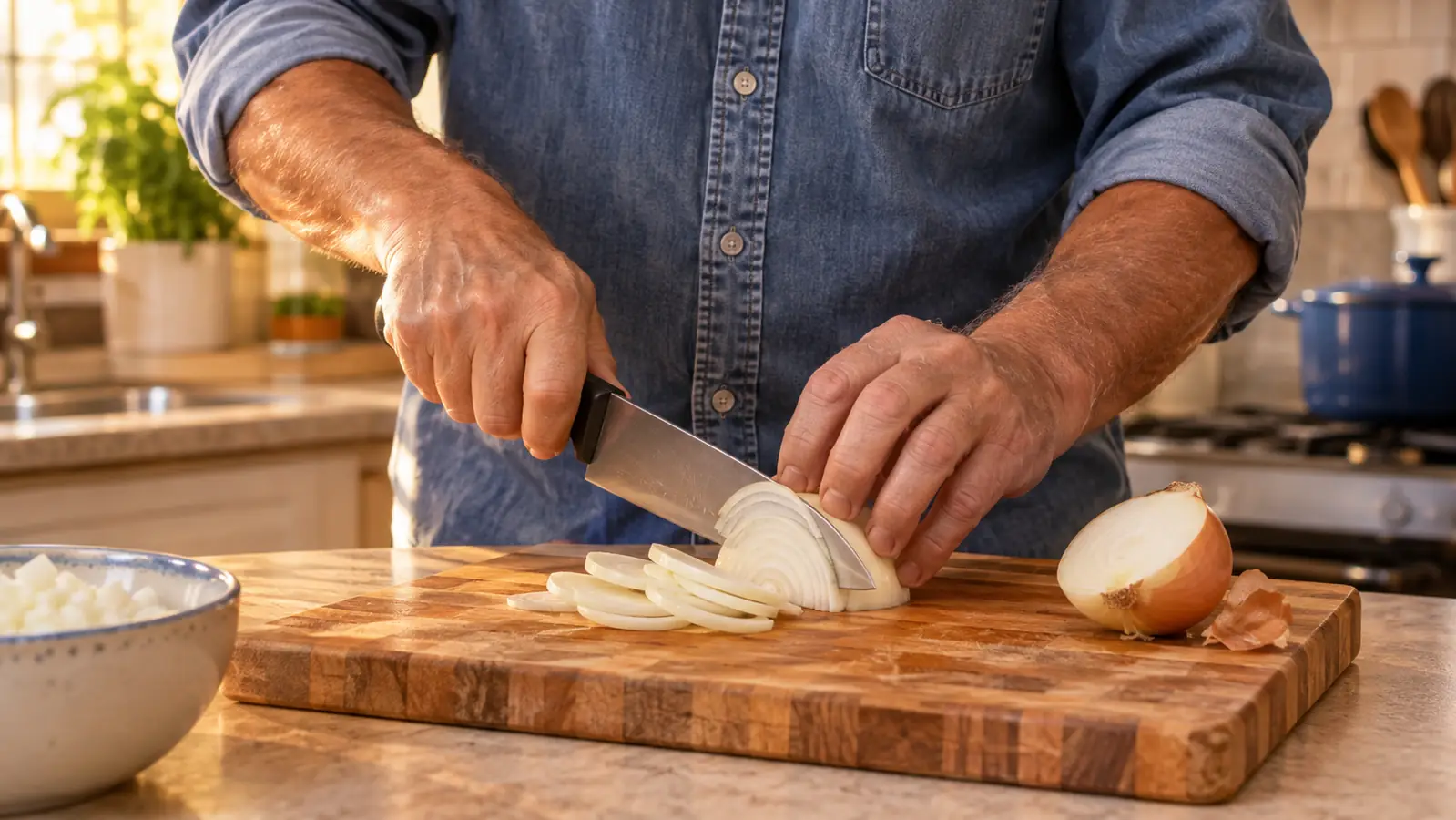
The Fibrox Pro is stamped. A sheet of stainless steel is cut to the blade shape, then ground and finished. It is not forged from a heated billet and it does not carry a heavy bolster down the full height between blade and handle. The listing says so plainly, and that one fact explains almost everything else about how the knife behaves in your hand.
Forged knives are sold as the serious option and for plenty of cooks they are. But the real difference is geometry, not virtue. A stamped blade is thinner and lighter, so there is less steel to push through an onion and less weight to control at the end of a long evening. My old knives were heavy in a way I had mistaken for quality. They were simply tiring.
What you give up is mass. A thin blade does not fall through a sweet potato. You push, and then you push again. If you are the kind of cook who wants the knife to do the work, this is not that knife. It is a fast, precise blade for someone willing to be the force behind it, and after eight months I prefer that arrangement, though I did not expect to.
The compensation is control. An eight inch blade with an overall length of 13.4 inches, ground thin, turns easily at the tip and lets you feel what you are cutting. When I mince garlic I can tell the difference between the clove and the board underneath it. With the heavy old knife I mostly felt the knife.
It went from March to October without a single trip to a sharpener, and it still bites into a tomato skin without crushing it, which is the only test I really trust.
Where It Genuinely Shines
Out of the box it was sharper than anything I have owned. Not slightly. I sliced a tomato with almost no pressure, then did it again to be sure I had not imagined it. Cheaper knives arrive with an edge that seems fine until you have something better to compare it to, and then you cannot unfeel the difference.
Eight months later, after weekly honing and no sharpening, it still cuts. Not factory sharp, and I will not pretend otherwise, but a tomato still gives up its skin without being crushed. My old block would have failed that test by the third week of March. That is the whole argument for this knife in one sentence.
The handle deserves its reputation. Fibrox is a textured synthetic grip, and the texture is not decoration. Wet hands on a smooth handle are how people get hurt, and I have the scar on my left thumb from a wet chicken and a slick knife to prove how quickly that goes wrong. This one grips when wet. It also absorbs nothing, so it does not hold on to onion or raw chicken the way a wood handle can.
Then there is the thing that changes your relationship with a tool: it stopped being a decision. I did not spend three weeks reading about steel hardness before I bought it and I did not wince afterwards. Today's price on a knife the listing itself bills for home cooks and professionals alike is the reason it is so widely recommended, and it is the reason I use mine without ceremony. A knife you are afraid of is a knife you leave in the drawer.
Where It Falls Short
The tip is thin enough that I treat it with respect. Not fragile, but it will not tolerate being used as a pry bar, and I have watched people do that to chef's knives for decades. If you scrape the edge across a board to scoop up chopped onion, you will roll that edge over, and no knife at any price forgives that for long.
The handle divides people and I want to be straight with you about it. It has no rivets, no wood, no brass, no weight at the butt. My wife Ruth picked it up once, said it felt like something from the garage, and put it down. If part of why you want a good knife is that it looks like a good knife sitting on the counter, this one will disappoint you and no amount of cooking will change your mind.
There is no full bolster either. Some cooks brace a finger against it and miss it when it is gone. I came from knives without one, so it cost me nothing, but if you learned to cut on a forged blade with a heavy collar you will notice the absence every single night for a while.
And the factory edge is a starting point, not a permanent condition. It arrived sharp, it stayed sharp for months with honing, and then it started to fade. That is normal and it is not a fault, but any review claiming a knife stays sharp forever was written by someone who is not cooking. I will need to sharpen it, probably before the year is out.
It also arrives as the knife and nothing else. Included components, one chef's knife. No guard, no sleeve, no box worth keeping. If you store knives loose in a drawer you will want to buy a guard, and if you have never thought about that before, you will think about it now.
What I Liked
- Arrives genuinely sharp and holds a usable edge for months with weekly honing
- Light, thin blade that turns easily and lets you feel the cut
- Textured handle grips well with wet hands and absorbs nothing
- Stamped stainless blade, eight inches, backed by a lifetime warranty against manufacturer defects
- Easy on the wallet, which means you actually use it instead of saving it
Where It Falls Short
- Thin tip and light blade need care, since you do the pushing rather than the weight
- Plain handle with no rivets or bolster, which bothers some cooks
- No bolster to brace against and nothing included for storage
- Listed as dishwasher safe, but the machine will shorten the life of the edge
- Will need real sharpening within the first year
The Dishwasher Line in the Listing
The listing says dishwasher safe, and I believe it in the narrow sense that the knife will survive the machine. I still do not put mine in. Heat, water and detergent are unkind to any edge, and a knife that spends years in a dishwasher will be sharpened far more often than one that gets rinsed and dried by hand.
I want to be clear that this is my standard, not a manufacturer warning. Victorinox rates it for the dishwasher and I am not contradicting them. I am telling you what I do and why: drying takes twenty seconds, and twenty seconds is less work than sharpening a blade I let go soft.
If you already know the knife will end up in the machine, buy it anyway. It will survive. But do not expect the edge to hold up the same way, and do not blame the steel when it does not.
Honing, Sharpening, and What It Actually Needs
Honing is not sharpening, and the two get muddled constantly. A honing steel straightens an edge that has rolled slightly. It removes no metal and creates no new edge. Five or six light strokes a side, once a week, brings the bite back for another seven days. That is most of what this knife asks of you.
Real sharpening is a separate job, and the listing points you toward Victorinox's own sharpeners, sold separately. I have not bought one yet. When the edge finally goes flat I will either learn to do it properly on a stone or buy a simple guided sharpener, and I have not decided which. What I will not do is drag it through a motorized pull-through that removes more steel than it needs to.
The honest summary is that this knife asks for a small amount of attention on a regular schedule. Every knife worth owning does. There is no version of good cooking where the knife maintains itself.
What I Got Wrong
I expected to want a heavier knife within a month. I had spent two decades believing weight meant substance, and the first week with a light blade felt like driving a small car on a windy day. That feeling lasted about ten days. What replaced it was a preference I did not anticipate. I like feeling the board through the blade.
I also expected the handle to be the compromise I tolerated to get a good blade without a fight. It turned out to be a feature I now look for. When I pick up a smooth-handled knife in someone else's kitchen, it feels like it is trying to escape my grip. If someone offered me this same blade with a fancier handle, I am not sure I would take it.
The third thing I got wrong was assuming I would eventually upgrade. I had it in my head that this was a starter knife, a placeholder until I knew enough to buy something serious. Eight months in, I no longer think of it that way. It is not a placeholder. It is the knife, and the serious purchase is the one I already made.
Who This Is For
If you cook most nights and your current knife is a daily irritation, this is the simplest upgrade available to you, and it will change your dinners more than a new pan will. It suits cooks who work on a board, who will rinse and dry a knife without being asked twice, and who want a light, quick blade instead of a heavy one. It suits people who are hard on their gear but willing to be careful with an edge. And it suits anyone who would rather spend the money on good food than on a fancy handle.
Who Should Skip It
Skip it if you want a knife that feels substantial and looks the part, because this one will not give you that and you will resent it every time you open the drawer. Skip it if you know it will live in the dishwasher and you are unwilling to accept a shorter edge life. Skip it if you regularly break down squash, poultry bones or anything frozen, where the mass of a heavier forged blade does real work and this one just makes you push harder. And skip it if you already own a good eight inch chef's knife, because this is not an upgrade from a good knife. It is an upgrade from a bad one.
Two hundred dinners later, this is still the one I reach for
No ceremony, no oil, no special storage. A rinse, a dry, a weekly pass on the steel, and it keeps cutting. If your knife is the weak point in your kitchen, check today's price and read the listing yourself.
Amazon Check Today's Price on Amazon →