
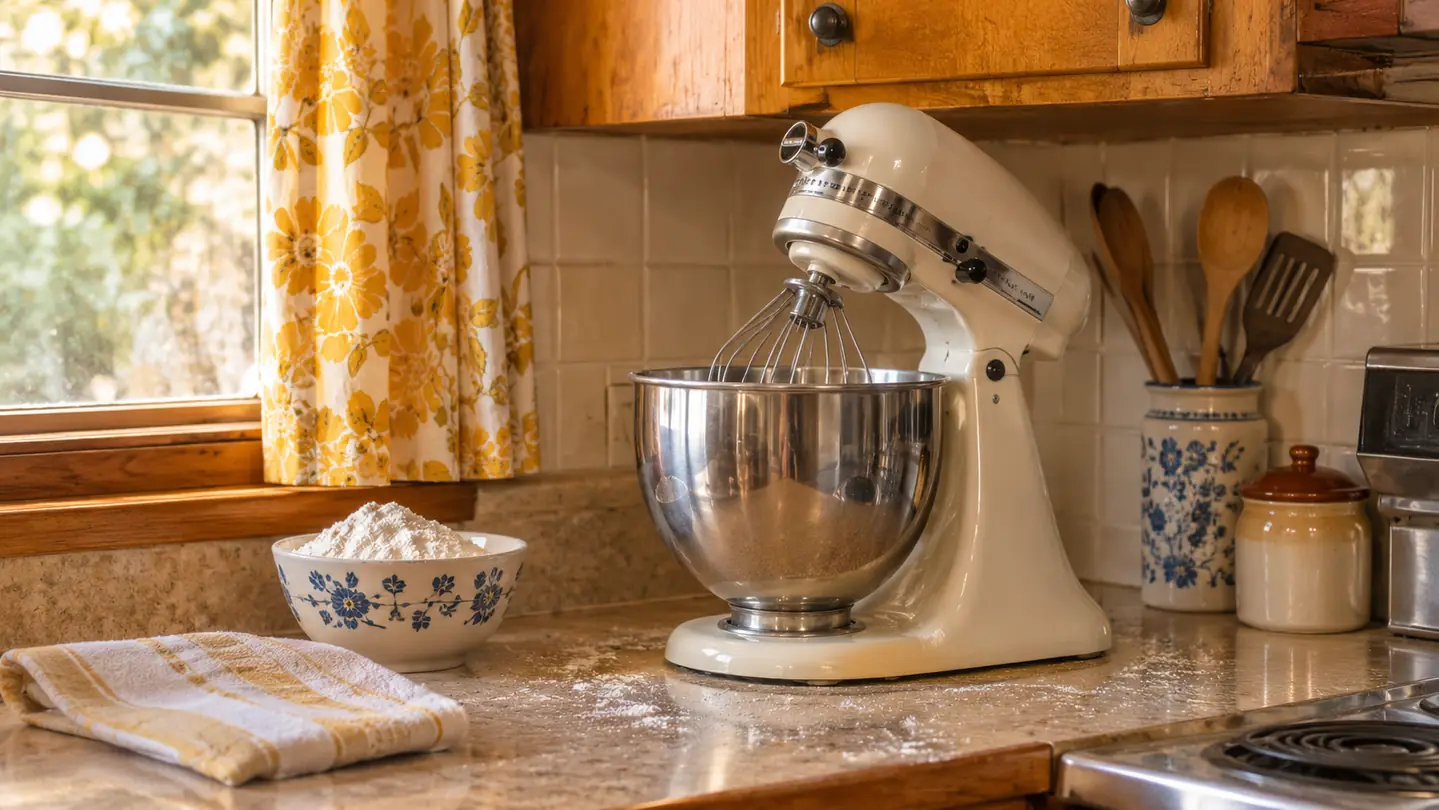
The first thing I did after setting the KitchenAid Artisan on the counter was measure what it had taken. 14.1 inches deep, 8.7 inches wide, 13.9 inches tall, and that is with the head down. I have eight feet of laminate counter in a 1970s kitchen and I had just handed a real slice of it to a machine. Eight months later I would make that trade again, but I want to be straight with you about what the trade actually is.
This is not the review that talks you into a stand mixer. I bought this one myself in the first week of March, along with four other pieces I used to replace a kitchen full of worn out starter gear, and I have used it once or twice a week ever since. Ruth, my wife of thirty six years, chose the finish and has never once touched the speed knob. What follows is the conversation I would have with a friend in the aisle: what earned its place, what irritates me, and the fine print I should have read more slowly.
The Quick Verdict
A heavy, steady workhorse that will likely outlast cheaper mixers, provided you can spare the counter depth and you do not mind hearing it work.
Amazon Check Today's Price →If you have 14 inches of counter, this is the mixer I would buy twice
The KitchenAid Artisan in the five quart size, with the stainless bowl, coated flat beater, coated dough hook and six wire whip in the box. Nothing else needed for bread, batter or cream.
Amazon Check Today's Price on Amazon →How I Have Used It for Eight Months
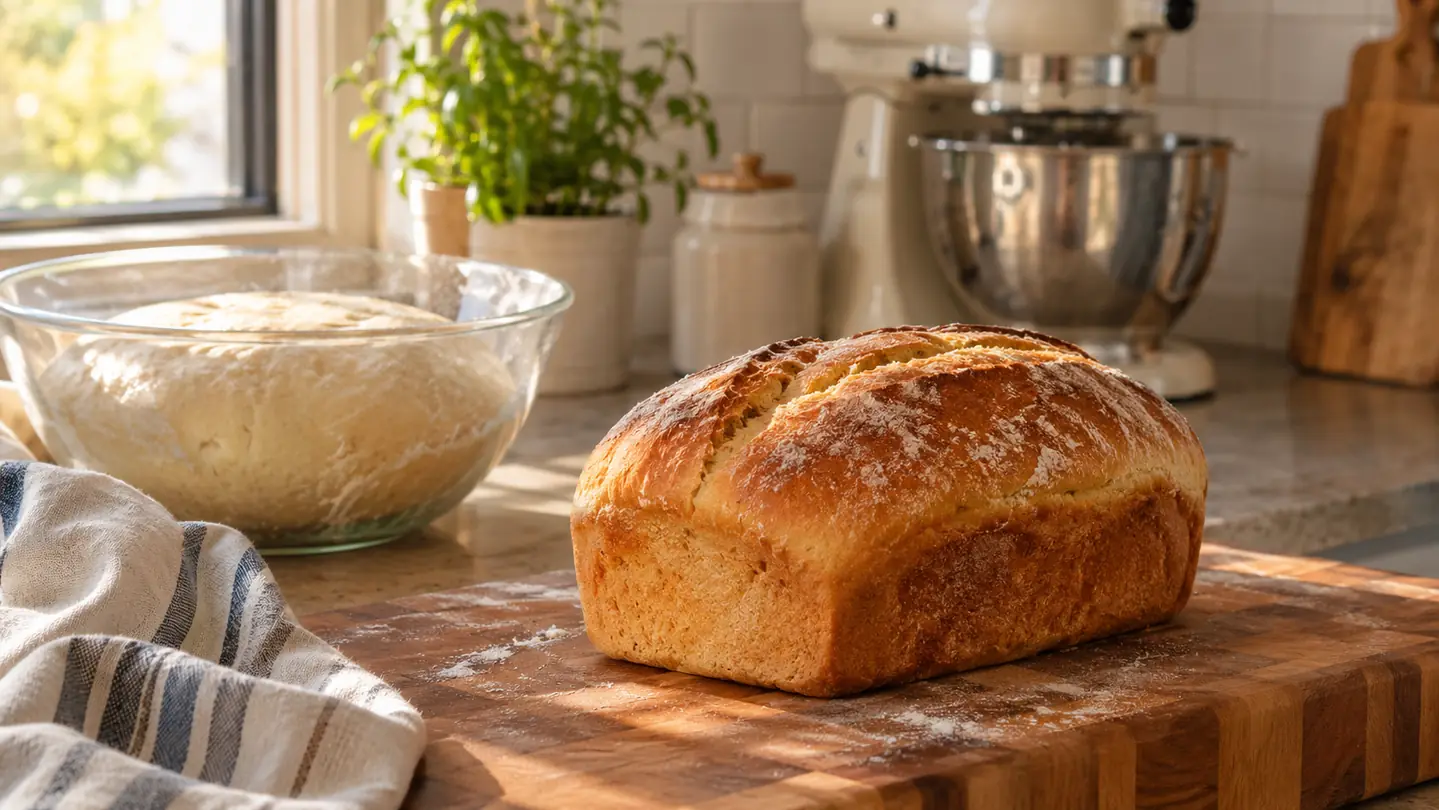
I use it the way most people actually would, which is less often than a cooking show and more often than a cupboard. Sunday dinner with the grandkids means a loaf of bread, so the dough hook goes on and the machine works for ten minutes while I do something else. Friday is often pizza. Every few weeks there are cookies, and once a month I whip cream for whatever Ruth has decided we are having.
I use exactly what came in the box: the five quart stainless bowl, the coated flat beater, the coated dough hook and the six wire whip. I own no extra attachments and I have not missed them. Grinding meat and rolling pasta sound lovely and would take cabinet space I do not have.
The learning curve was shorter than I expected and different from what I expected. My first loaf, I stood watching the hook turn like a man watching a clock. My second loaf, I walked away and came back to dough climbing the hook and a machine working harder than it needed to. Now I stay in the room for the first two minutes and then I leave it alone. That is the whole technique, and it took one ruined afternoon to learn.
To be concrete about the schedule, since vagueness helps nobody: in a typical month I run it six or seven times. Two of those are Sunday bread, usually a 70 percent hydration dough with about 500 grams of flour that kneads for eight minutes on speed two. One is pizza dough on a Friday, which is stiffer and makes the machine work noticeably harder for the first minute. Two or three are cookies, which are the easiest thing I ask of it and finish in a couple of minutes on stir and then speed four. The last one is whipped cream, and I have learned to stop it the moment it turns from loose to holding a soft peak, because cream goes from done to butter faster than any other thing in this kitchen.
The Numbers Nobody Reads Before They Buy
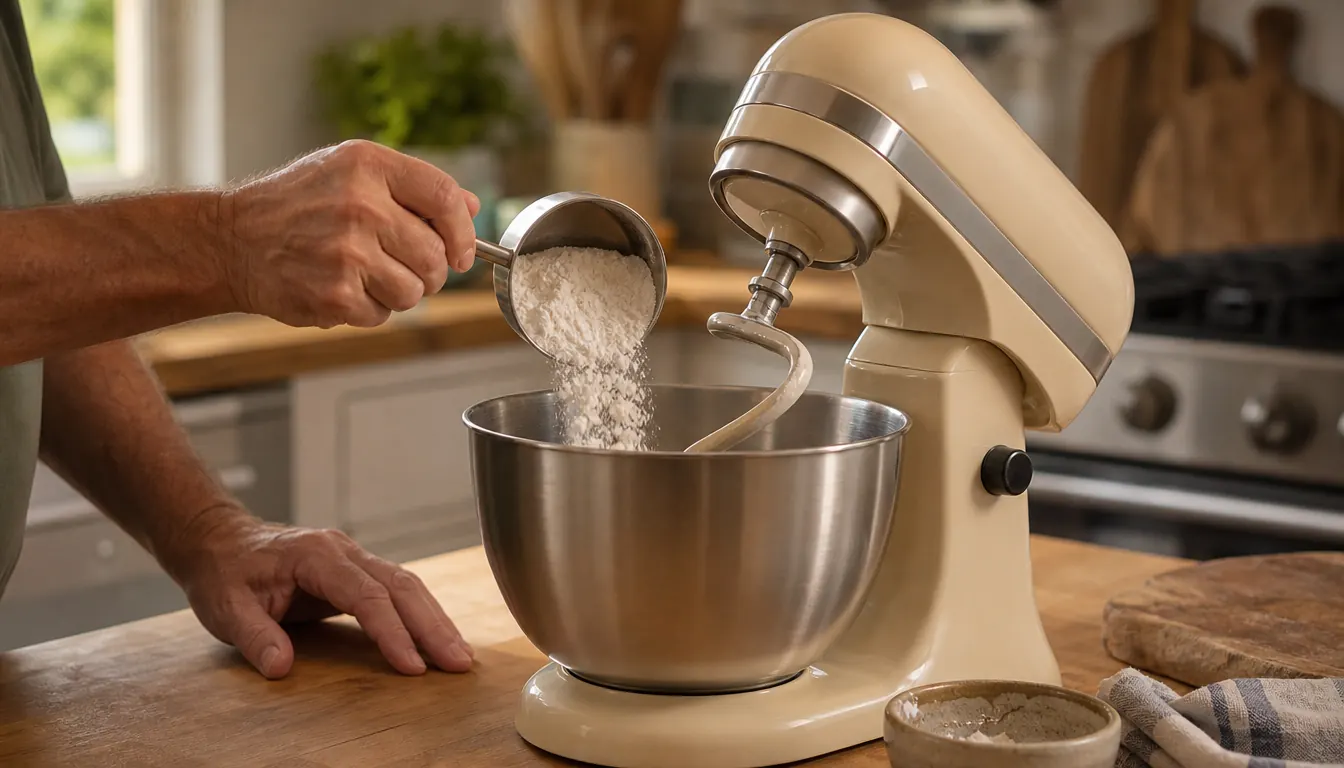
Twenty two pounds. That is the weight and it is the number that matters most. A stand mixer is not a thing you put away. You can lift 22 pounds, certainly, but you will not lift it twice a day, so wherever you set it down is where it lives. Mine sits in the corner by the window and does not travel. If your kitchen has no permanent corner, decide where the corner will be before you buy.
325 watts. That figure reads small next to the numbers on some other boxes and I understand why people compare them. All I can tell you is what happened in my kitchen: it has not stalled on any dough I have asked it to knead, and my doughs are not timid. A single wattage number tells you less than the weight of the machine and the way it holds steady, and I would rather report what I saw than argue about a spec sheet.
One year limited warranty. That is the fine print and it deserves saying plainly, because a 22 pound machine with a one year warranty is a bet the manufacturer is making about how it will hold up. Register it. Keep the receipt somewhere better than a junk drawer. And go in expecting to keep it a long time, because that is the only way the arithmetic works in your favour.
Ten speeds on a knob, from a stir setting up to a fast whip. In eight months I have used four of them: stir, two, four, and eight when there is cream to whip. The knob is stiff in a way I like, since I am often turning it with flour on my hands. The listing also mentions 59 touchpoints around the bowl, which means a great deal to an engineer and nothing at all to a baker. What I will say is that the bowl has a handle, and after ten minutes of kneading you will be glad it does.
One more dimension worth measuring before you commit, because I did not: the head needs room to tilt back and stay there. I cleared the footprint and forgot the arc. My machine sits about four inches from the window frame and the head clears it, but barely, and I measured that after the fact by tilting the head and watching it stop a finger's width from the trim. If you have a cabinet run directly above the machine rather than open wall, go stand at the counter with a book and swing it up before you buy. That is a two minute check that saves a return.
Where the Five Quart Bowl Actually Stops
The listing says nine dozen cookies in a single batch, and I believe it, though I have never made nine dozen of anything. What I can tell you is where I stop. Two batches of a stiff bread dough in one bowl is my ceiling, and I stop there because the dough starts climbing the hook and the machine starts working audibly harder. For a household of two with occasional grandkids, five quarts has been enough every single time. For a household that bakes for a crowd every week, it would not be.
The bowl is the part people underestimate. It is stainless, it has a handle, and it is the piece you will wash most often. I wash mine by hand, dry it, and set it back on the machine, and it still looks like the bowl that came out of the box in March.
The coated flat beater and the coated dough hook have both picked up fine scuff lines where they meet the bowl, which I expected. The coating has not chipped. The wire whip is the piece I use least and handle most carefully, because six thin wires bent out of shape are six thin wires you cannot put back.
I did try to push the ceiling once, in April, out of curiosity. I put a double batch of that stiff pizza dough in and turned it on at speed two, and within ninety seconds I could hear the difference: a slightly higher pitch, the counter humming under my palm, the head rocking a fraction where it meets the base. Nothing broke. Nothing even came close. But I stood there with a hand on the machine the whole time like a man holding a ladder for somebody, and I decided then that the listed capacity and the comfortable capacity are two different numbers. Nine dozen cookies is probably honest, since cookie dough is soft. Bread is the test, and my bread ceiling is two batches.
Nine dozen cookies is the listing's number. Two batches of stiff bread dough is mine, and I have the sticky photographs to prove it.
The Noise Is Part of the Deal
Nobody warns you properly about this. The KitchenAid Artisan is not loud the way a blender is loud. It is a low, steady hum that you feel through the counter as much as hear. On stir it is a whisper. At four, kneading bread, it fills the kitchen and you raise your voice a little to talk over it. At eight, whipping cream, you will not be holding a conversation.
The listing carries a noise figure that I will not repeat as though it meant something, because one number cannot describe a machine that makes ten different sounds at ten different speeds. Here is what I would tell you instead. If your kitchen opens onto the room where people watch television, they will hear it. If you bake at six in the morning, the people upstairs will hear it.
It has never bothered me. It has bothered Ruth twice, both times before seven in the morning. I have come to like it, honestly, the way I like the sound of a kettle. It is the sound of something being made. But I am not trying to sell you a mixer, so take the honest version: it is a working machine and it sounds like one.
There is a reason beyond preference, and it took me a while to work it out because I taught chemistry for thirty one years and old habits die slowly. A machine this heavy does not need to spin fast to do the work, so most of what you hear at kneading speed is the gears and the dough, not a motor screaming. That is also why the counter hums: 22 pounds of metal sitting on laminate transmits vibration straight into the cabinet below. I put a thin rubber mat under mine in June, of the kind sold for dish drainers, and it took the edge off the low end without changing anything else. Cheap fix, and I wish I had thought of it in March.
The Tilt Head and the Fiddly Bits
The head tilts back, which is what makes it easy to scrape down the bowl and add flour without fighting anything. The trade is headroom. You need clear space above the machine and you need to make sure the head is down and settled before you turn the knob. I forgot twice. The first time the bowl jumped and I caught it. The second time I did not, and there was flour on the floor and a lesson learned. If you are the sort who skips the manual, that is the one line of it that matters.
With the head back, the beater sits in your way when you add ingredients, and you cannot casually tip a cup of flour in with the machine running unless you are quicker than I am. Small thing. It adds up over eight months.
Then there is the bowl clearance. Mine left a thin ring of butter and sugar unmixed at the bottom for the first month before I worked out what was happening and put it right. Five minutes of fiddling, no tools, no drama. Nobody mentions it at the register, and it is the first thing I would check on a new one. The test is simple: drop the beater in with the head down and look at the gap. Mine was close to a quarter inch at the bottom when it left the box, which is too much for creaming butter into sugar, and after adjusting it sits where a scrap of paper dragged around the bowl just barely catches. I use that paper test on it every few months now, because a machine that gets used twice a week will work its way loose eventually.
What I Would Change
If I could change one thing it would be the weight, except that is not true. A lighter machine would slide around on stiff dough, and a mixer that walks across the counter is worse than a mixer that stays exactly where you put it. So I would not change it. I would just want you to know what you are buying, because 22 pounds is furniture, not a gadget.
The second thing I would change is the booklet. Mine told me what the ten speeds were for and almost nothing about what to do when the beater leaves a ring of butter at the bottom of the bowl, or how stiff a dough is too stiff. I learned more from one afternoon of reading than from the paper in the box. That is not a reason to avoid the machine. It is a reason to expect a week of figuring things out.
The third thing is smaller and I will mention it because nobody else does. The machine has one job in my kitchen and the cord to do it is a nuisance. Mine reaches the outlet behind the toaster only if I route it along the back of the counter, and I have tidied that cord perhaps twenty times in eight months. It is not a reason to walk away from a good mixer. It is a reason to look at where your own outlet sits before you choose the corner, because the corner chooses itself once that plug is made.
What I Liked
- Has kneaded every bread and pizza dough I have given it without stalling
- The bowl, flat beater, dough hook and wire whip cover bread, batter and cream with nothing extra to buy
- Heavy enough that it stays put on the counter, even on stiff dough
- Ten speeds on a knob I can turn with flour on my hands
- Eight months of once or twice a week use and nothing has loosened or chipped
Where It Falls Short
- 22 pounds means it needs a permanent home, not a cabinet shelf
- Audible at kneading and whipping speeds, in a way a quiet house will notice
- The five quart bowl caps me at two batches of stiff dough
- One year limited warranty on a machine this heavy
- The beater sat slightly high out of the box and left a ring unmixed until I sorted it
Who This Is For
This is for the person who bakes often enough that a hand mixer has become a nuisance and kneading by hand has become a chore, and who has a permanent corner of counter to give up. That was me exactly. My wrists had started complaining about ten minutes of kneading, and the hand mixer I had owned for years was fine for cake batter and useless for bread. If that describes your kitchen, the KitchenAid Artisan solves a real problem and will likely outlast the counter it sits on.
It is also for the person who wants one machine doing several jobs rather than four machines doing one each. I gave up a hand mixer, a bread board routine and a good deal of standing and pushing, and I got back a corner of counter and a habit of baking on Sundays without thinking about it. That trade is the whole case for the machine, and it either appeals to you or it does not. There is no clever argument that will change it.
Who Should Skip It
Skip it if your counter is already full, because a 22 pound machine that lives in a cabinet is a machine that gets used twice a year and resented the rest of the time. Skip it if you bake for a crowd every week, because the five quart bowl will frustrate you and there are larger machines built for that job. Skip it if you make one batch of cookies a few times a year, because a hand mixer and a strong arm will do that work. And skip it if noise in a quiet house would genuinely bother you. That is not a joke. Some people cook early, some cook late, and you know which one you are.
Eight months in, I am glad it is on my counter. It has taken over a corner that used to hold a fruit bowl nobody needed, it has made Sunday bread a habit instead of a project, and it has not given me a moment of trouble since I sorted the beater height. That is a boring review. It is also a true one, and boring and true is what I want from a machine I plan to keep for a long time.
The corner of counter I would give up again
Five quarts, ten speeds, and everything you need for bread, cookies and cream in the box. Check the current price and the full spec sheet, then decide whether your counter has the 14 inches.
Amazon Check Today's Price on Amazon →