
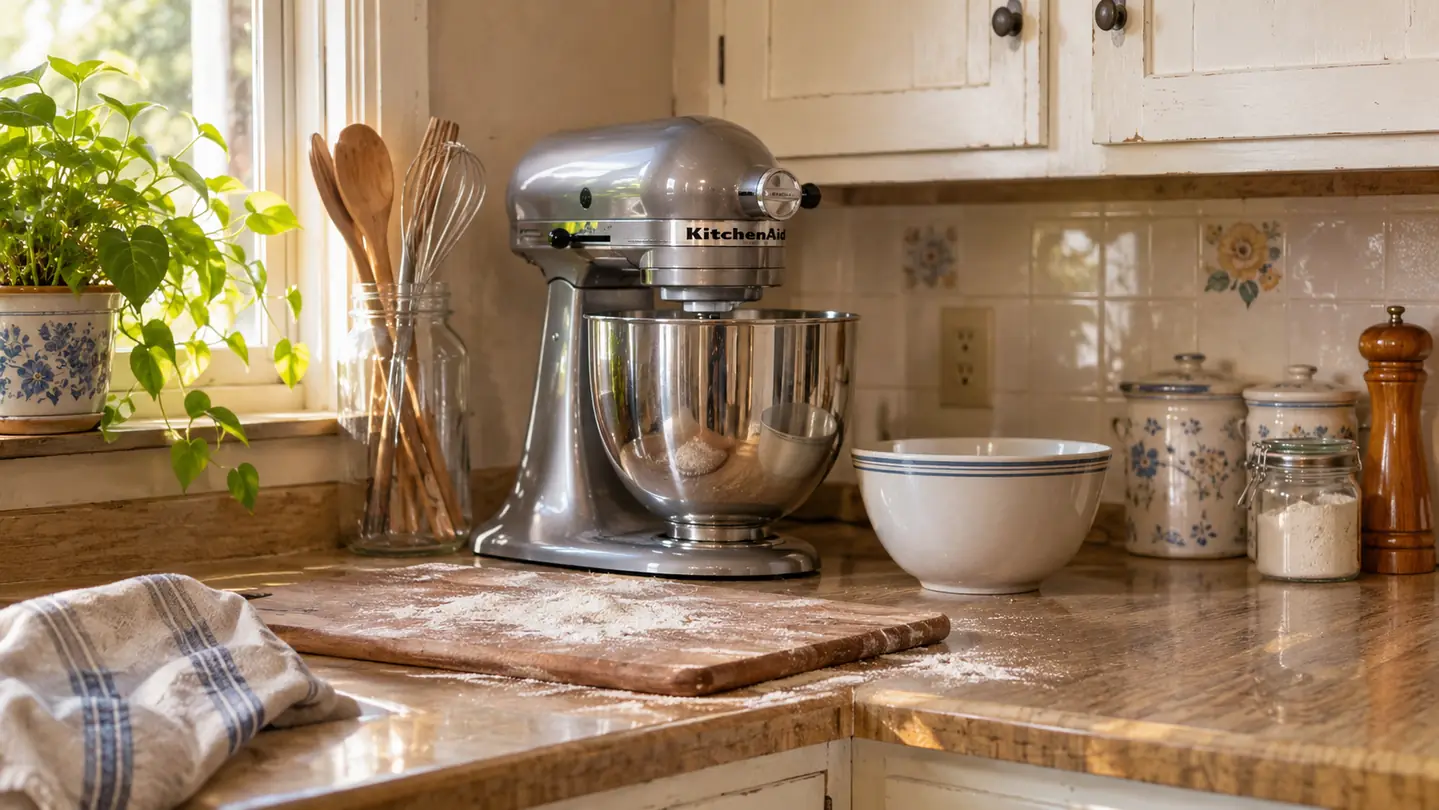
The Sunday before I bought it, I stood at the counter and kneaded bread dough by hand for eleven minutes. By the last fold my wrists had that dull ache that shows up around four in the afternoon now that I am 63. Ruth looked up from her book and said, without much sympathy, that I had been complaining about that ache since Christmas.
She was right, which is annoying. So in the first week of March I replaced the worn-out pieces of my kitchen in one go, and the last item on the list was a KitchenAid Artisan, the 5 quart tilt-head stand mixer. Until then I had been getting by with a hand mixer I bought in the nineties and with my own forearms. Both were tired.
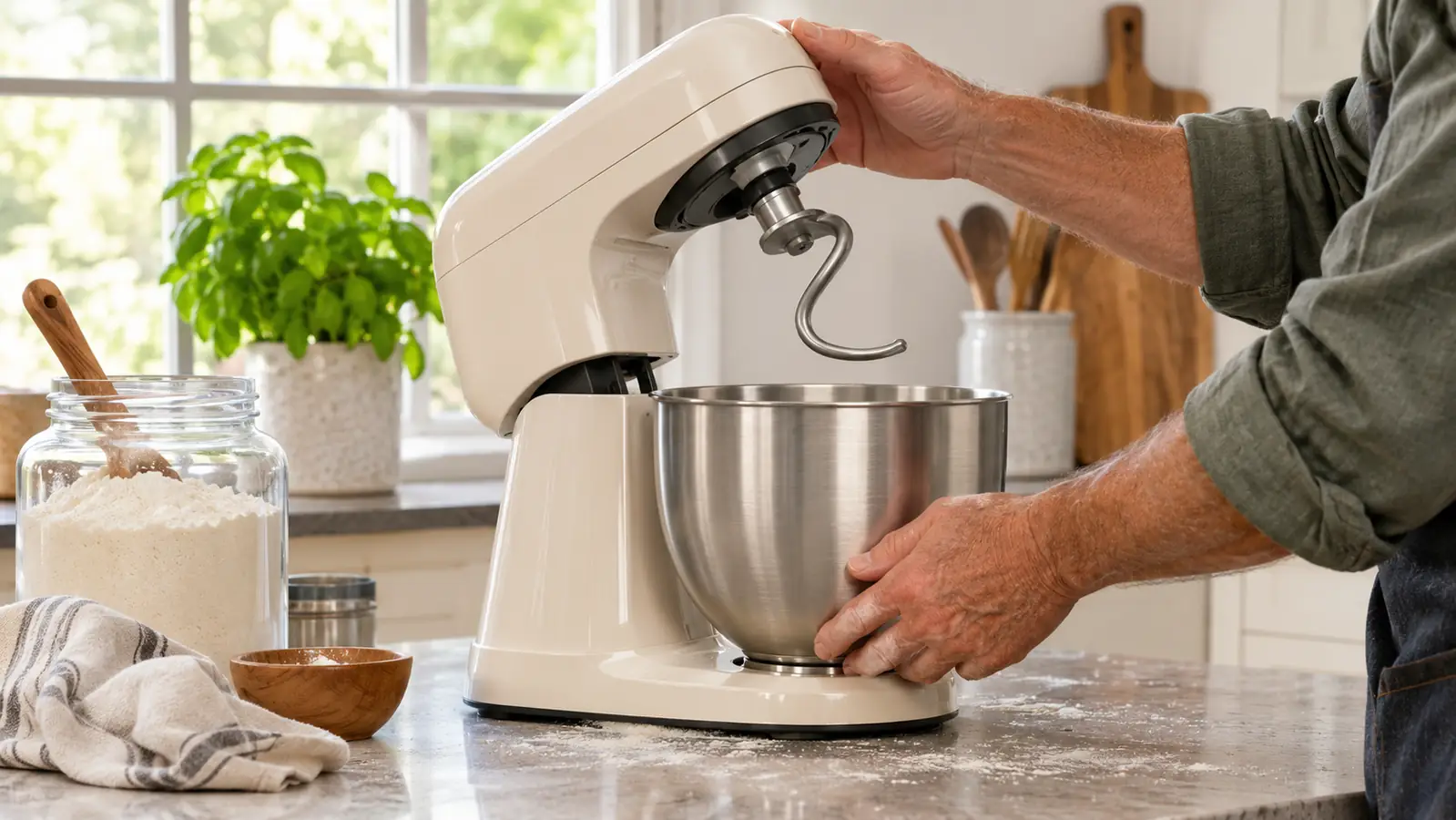
I taught high school chemistry for 31 years, so I like a machine I can understand. The Artisan is not complicated. There is one knob on the side with ten speeds, and a head that tilts back so you can reach the bowl. That is the whole interface. No screen, no menu, nothing to update.
In the box you get a 5 quart stainless steel bowl with a handle, a coated flat beater, a coated dough hook and a six-wire whip. Eight months in, I have bought nothing else for it, and I have not needed to. The bowl lifts off, which matters more than I expected, because scraping it out at the sink is the only cleanup step that takes any real effort. Everything else wipes down with a damp cloth.
Eight months, close to sixty loaves, and not once have I gone back to kneading by hand.
One knob, ten speeds, and a bowl that holds a two loaf batch
The KitchenAid Artisan is the machine I use every Sunday. Bowl, flat beater, dough hook, wire whip, and nothing else required. Check today's price and availability on Amazon.
Amazon Check Today's Price on Amazon →The first thing I made was pizza dough, because pizza dough is forgiving and I did not want to wreck a Sunday loaf on a machine I did not understand yet. I locked the bowl in place, fitted the dough hook and turned the knob to stir. The dough came together in a shaggy ball, then smoothed out over the next few minutes while I stood there drinking coffee and feeling slightly unnecessary.
That is the real change, and it is not about speed. My hands were never consistent. At minute nine they got careful and started kneading differently than they had at minute two. The hook does not get tired and it does not get careful. The dough gets the same treatment for the same length of time every Sunday, and the bread has been more even because of it.
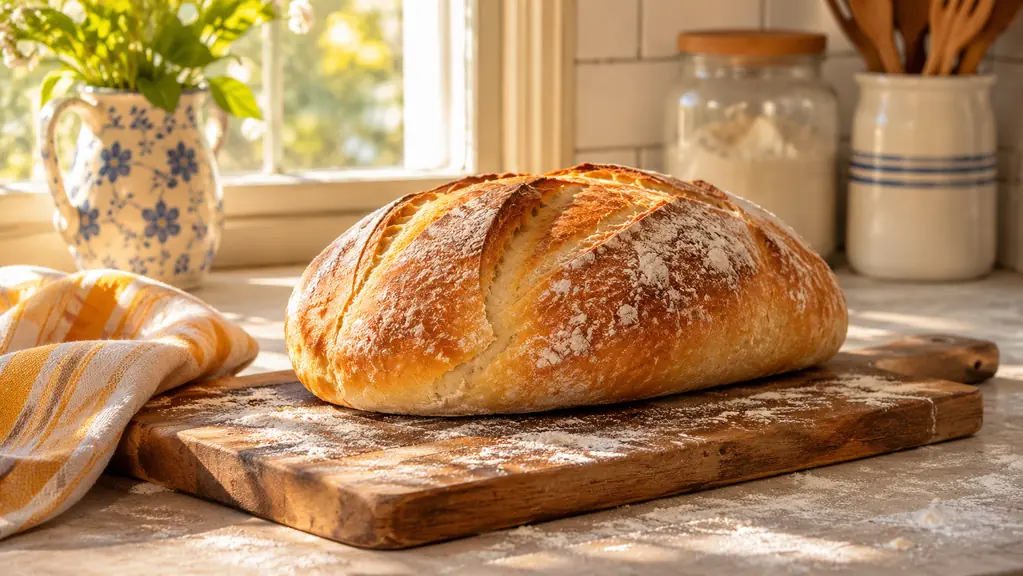
Sunday bread now runs on a schedule I can keep. I start the sponge before Ruth gets up, mix and knead in the machine, and the loaf is cooling on the board before the grandkids arrive. A two-loaf batch fits in the 5 quart bowl with room to spare. KitchenAid lists the bowl as doing nine dozen cookies in a single batch, which I believe and have no intention of testing, since I do not own that many cookie sheets. Cookies are the other job around here. The flat beater creams butter and sugar in the time it takes the oven to come up to temperature, and the dough leaves the bowl in one piece instead of climbing the beaters and stalling the motor. My old hand mixer used to smell faintly warm after a double batch. This one does not.
What I got wrong was the speeds. Ten of them is more rope than I first knew what to do with, and my instinct was to run everything at six, because six felt like the middle and the middle felt safe. Three batches of tough cookies taught me otherwise. Creaming butter is four. Whipping cream is eight, and it takes about a minute and a half, so you stand there and watch it rather than walking off to check the mail.
The honest complaints. It weighs 22 pounds, and mine lives on the counter in the corner by the window rather than in a cabinet, because lifting it out once a week would be a worse strain than the one I was trying to fix. It stands 13.9 inches tall and the head needs room to tilt back, so measure the clearance under your upper cabinets before you commit. The warranty is one year, which feels short on a machine this solidly built. And the six-wire whip is the attachment I use least, though for whipped cream and egg whites nothing else will do.
What I'd Tell You If We Were Sitting at My Kitchen Table
I would tell you that this is not a purchase that makes you a better baker by itself. It removes one specific obstacle, which for me was tired wrists and inconsistent kneading, and it removes it completely. If your obstacle is something else, like not knowing how to shape a loaf, a mixer will not help you with that and no number of speed settings will.
I would also tell you to be honest about counter space before you buy. A machine that lives in a cabinet gets used half as often as one within arm's reach, and this one is heavy enough that you will not want to move it twice a day. If the corner by the window is already taken, decide what you are willing to move before the box arrives, not after.
And I would tell you that the extra attachments are optional. I have the bowl, the flat beater, the dough hook and the whip, and after eight months of Sunday baking I have not once felt the lack of anything else. Learn the ten speeds on the machine you already have before you buy a second box of parts for it.
If tired wrists are why you stopped baking bread, start here
Eight months of Sunday loaves and the ache has not come back. The 5 quart KitchenAid Artisan is the version I own and the one I would buy again.
Amazon See the KitchenAid Artisan on Amazon →